


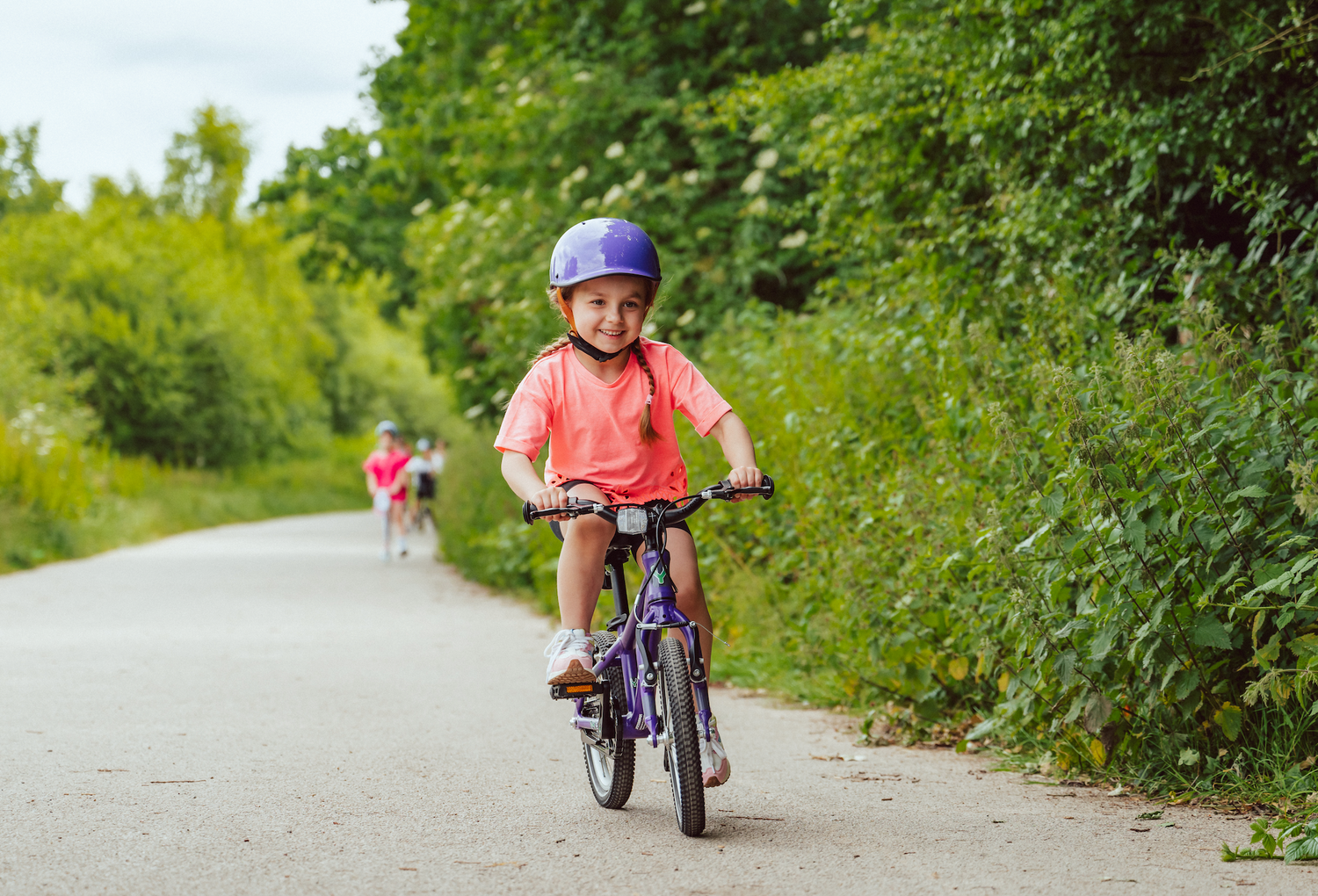
<p>Cycling gives children freedom, independence and a great way to explore, but safe riding depends on much more than simply putting on a helmet.</p>
<p>The right bike fit, reliable brakes, good bike control, an appropriate route and an understanding of other road and path users all matter.</p>
<p>Whether your child is learning in the park, riding a traffic-free trail or beginning to cycle on quieter roads, these 10 practical cycling safety tips will help you build good habits from the start.</p>
<h2>1. Start with a bike that fits your child properly</h2>
<p>Before thinking about roads, helmets or equipment, make sure your child's bicycle actually fits them.</p>
<p>A bike that's too large can make it harder to:</p>
<ul>
<li>start confidently;</li>
<li>reach the handlebars;</li>
<li>operate the brakes;</li>
<li>control the bike at low speed;</li>
<li>stop and put a foot down; and</li>
<li>recover from a wobble.</li>
</ul>
<p>A bike that's much too small can also become cramped and uncomfortable as a child grows.</p>
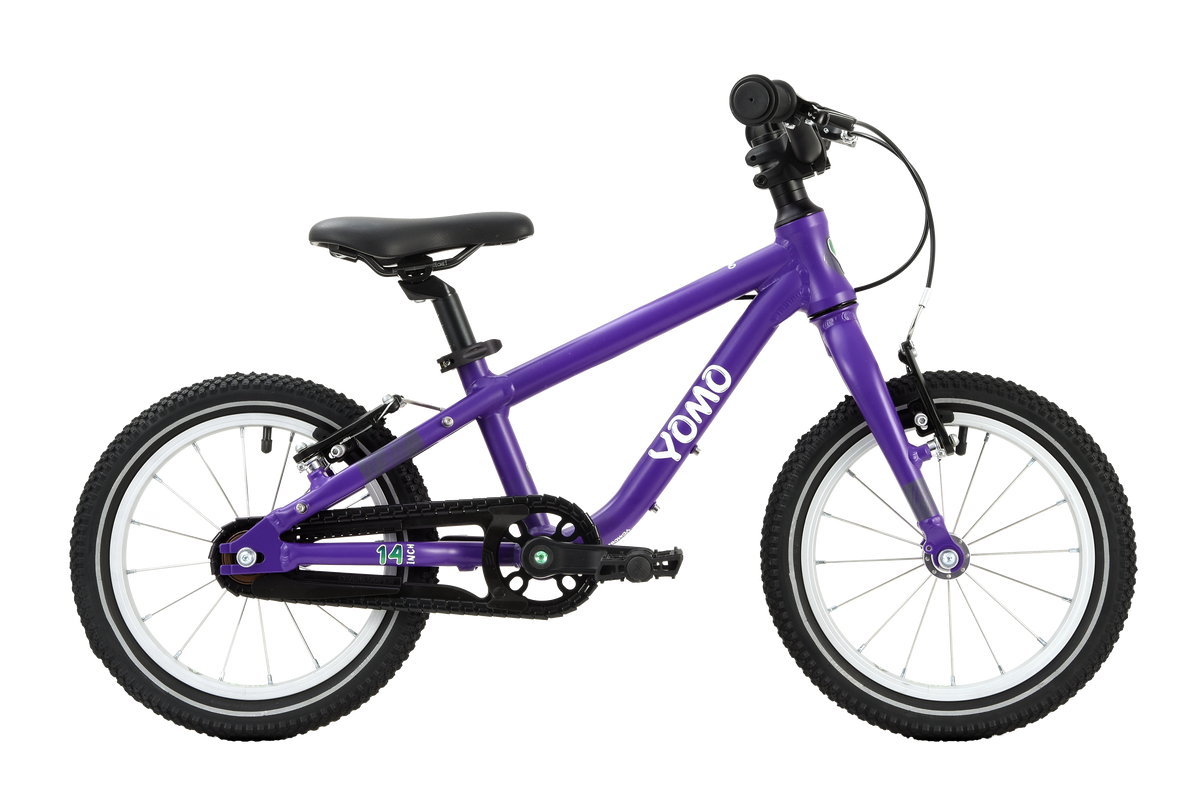
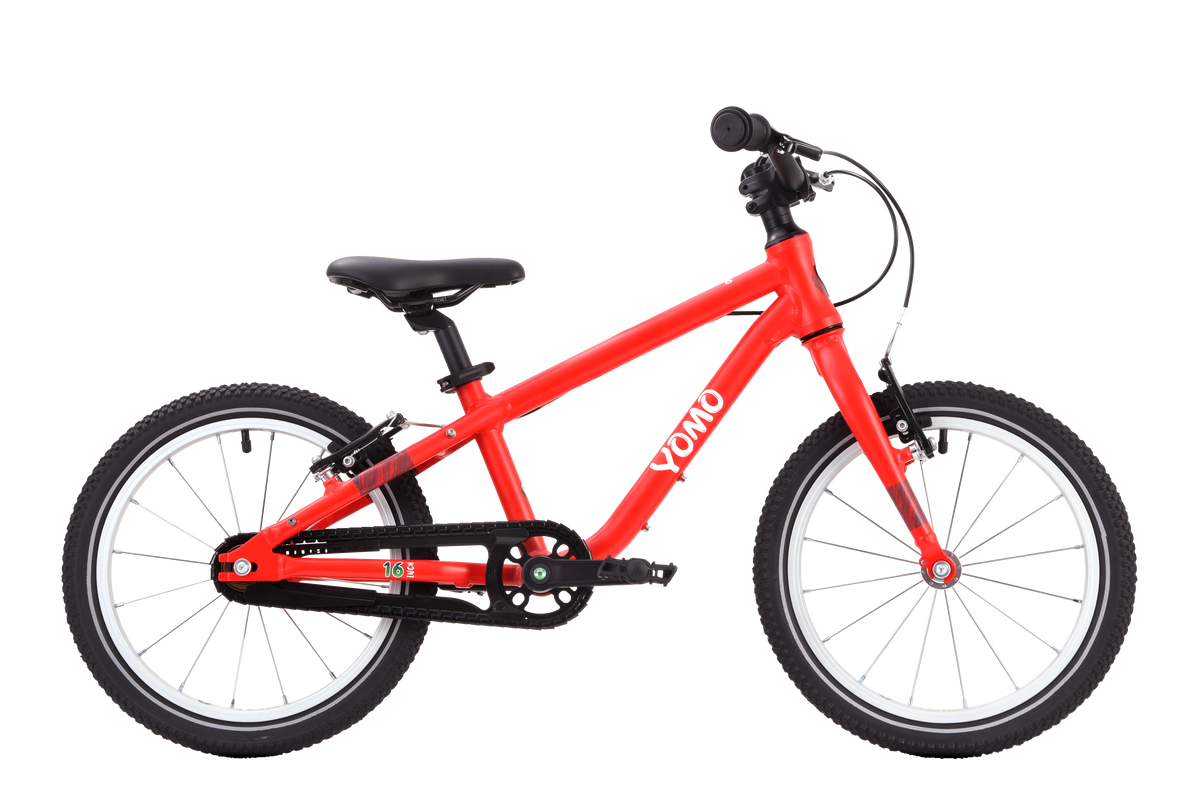
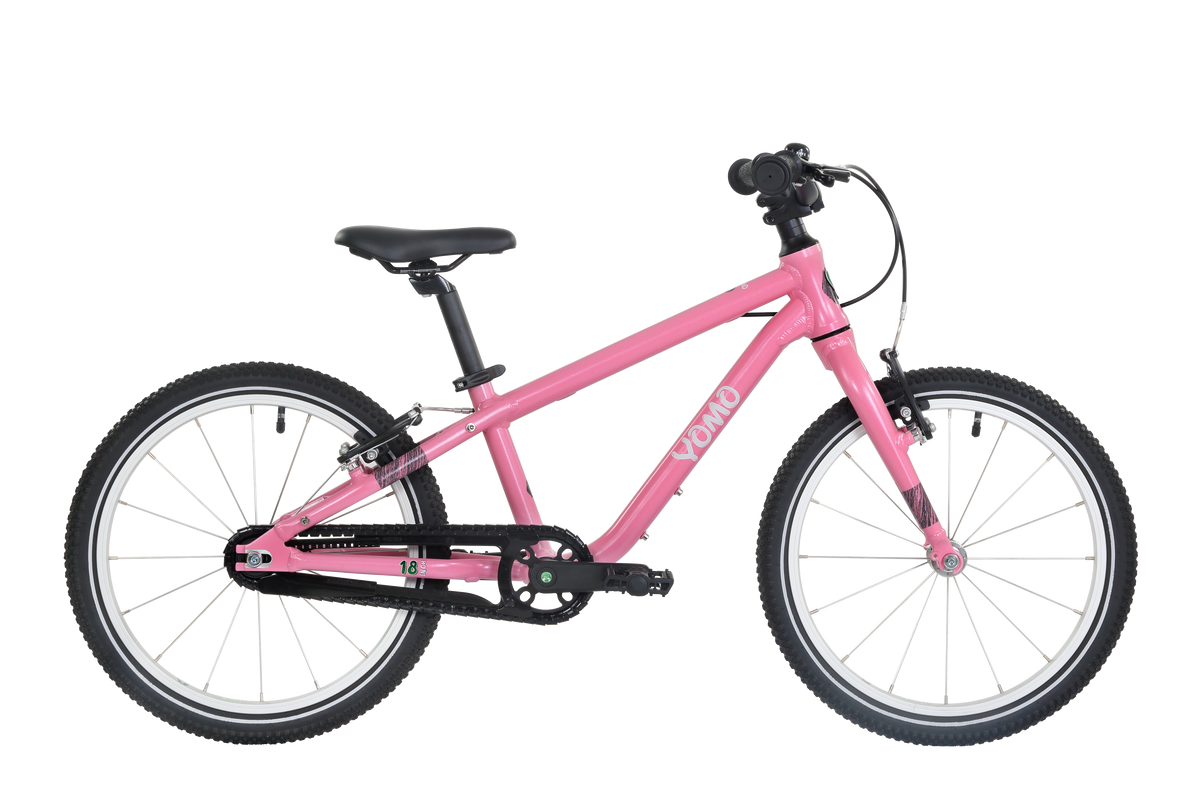
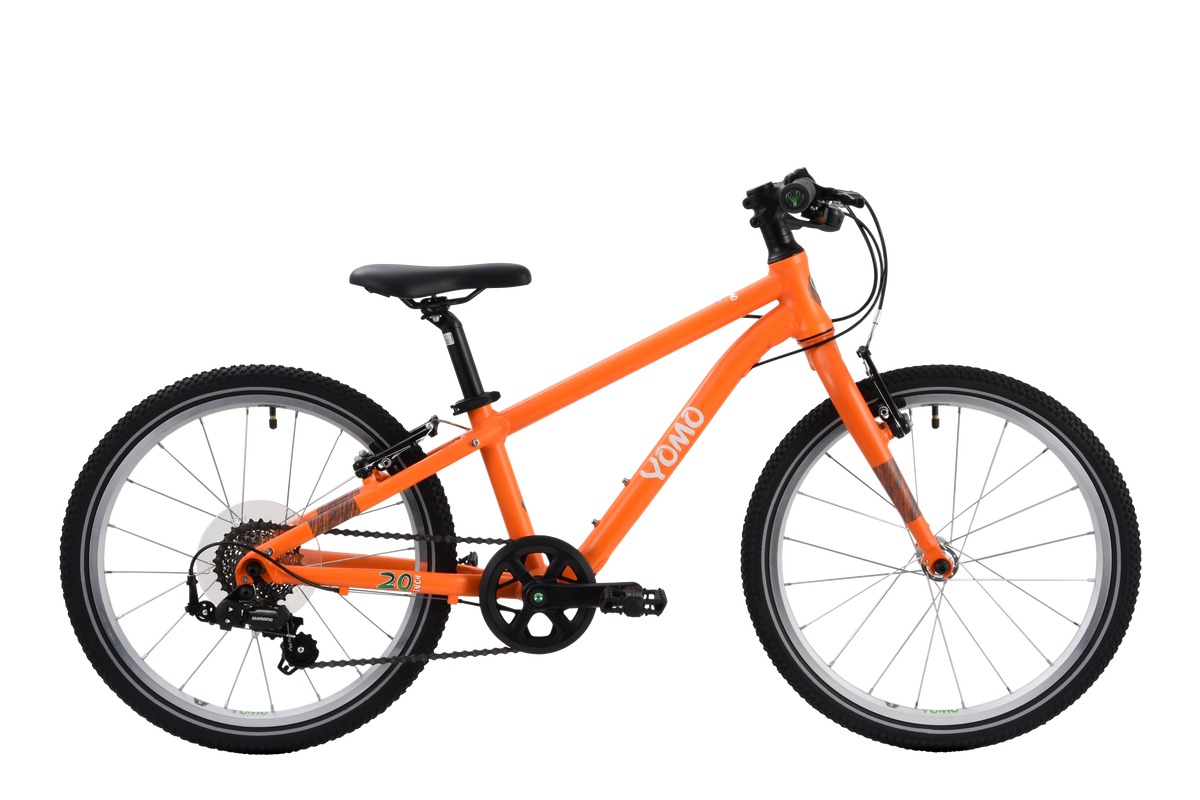
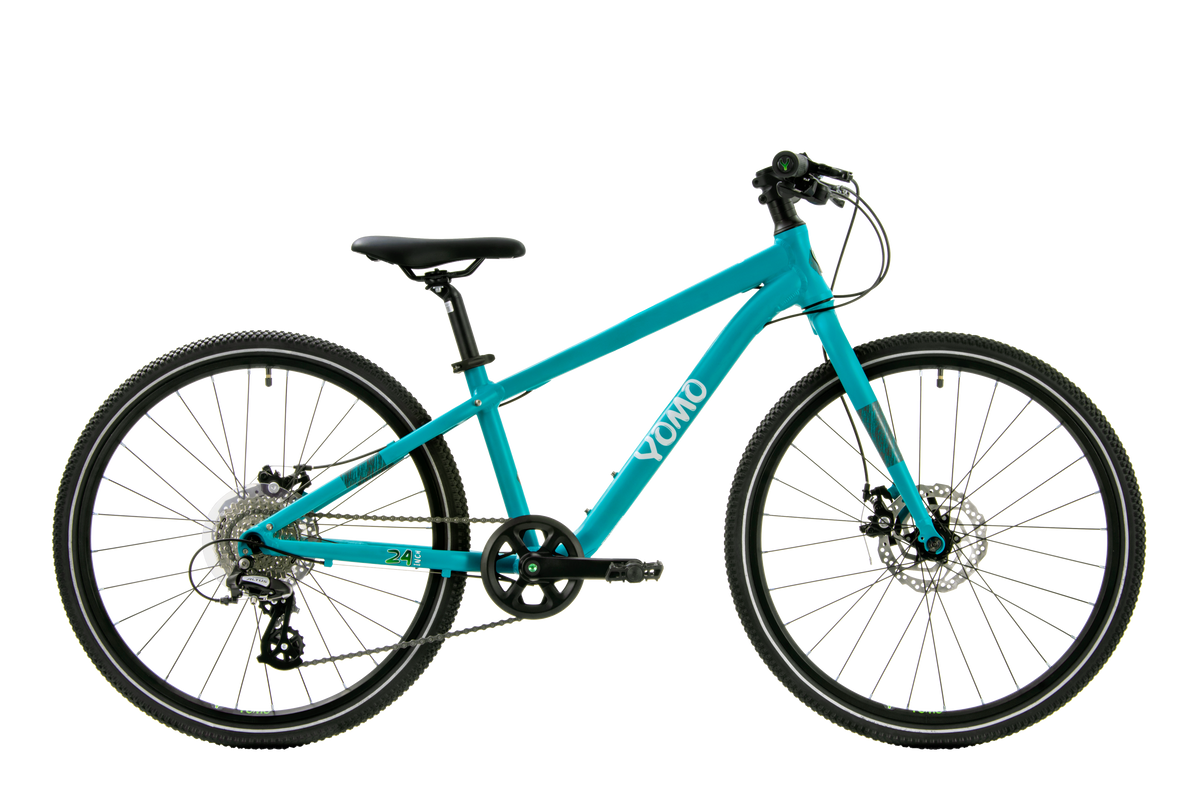
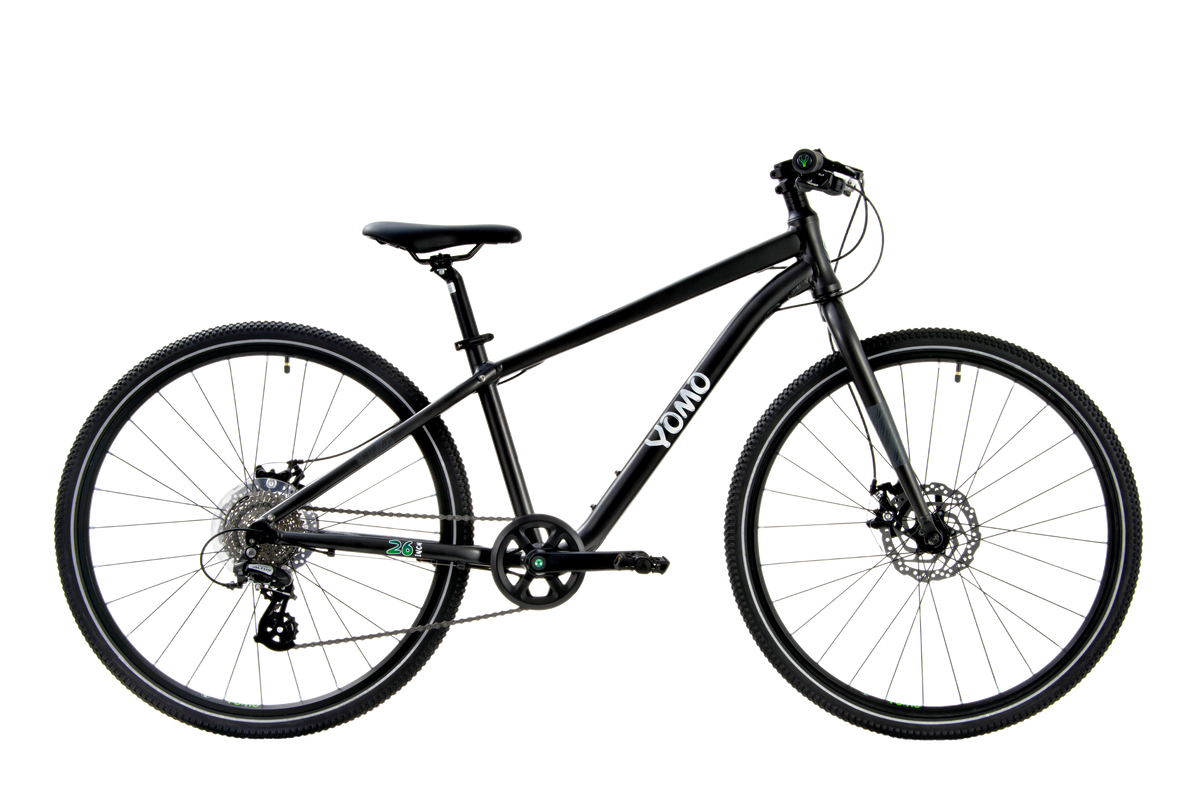
<p>For YOMO bikes, sizing should prioritise <strong>inside-leg measurement, current fit and riding confidence</strong>, with age used only as an approximate guide.</p>
<p>If your child's measurements overlap two sizes, think about the <strong>best fit now</strong> versus the option that gives <strong>more room to grow</strong>. A cautious or newer rider may benefit from the smaller option, while a confident rider may be ready for the larger bike once they comfortably meet its fit requirements.</p>
<p>Use the <a href="/#size-finder"><strong>YOMO Perfect Size Finder</strong></a> if you're unsure.</p>
<h2>2. Make sure their helmet fits correctly</h2>
<p>The Highway Code recommends wearing a cycle helmet that conforms to current regulations, is the correct size and is securely fastened.</p>
<p>For children, helmet size should be based on <strong>head circumference rather than age</strong>.</p>
<p>A correctly fitted helmet should:</p>
<ul>
<li>sit level on the head rather than tilted backwards;</li>
<li>sit low enough to protect the forehead;</li>
<li>feel snug without uncomfortable pressure;</li>
<li>remain secure when the child moves their head;</li>
<li>have correctly adjusted straps; and</li>
<li>fasten securely beneath the chin.</li>
</ul>
<p>Don't rely only on a generic “two-finger rule”. Always follow the fitting instructions supplied by the helmet manufacturer.</p>
<p>A helmet should also be replaced after a significant impact or if it is damaged, and you should follow the manufacturer's guidance on its usable life.</p>
<p>For more help, read our <a href="/blogs/yomo-blog/the-yomo-kids-helmet-range-colourful-comfortable-and-built-for-safety"><strong>kids' bike helmet sizing and fit guide</strong></a>.</p>
<h2>3. Check the bike before riding</h2>
<p>A quick check before setting off can identify problems before they become problems on the move.</p>
<p>Check:</p>
<ul>
<li><strong>Tyres:</strong> are they correctly inflated and free from obvious damage?</li>
<li><strong>Brakes:</strong> do both operate effectively?</li>
<li><strong>Wheels:</strong> are they secure and spinning normally?</li>
<li><strong>Chain:</strong> is it correctly positioned and running smoothly?</li>
<li><strong>Gears:</strong> if fitted, are they changing correctly?</li>
<li><strong>Handlebars:</strong> are they secure and correctly aligned?</li>
<li><strong>Saddle:</strong> is it secure and at an appropriate height?</li>
</ul>
<p>If something doesn't feel or sound right, investigate it before the child rides.</p>
<p>The Highway Code specifically says cyclists should ensure their brakes are efficient and that tyres, wheels, gears, chain, saddle and handlebars are in suitable working order.</p>
<p>Our <a href="/blogs/yomo-blog/is-your-childs-bike-ready-for-spring-riding"><strong>kids' bike maintenance checklist</strong></a> covers the main checks in more detail.</p>
<h2>4. Help your child be seen</h2>
<p>Visibility becomes particularly important around roads, junctions and in poor light.</p>
<p>Light-coloured or fluorescent clothing can help other road users see a cyclist during daylight and poor light, while reflective clothing or accessories can improve visibility in darkness.</p>
<p>At night, bicycles must have the required lights and reflectors.</p>
<p>In Great Britain, this includes a <strong>white front light and red rear light</strong> when cycling at night, together with the required reflectors.</p>
<p>Don't wait for complete darkness before thinking about visibility. Poor weather, shaded roads and dusk can all make a rider harder to see.</p>
<p>And remember: being visible does not replace careful road positioning, observation and decision-making.</p>
<h2>5. Build bike control before introducing roads</h2>
<p>Before a child begins riding in traffic, they should first be able to control the bicycle confidently in a traffic-free environment.</p>
<p>Useful skills include:</p>
<ul>
<li>starting independently;</li>
<li>riding in a controlled straight line;</li>
<li>steering smoothly;</li>
<li>braking progressively;</li>
<li>stopping where intended;</li>
<li>looking behind without losing control;</li>
<li>looking ahead rather than down at the front wheel; and</li>
<li>responding to instructions while riding.</li>
</ul>
<p>If your child is still learning independent bike control, concentrate on those fundamentals before adding traffic.</p>
<p>For children learning to ride, see our <a href="/blogs/yomo-blog/how-to-ride-a-bike-without-stabilisers-a-fun-easy-guide-to-get-your-kids-riding"><strong>step-by-step guide to riding without stabilisers</strong></a>.</p>
<h2>6. Teach road awareness gradually</h2>
<p>Knowing how to pedal doesn't automatically mean a child is ready to ride on the road.</p>
<p>Road riding adds several new skills, including:</p>
<ul>
<li>observing other road users;</li>
<li>understanding signs and road markings;</li>
<li>looking behind;</li>
<li>signalling;</li>
<li>choosing an appropriate road position;</li>
<li>approaching junctions;</li>
<li>passing parked vehicles; and</li>
<li>anticipating what drivers and pedestrians may do.</li>
</ul>
<p>Start by talking about these situations during family rides rather than expecting children to understand everything immediately.</p>
<p>For example, explain why you're slowing down, why you're checking behind or why you've chosen a particular road position.</p>
<p>In England, <strong>Bikeability</strong> provides structured cycle training. Level 1 develops bike control away from traffic, Level 2 introduces riders to quieter roads, and Level 3 develops skills for more complex road environments.</p>
<p>A child's readiness for a particular road should be based on their skills and judgement, not simply their age.</p>
<h2>7. Teach safe behaviour on shared paths and trails</h2>
<p>A traffic-free route is not a hazard-free route.</p>
<p>Shared paths may include:</p>
<ul>
<li>pedestrians;</li>
<li>young children;</li>
<li>dogs;</li>
<li>runners;</li>
<li>horse riders;</li>
<li>wheelchair and mobility users;</li>
<li>other cyclists; and</li>
<li>maintenance or forestry vehicles in some locations.</li>
</ul>
<p>The Highway Code says cyclists should take care when passing pedestrians and horse riders, give them plenty of room and be prepared to slow down and stop.</p>
<p>Teach children to:</p>
<ul>
<li>look well ahead;</li>
<li>control their speed;</li>
<li>slow down around people and animals;</li>
<li>avoid racing into blind bends;</li>
<li>give others plenty of space;</li>
<li>use a bell or polite voice when appropriate; and</li>
<li>be ready to stop if the path becomes blocked.</li>
</ul>
<p>Never assume someone ahead has heard a bell. They may be wearing headphones or have a hearing impairment.</p>
<h2>8. Choose routes for your child's ability, not just their age</h2>
<p>Route choice is one of the most effective ways parents can manage cycling risk.</p>
<p>Before setting off, check:</p>
<ul>
<li>how much of the route is traffic-free;</li>
<li>road crossings;</li>
<li>junctions;</li>
<li>traffic speed and volume;</li>
<li>hills;</li>
<li>surface type;</li>
<li>distance;</li>
<li>whether the route can easily be shortened; and</li>
<li>current closures or diversions.</li>
</ul>
<p>A child who rides confidently on a flat park path may not yet be ready for a busy junction or technical forest trail.</p>
<p>Likewise, two children of the same age can have completely different levels of cycling experience.</p>
<p>Choose for the least confident rider in the group.</p>
<h2>9. Adjust the ride for weather and surface conditions</h2>
<p>Conditions can change how much grip, visibility and stopping distance a rider has.</p>
<p>Take extra care with:</p>
<ul>
<li>wet leaves;</li>
<li>loose gravel;</li>
<li>mud;</li>
<li>standing water;</li>
<li>ice;</li>
<li>poor visibility;</li>
<li>strong winds; and</li>
<li>very wet roads.</li>
</ul>
<p>Encourage children to reduce their speed before slippery sections rather than braking suddenly once they're already on them.</p>
<p>If conditions are beyond your child's current ability, choosing another route or postponing the ride is the sensible option.</p>
<h2>10. Have a simple plan for longer or independent rides</h2>
<p>As children become older and more independent, safety also means knowing what to do when a parent isn't immediately beside them.</p>
<p>Before allowing more independent riding, agree:</p>
<ul>
<li>where they're allowed to ride;</li>
<li>which roads or areas are off limits;</li>
<li>when they should return;</li>
<li>what to do if the bike develops a problem;</li>
<li>who to contact if they need help; and</li>
<li>what to do if the planned route becomes unsafe or inaccessible.</li>
</ul>
<p>For longer family rides, it's also sensible to carry:</p>
<ul>
<li>water;</li>
<li>a snack;</li>
<li>basic first-aid supplies;</li>
<li>weather-appropriate clothing;</li>
<li>a suitable bike tool or puncture equipment where appropriate; and</li>
<li>a charged phone carried by an adult or sufficiently responsible older rider.</li>
</ul>
<p>The goal isn't to remove independence. It's to make sure independence develops alongside judgement and cycling skills.</p>
<h2>What safety equipment does a child's bike need?</h2>
<p>The most important starting point is a mechanically sound, correctly sized bicycle.</p>
<p>Useful equipment may include:</p>
<ul>
<li>a correctly fitted helmet;</li>
<li>effective brakes;</li>
<li>the legally required lights and reflectors when riding at night;</li>
<li>a bell;</li>
<li>secure handlebar grips; and</li>
<li>suitable clothing for the conditions.</li>
</ul>
<p>A kickstand, basket or decorative accessory shouldn't be treated as safety equipment.</p>
<p>Accessories must also be fitted so they cannot interfere with steering, brakes, wheels or the chain.</p>
<h2>Should children cycle on pavements?</h2>
<p>Parents should distinguish between an ordinary pavement and a designated cycle track or shared-use path.</p>
<p>In Great Britain, the Highway Code states that cyclists must not cycle on ordinary pavements.</p>
<p>Some paths are specifically designated for cycling, while others are shared between cyclists and pedestrians. Look for local signs and markings showing how the space should be used.</p>
<p>At some busy junctions or crossings, it can be safer to dismount and wheel the bicycle rather than attempting to ride through a situation beyond the child's ability.</p>
<h2>How can parents model safer cycling?</h2>
<p>Children notice what adults actually do.</p>
<p>On family rides, demonstrate the habits you want them to develop:</p>
<ul>
<li>look before moving or changing position;</li>
<li>follow traffic signals and signs;</li>
<li>control speed around other people;</li>
<li>give pedestrians and horses plenty of room;</li>
<li>signal clearly when needed;</li>
<li>avoid distractions;</li>
<li>wear an appropriately fitted helmet; and</li>
<li>stop when conditions aren't safe.</li>
</ul>
<p>Explaining your decisions can also help children understand that safe cycling involves observation and judgement rather than simply following a list of rules.</p>
<h2>Frequently asked questions about kids' cycling safety</h2>
<h3>What is the most important cycling safety tip for children?</h3>
<p>There isn't one single measure that guarantees safety. Start with an appropriately sized, mechanically sound bicycle and build your child's control, observation and decision-making skills in environments suited to their ability.</p>
<h3>Should children always wear a cycle helmet?</h3>
<p>The Highway Code recommends that cyclists wear a helmet that conforms to current regulations, is the correct size and is securely fastened. Correct fit is particularly important for children.</p>
<h3>When should a child's cycle helmet be replaced?</h3>
<p>Replace a helmet after a significant impact or when it is damaged, and follow the helmet manufacturer's guidance regarding age, condition and replacement.</p>
<h3>Do children's bikes need lights?</h3>
<p>If the bicycle is ridden at night, the required front and rear lights and reflectors must be fitted. In Great Britain, cyclists must have a white front light and red rear light illuminated at night.</p>
<h3>When is a child ready to cycle on the road?</h3>
<p>There is no single age. Before progressing onto roads, a child should have reliable bike control and should gradually develop observation, signalling, positioning and junction skills in an appropriate environment.</p>
<h3>Is a traffic-free cycle route completely safe?</h3>
<p>No. Traffic-free routes may still include pedestrians, animals, other cyclists, road crossings, uneven surfaces and occasional authorised vehicles. Children still need to control their speed and look ahead.</p>
<h3>How can my child learn safer road cycling?</h3>
<p>Structured cycle training can help. In England, Bikeability teaches bike control before progressing onto quieter roads and, at higher levels, more complex traffic situations.</p>
<h2>Safer cycling comes from skills, fit and good decisions</h2>
<p>Children don't become safer cyclists because of one accessory or one rule.</p>
<p>Confidence grows when the bicycle fits properly, the child can control it, the equipment works and the riding environment matches their current ability.</p>
<p>Start somewhere manageable, build skills gradually and introduce more challenging routes only when your child is ready.</p>
<p>If you're unsure whether their current bike still fits, use the <a href="/#size-finder"><strong>YOMO Perfect Size Finder</strong></a>.</p>
<p>You can also <a href="/collections/bikes"><strong>explore the YOMO children's bike range</strong></a> or <a href="/products/yomo-helmets"><strong>view YOMO kids' helmets</strong></a>.</p>


