

A practical guide for UK parents of older children and young teens
Winter has a way of quietly parking bikes in the shed.
Short days, wet roads, homework, gaming, social media and changing routines can all mean that a child who happily cycled through summer suddenly hasn't touched their bike for months.
If you're wondering how to get your kids back into cycling after winter, you're not alone. As children get older, cycling often has to compete with more activities, greater independence and changing interests.
The good news is that spring provides a natural opportunity to reset.
This guide covers practical, realistic ways to encourage older kids to cycle again without nagging, bribing or turning it into a battle.
Why Older Kids Stop Cycling After Winter
Before trying to restart the habit, it helps to understand what may have changed.
Possible reasons include:
- Loss of routine during darker winter evenings
- Other activities competing for their free time
- Friends no longer cycling as often
- Outgrowing their current bike
- Losing some confidence after several months away from riding
- The bike becoming uncomfortable or needing maintenance
Older children may also be less interested in cycling simply because a parent suggests a traditional family bike ride.
The answer isn't necessarily to push harder. It can be more effective to make cycling useful and relevant to them again.
Step 1: Make the Bike Feel Theirs Again
Start with the bike rather than immediately suggesting a long ride.
Give the bike a spring reset
Before heading out:
- Check and inflate the tyres to the recommended pressure
- Check both brakes
- Clean and lubricate the chain where appropriate
- Check the gears
- Adjust the saddle if your child has grown
- Check that the wheels, handlebars and other components are secure
- Give the bike a clean
Better still, get your child involved. Something as simple as, “Fancy getting your bike sorted for spring?” gives them more ownership of the process.
If they have grown significantly over winter, check the bike's fit carefully. A bike that has become too small or awkward to ride can quietly discourage someone from using it.
Use the YOMO Perfect Size Finder to check their current measurements and see whether their bike still suits them.
Step 2: Shift from “Family Ride” to “Freedom Tool”
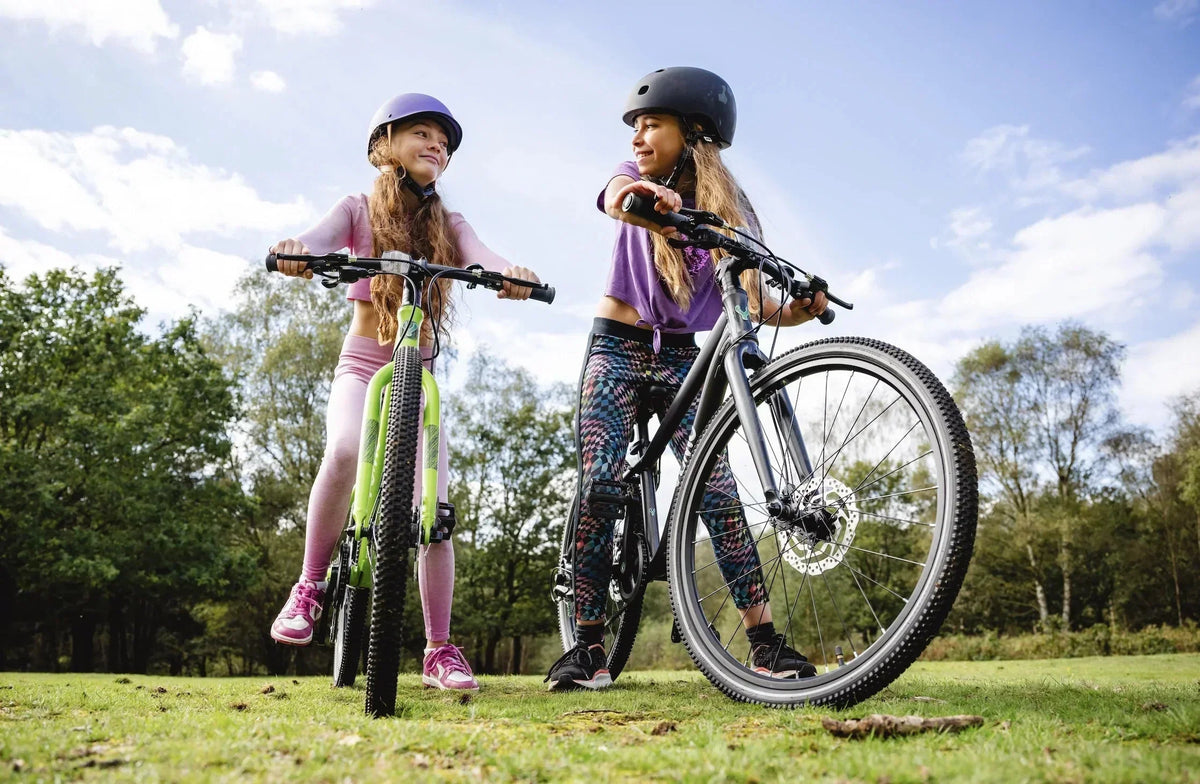
As children get older, cycling can become less about an organised family activity and more about independence.
Instead of:
“Let's go for a bike ride.”
You might suggest:
- cycling to the park;
- riding to meet a friend;
- cycling to a suitable activity;
- using the bike for an appropriate local journey; or
- exploring somewhere they actually want to visit.
Cycling becomes more appealing when it has a purpose.
For some older children, that may eventually include cycling to school, provided the route, riding ability and level of independence are appropriate.
Step 3: Use Social Motivation Naturally
Friends can play an important role in what older children choose to do.
Rather than presenting cycling primarily as exercise, it can become:
- a way to meet friends;
- a way to explore locally;
- a way to reach activities;
- a weekend trip to a café or park; or
- a shared ride on an appropriate trail or cycle route.
If friends already cycle, creating a suitable opportunity to ride together can make restarting feel much less like a parent-led activity.
As always, make sure the route and level of independence are appropriate for the child's age, ability and road awareness.
Step 4: Start Small
One mistake when returning to cycling after a long winter break is trying to do too much immediately.
A long ride may be less appealing if someone hasn't been on their bike for months.
Instead, try something manageable:
- a quick ride around a familiar local route;
- a short trip to the park;
- a ride to a nearby destination; or
- a simple traffic-free loop.
There isn't a required distance or duration.
The aim is simply to create a positive first ride back.
Step 5: Use Spring as a Natural Reset
Spring is a natural time to restart the cycling habit.
Longer daylight, milder temperatures and more opportunities to spend time outdoors can make getting back on a bike easier than it felt during the darkest part of winter.
Use that change naturally rather than making the first ride feel like a fitness programme.
A low-pressure suggestion to get outside can work better than presenting cycling as something they should be doing.
Step 6: Remove Barriers You Might Not See
If your child is reluctant to cycle, look for practical reasons before assuming they simply aren't interested.
Does the bike fit?
- Has your child grown noticeably?
- Is the saddle still correctly adjusted?
- Can they comfortably reach the handlebars and brake levers?
- Does the bike now feel cramped?
Does the bike work properly?
- Are the tyres properly inflated?
- Are the brakes working correctly?
- Does the chain run smoothly?
- Do the gears shift correctly?
- Are the grips and contact points comfortable?
Is confidence part of the problem?
They might be:
- nervous about traffic;
- unsure after spending months away from cycling;
- uncomfortable riding around more experienced friends; or
- worried about a particular route or type of terrain.
If confidence is the issue, start somewhere familiar and manageable rather than immediately introducing a challenging journey.
Step 7: Make Progress Enjoyable, Not Competitive
Some older children enjoy setting themselves small challenges, but it should depend on the individual child.
Ideas might include:
- trying a new local route;
- cycling slightly further than last time;
- learning to use their gears more effectively;
- practising a local school route with an adult; or
- visiting a suitable pump track or trail.
Avoid making speed the default measure of success.
The goal is to rebuild enjoyment and confidence, not turn every ride into a performance test.
Step 8: Upgrade the Purpose, Not Just the Bike
As children get older, the reason they cycle often changes.
It may become less about simply riding with parents and more about:
- getting somewhere;
- meeting friends;
- exploring independently;
- commuting;
- trail riding;
- pump tracks; or
- building practical independence.
When cycling serves a purpose that matters to them, motivation can become much easier.
Quick Checklist: Getting Older Kids Back on Bikes
- Check the bike mechanically
- Recheck sizing after winter growth
- Start with an easy first ride
- Give them some choice over the destination
- Think about cycling as transport as well as recreation
- Look for practical barriers before blaming motivation
- Allow friends to become part of the experience where appropriate
- Keep the first few rides relaxed
What If They Just Aren't Interested Anymore?
Children's interests change, and there isn't a particular age when everyone should want to cycle regularly.
If they're not interested right now, forcing it may make cycling less appealing rather than more.
Instead:
- keep the bike accessible;
- make sure it remains usable;
- avoid negative comparisons;
- occasionally suggest an enjoyable, low-pressure ride;
- give them some control over where and when they ride; and
- lead by example if cycling is part of your own routine.
The aim isn't to win a battle. It's to keep cycling available as something positive they can return to.
When Is It Time for a New Bike?
A winter break often coincides with a period of growth, so spring is a good time to reassess fit.
A new bike may be worth considering if your child has genuinely outgrown their current one.
Signs can include:
- the saddle can no longer be adjusted high enough within its safe range;
- their riding position looks noticeably cramped;
- their knees remain excessively bent while pedalling;
- the reach to the handlebars no longer feels comfortable; or
- their measurements have moved beyond the recommended fit range.
Don't replace the bike simply because your child has started secondary school or reached a particular birthday.
Inside leg, height and riding confidence are much better guides than age alone.
Use the Perfect Size Finder to check first.
Why the Right Bike Matters for Older Children
For older children who still fit a youth bike, weight, geometry and design remain important.
A bike should feel manageable and comfortable rather than like an oversized adult bicycle that the child still needs to grow into.
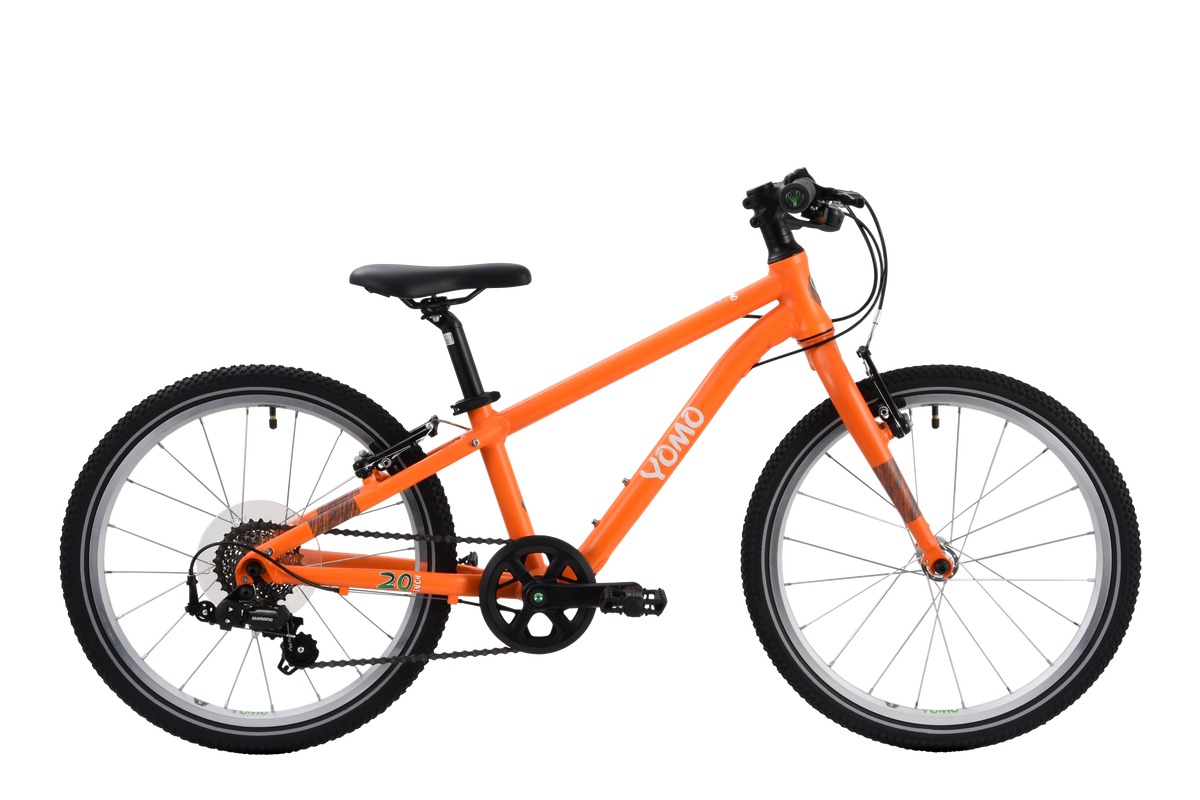
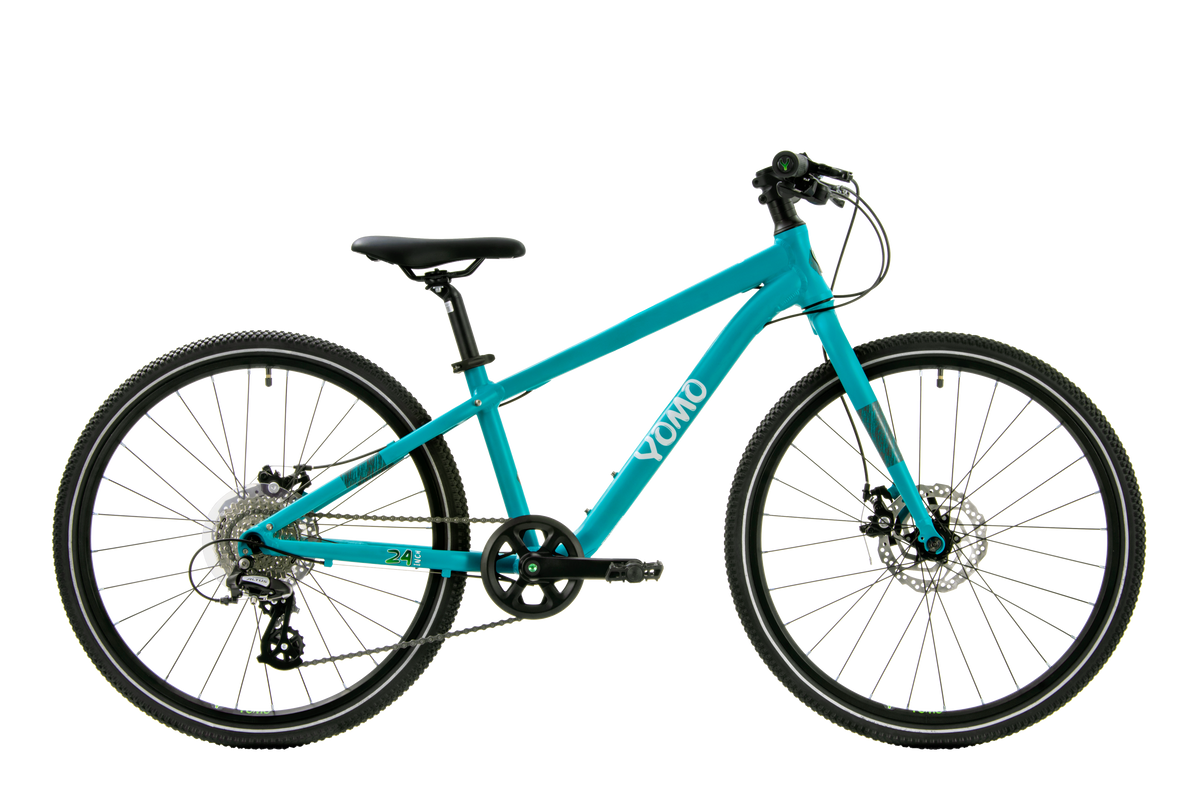
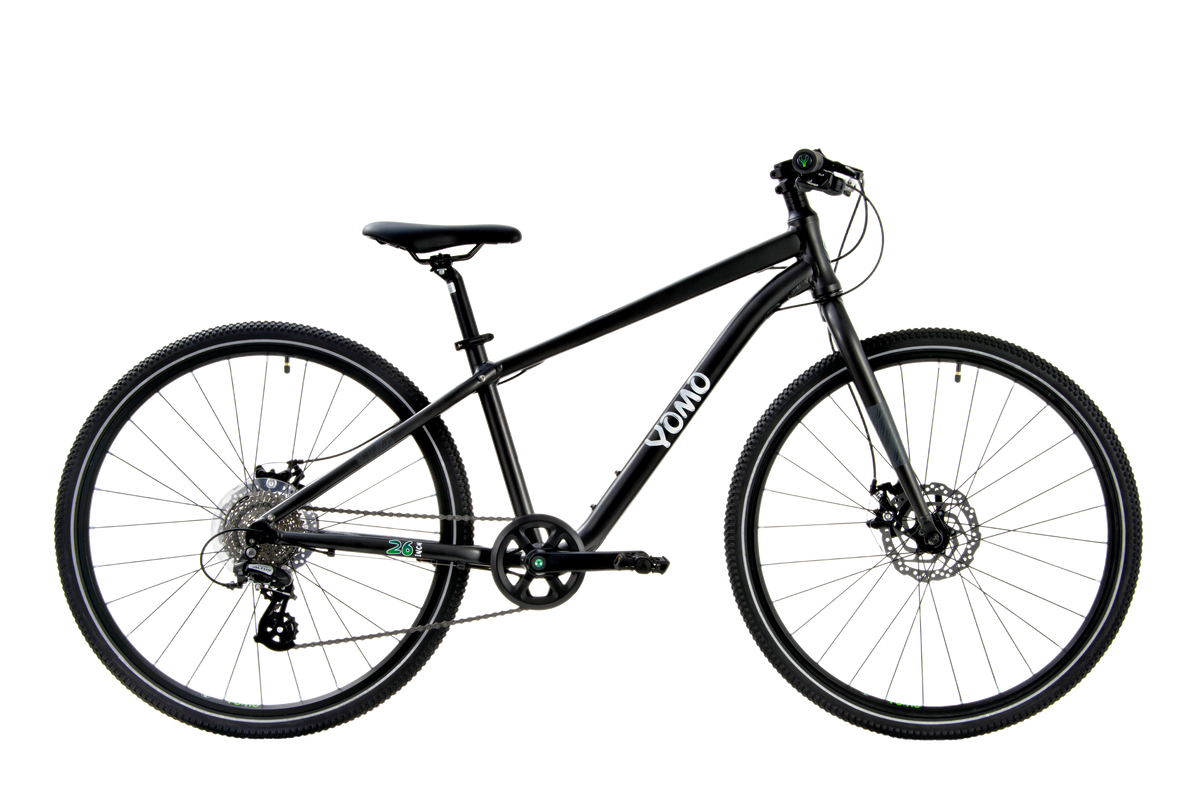
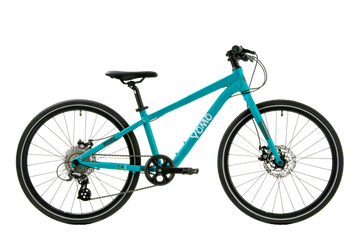
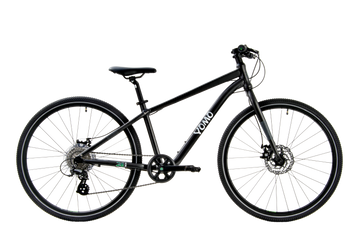
YOMO's larger models are designed specifically for growing riders.
The YOMO 24 and YOMO 26 both combine lightweight aluminium construction, child-specific geometry, Shimano gearing and mechanical disc brakes.
The YOMO 26 is designed for riders who fit its measurements rather than everyone within a particular age group, so always check sizing before choosing.
What If They've Outgrown Their Current YOMO?
If the existing bike is still relatively new but your child has genuinely outgrown it, check whether it qualifies for YOMO BikeTrade.
Eligible YOMO bikes can receive up to 50% credit, subject to inspection, towards an eligible next-size YOMO.
This can make it easier to choose the bike that fits properly now rather than deliberately buying something oversized in an attempt to make it last longer.
Frequently Asked Questions
How do I motivate my teenager to cycle again?
Start by understanding why they stopped. Check bike fit and condition, then think about what would make cycling useful or enjoyable to them now. For some children that may be meeting friends, travelling locally, riding trails or simply having more independence. Keep the first few rides low pressure.
What age do kids stop cycling?
There isn't a fixed age when children stop cycling. Interest can change as children get older, their routines shift and other activities compete for their time.
If cycling drops out of their routine for a while, that doesn't mean they won't return to it later.
Is cycling to school suitable for older children?
It can be when the rider has appropriate cycling skills and the route is suitable. Consider traffic, junctions, visibility, cycling infrastructure and your child's road awareness. Practising the journey together first can help determine whether it is appropriate.
How can cycling compete with screen time?
Rather than treating cycling as a punishment for using screens, give it an appealing purpose of its own. A ride to see friends, reach an activity or explore somewhere can be more motivating than simply being told to spend less time online.
Should I force my child to cycle?
Pressure is unlikely to create a positive long-term relationship with cycling. Make riding easy to access, suggest appropriate opportunities and help remove practical barriers, while allowing your child some autonomy.
How do I know if their bike is now too small?
Recheck their inside leg and height and look at their riding position. If the bike cannot be adjusted appropriately within its permitted range or your child appears cramped, it may be time for the next size.
Check their current size with the YOMO Perfect Size Finder.
The Bigger Picture: It's About Rebuilding the Habit
Getting older kids back on their bikes after winter doesn't need one huge ride or a dramatic fitness goal.
It is more often about:
- making sure the bike still fits;
- removing practical barriers;
- starting with an easy ride;
- giving cycling a purpose that matters to them; and
- allowing independence to grow alongside their skills.
If your child hasn't ridden since autumn, start small and keep the first ride relaxed.
Sometimes one enjoyable trip is enough to remind them that their bike still gives them something increasingly valuable as they get older: the freedom to go somewhere under their own power.
If you're unsure whether their current bike still fits, use the Perfect Size Finder. For older riders who fit the range, you can also explore the YOMO 26 or view all YOMO children's bikes.