


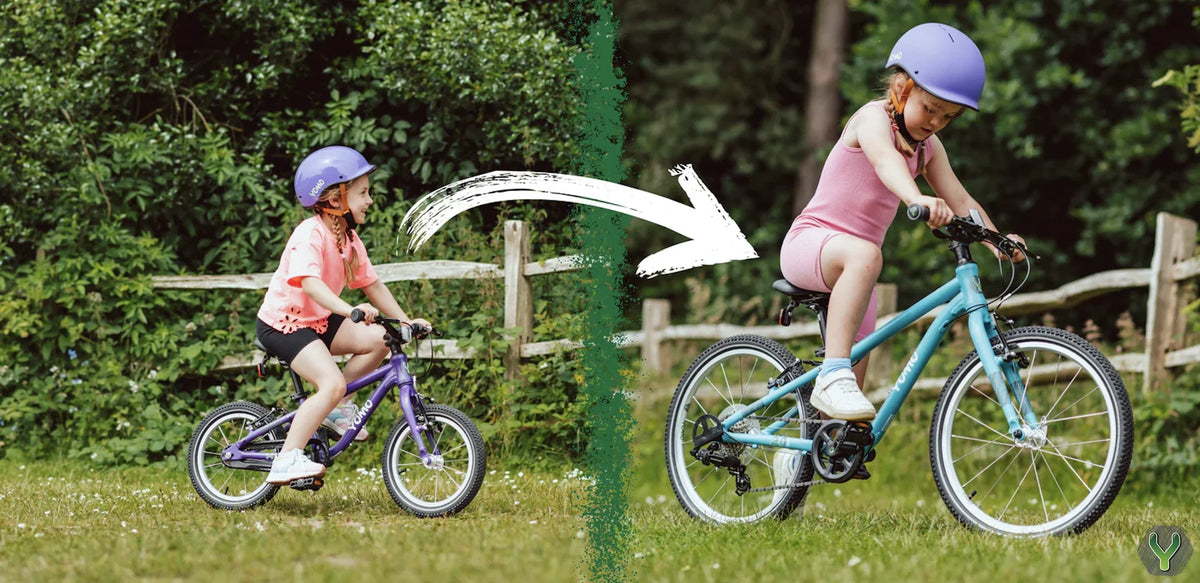
Choosing the right bike size for your child isn’t always straightforward; especially between ages 8 and 15, when growth spurts happen fast and confidence on the bike really starts to develop.
Go too small, and they outgrow it in months.
Go too big, and you risk knocking their confidence (or worse, their safety).
This guide will help you understand kids bike sizes, when it’s time to upgrade, and how to confidently choose the right fit. Without second guessing.
Why Bike Size Matters More Than Age
One of the biggest mistakes parents make is choosing a bike based on age alone.
While age can be a rough guide, height and inside leg measurement are far more accurate when it comes to kids bike sizing.
That’s because:
- Children grow at different rates
- Confidence levels vary
- Riding ability isn’t tied to age
This is why tools like a kids bike sizing calculator (like YOMO’s Perfect Size Finder) are so useful as they take the guesswork out of the process.
Understanding Kids Bike Sizes (Ages 8–15)
For this age group, most children will be moving through two key bike sizes:
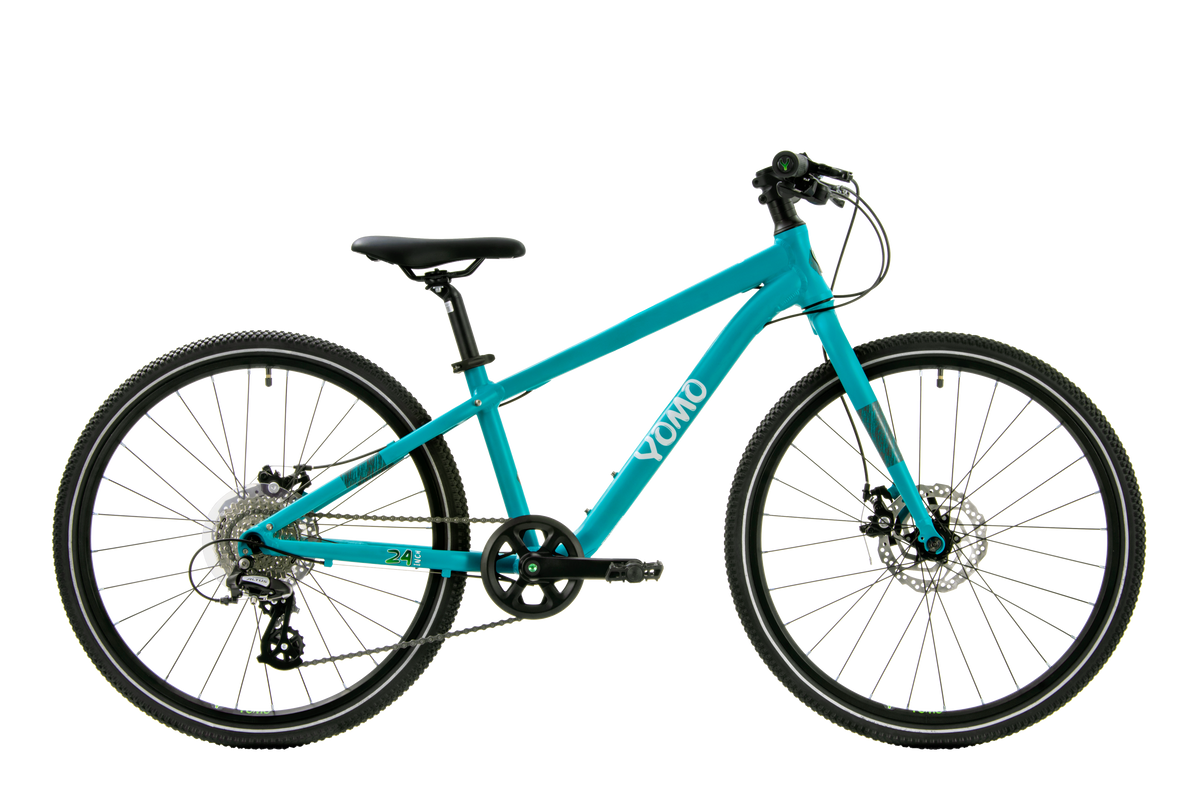
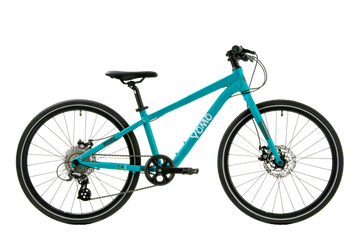
24-Inch Bikes
Typically suitable for:
- Ages: 8–11 (approx.)
- Height: ~130–145 cm
These are often the first “serious” bikes where kids start riding further, faster, and more independently.
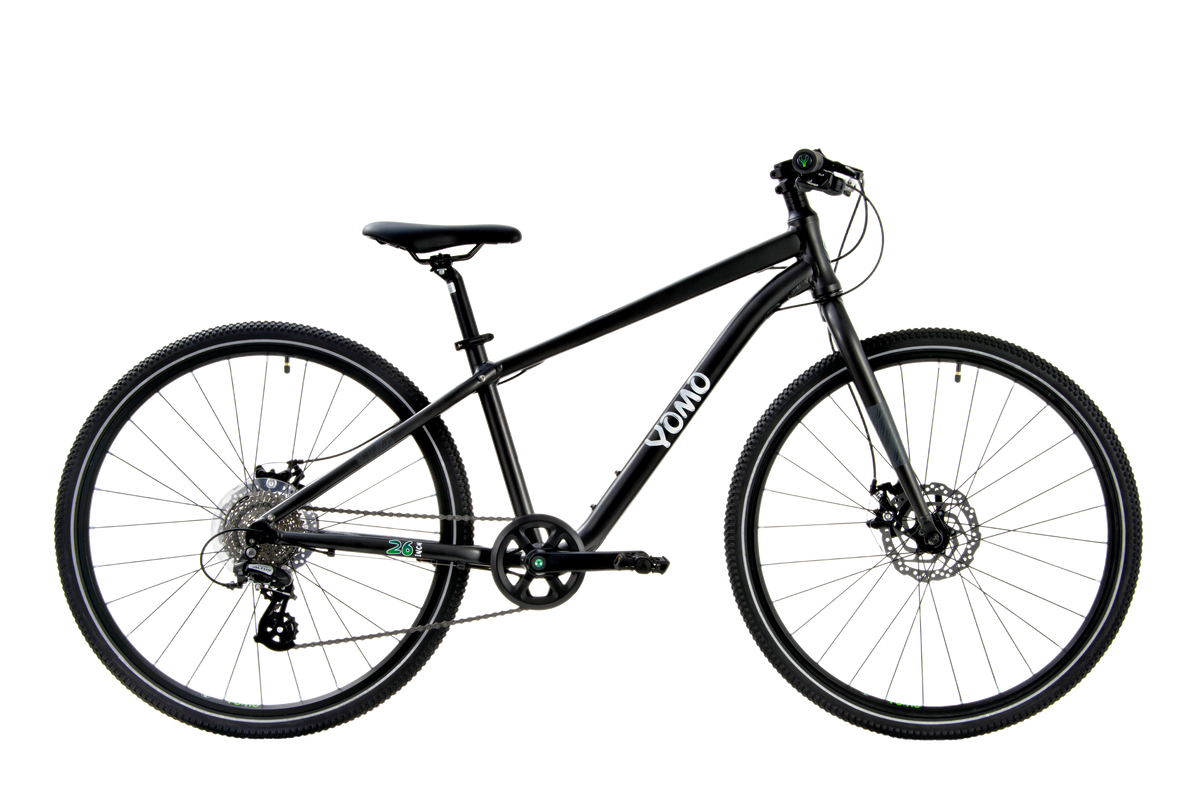
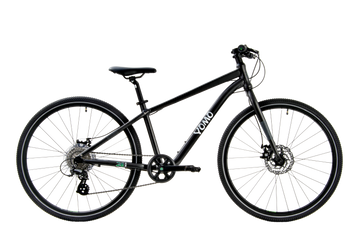
26-Inch Bikes
Typically suitable for:
- Ages: 10–15 (approx.)
- Height: ~140 cm+
This is the transition point towards teen and adult-style bikes, with more advanced gearing and geometry.
The Overlap Zone (Where Most Parents Get Stuck)
Between roughly 135–145 cm, your child could fit either a 24” or 26” bike.
This is where sizing decisions matter most.
Rule of thumb:
- If they’re still building confidence → stay with 24”
- If they’re taller and confident → move to 26”
5 Signs It’s Time to Upgrade Your Child’s Bike
Not sure if they’ve outgrown their current bike? Look for these telltale signs:
1. Knees Are Too High While Pedalling
If their knees are rising noticeably toward the handlebars, the bike is too small.
2. They Look “Cramped”
A hunched posture or awkward positioning is a clear indicator they’ve outgrown the frame.
3. Frequent Complaints of Discomfort
Sore legs, back, or hands after short rides often come down to poor fit.
4. They’ve Outgrown the Saddle Height Range
If the seat is already at its maximum height (and still too low) it’s time to move up.
5. Their Confidence Is Being Held Back
This one is subtle but important. A bike that’s too small can feel unstable at speed and limit progression, especially for kids starting to ride longer distances or tackle new terrain.
The Biggest Mistake: Buying “A Size Up”
It’s tempting to future-proof by buying a slightly bigger bike.
But with kids bikes, this often backfires.
A bike that’s too big can:
- Be harder to control
- Reduce confidence
- Increase the risk of falls
- Slow skill development
The best approach is always: Fit for now, not for later
How to Get the Perfect Fit
When choosing between kids bike sizes, focus on three key factors:
1. Height
This gives you your starting point.
2. Inside Leg Measurement
This is the most accurate indicator of fit, especially for saddle height and control.
3. Riding Confidence
Two children the same height may need different bike sizes depending on ability.
Why Lightweight Bikes Make a Huge Difference
As kids get older, bikes often get heavier, but that doesn’t mean they should.
A heavy bike can:
- Make climbing harder
- Reduce control
- Tire them out quickly
That’s why lightweight, child-specific bikes (like YOMO’s range) are designed to:
- Match a child’s strength
- Improve handling
- Build confidence faster
24” vs 26”: Quick Decision Guide
If you’re stuck between sizes, use this:
Choose 24” if:
- Your child is under ~140 cm
- They’re still building confidence
- They prefer control over speed
Choose 26” if:
- They’re over ~140 cm
- They ride regularly and confidently
- They’re starting longer or faster rides
Use a Kids Bike Sizing Calculator (The Easy Way)
If you want a quick, reliable answer without second guessing, the easiest route is to use a kids bike sizing calculator.
YOMO’s Perfect Size Finder uses:
- Height
- Inside leg measurement
- Age (as a secondary guide)
…to recommend the right bike size in seconds.
It’s the fastest way to avoid buying the wrong size.
Final Thoughts: Confidence Comes from the Right Fit
At this stage (ages 8–15), the right bike does more than just “fit”. It shapes how your child rides.
The right size will:
- Build confidence
- Improve control
- Encourage longer rides
- Make cycling more enjoyable
The wrong size? It does the opposite.
Find the Right Size Today
Not sure where your child sits between 24” and 26”?
Use the YOMO Perfect Size Finder to get a tailored recommendation in seconds.
Or explore the YOMO range to find a lightweight bike designed specifically for growing riders


