


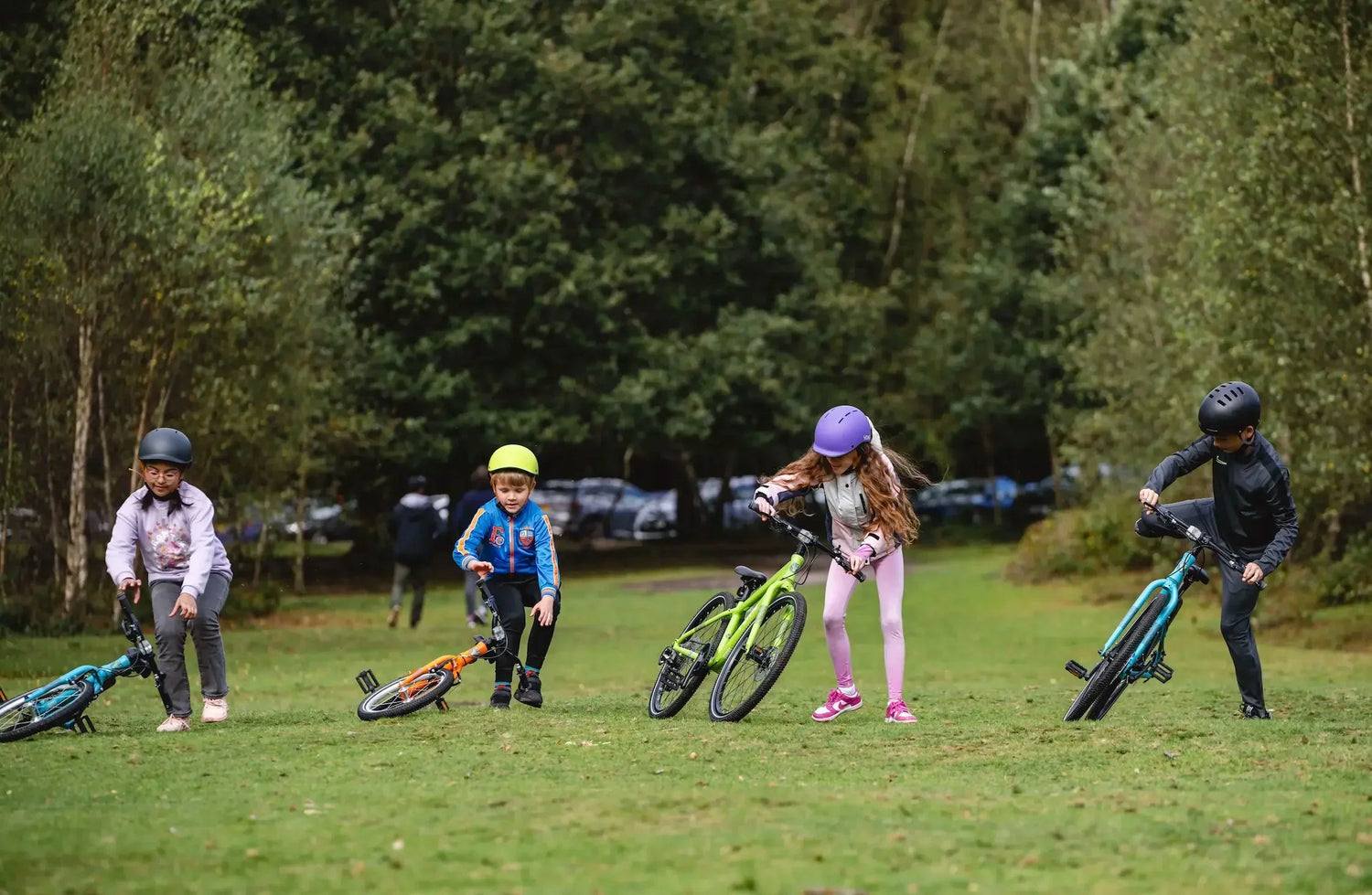
Not every child gets on a bike and immediately feels confident.
Some children take longer to find their balance. Some become cautious after a fall. Others can ride perfectly well but hesitate when the path gets busy, the hill gets steeper or everyone starts watching.
None of that means they aren't going to become confident cyclists.
The most useful approach is usually to reduce the pressure, make riding manageable and give them lots of opportunities for small successes.
You don't need to turn every ride into a lesson. Here's how to help your child build cycling confidence naturally.
What does cycling confidence actually mean?
A confident child isn't necessarily the fastest rider or the one attempting the biggest hill.
Cycling confidence is more about feeling in control.
A child who feels confident on their bike is more likely to:
- start and stop without worrying;
- recover calmly from a small wobble;
- try something again if it doesn't work first time;
- use their brakes rather than panicking;
- look ahead rather than constantly down at the bike; and
- enjoy riding enough to want to do it again.
Skill and confidence develop together. Improving one can help the other.
That means the goal isn't simply to tell a nervous child to “be confident”. It's to give them riding experiences where they gradually discover that they can control the bike themselves.
1. Check the bike before assuming it's a confidence problem
If your child suddenly seems reluctant to ride, start with the bike.
A bicycle that is too large, unnecessarily heavy or awkward for the rider can make perfectly normal cycling tasks feel much harder.
Check whether your child can:
- reach the handlebars comfortably;
- operate the brake levers without stretching;
- reach the ground appropriately for their ability;
- start without struggling against the size of the bike; and
- steer and manoeuvre it without feeling overwhelmed by its weight.
For YOMO bikes, sizing should begin with inside-leg measurement, supported by height and current riding confidence.
If you're unsure, use the YOMO Perfect Size Finder. It distinguishes between a learning or cautious rider and a confident independent rider when recommending the appropriate size.
You can also read our guide to choosing the right size bike for your child.
2. Don't turn learning to ride into a performance
Adults naturally want to encourage children, but sometimes encouragement can accidentally create pressure.
Statements such as:
- “Today's the day you're going to do it.”
- “Come on, your friend can already ride.”
- “Just one more go.”
- “Everyone's watching you.”
can make an ordinary bike ride feel like a test.
For a cautious child, it can work better to make cycling simply one of the options available:
“Do you fancy bringing your bike to the park?”
That gives them an opportunity to ride without attaching a required outcome to the session.
3. Choose somewhere that makes success easier
Environment has a huge effect on how difficult cycling feels.
A child who struggles in a crowded park may ride confidently somewhere quieter.
For confidence-building rides, look for:
- a traffic-free location;
- a smooth, reasonably level surface;
- plenty of open space;
- good visibility;
- few pedestrians or obstacles; and
- somewhere familiar if your child prefers predictable surroundings.
Avoid introducing several challenges at once.
A steep hill, unfamiliar bike, busy path and nervous rider aren't a good combination for a confidence-building session.
4. Keep rides short enough that they still want another one
There isn't a perfect number of minutes for a children's cycling session.
The better guide is your child's behaviour.
If concentration is dropping, frustration is increasing or they are physically tired, continuing for another 20 minutes rarely improves the experience.
It's often better to finish while the ride still feels positive.
That might mean five minutes for a very young beginner or a much longer ride for an older confident child.
Regular enjoyable rides are generally more useful than occasional marathon practice sessions that everyone finishes exhausted.
5. Break cycling into small skills
“Learning to ride a bike” sounds like one large task.
In reality, it is made up of lots of smaller skills:
- getting onto the bike;
- pushing off;
- balancing;
- pedalling;
- steering;
- looking ahead;
- using the brakes;
- slowing down;
- stopping; and
- putting a foot down confidently.
If your child is nervous, work out which part is causing the problem rather than asking them to practise everything at once.
A child who can pedal confidently but worries about stopping may simply need five relaxed minutes practising controlled stops.
A child who struggles to get moving may benefit from practising only starts.
One small skill becoming easier can transform how the whole ride feels.
6. Let beginners get comfortable with the ground
Children who are learning often feel more relaxed when they know they can put their feet down easily.
That is one reason correct bike fit matters so much at this stage.
For a beginner or cautious rider, the saddle may need to be set differently from the position used by an experienced cyclist.
As confidence improves, the saddle can gradually be adjusted towards a more efficient pedalling position.
Don't rush that adjustment simply because an adult cycling setup suggests the saddle should be higher.
The child's current ability matters.
7. If pedals are the problem, go back to balance
Some children are comfortable balancing but become overwhelmed when they have to balance, pedal and steer simultaneously.
Depending on the bike and the child's fit, temporarily removing the pedals can sometimes allow an appropriately sized pedal bike to be used for balance practice.
The child can push themselves forwards with their feet, practise gliding and become comfortable controlling the bicycle before adding pedalling again.
This uses the same basic principle as a balance bike: learn balance and steering first, then introduce another skill.
For younger children beginning on a balance bike, our balance bike step-by-step guide explains the progression in more detail.
8. Don't hold onto the bike more than necessary
Holding a child upright can feel reassuring, but if an adult is constantly controlling the bicycle, the child has fewer opportunities to learn what balance actually feels like.
Where support is genuinely needed, keep it light and reduce it gradually as the child gains control.
Avoid pulling or twisting the handlebars while they ride. Steering needs to become something the child controls themselves.
When they are ready, create enough open space for them to experiment safely without feeling that an adult is correcting every movement.
9. Give one instruction at a time
Imagine trying to learn something new while someone calls:
“Pedal! Look up! Brake! Straighten the wheel! Keep going!”
Too much information can make riding more difficult.
If your child needs help with a particular skill, keep the instruction short and specific.
For example:
“Look towards the tree.”
or:
“Start squeezing the brakes here.”
Once that skill feels comfortable, move on.
10. Use games instead of drills
Children don't necessarily need to know they are practising a particular cycling skill.
Simple games can make repetition feel much more natural.
Controlled stopping
Put down a marker and see whether they can stop beside it.
Steering
Create a wide course around a few cones, bottles or other safe markers.
Looking ahead
Ask them to spot an object in the distance while continuing to ride.
Slow-speed control
See who can ride a short section most slowly without putting a foot down.
Keep it playful rather than competitive, particularly if competition makes your child anxious about making mistakes.
11. Let them choose some of the ride
Giving children a little control over the experience can make a surprisingly large difference.
Let them choose:
- which park to visit;
- which direction to ride;
- whether to do another lap;
- which safe path to try; or
- when they are finished.
A child who feels that cycling is something being done with them rather than to them is more likely to engage with it positively.
12. Ride together without turning every ride into coaching
Children can learn a great deal simply from riding with a capable adult.
You can demonstrate:
- smooth braking;
- looking ahead;
- slowing down before corners;
- choosing a sensible line;
- changing gear before a hill; and
- stopping calmly.
You don't need to explain every movement.
Sometimes riding alongside them at a relaxed pace is more useful than providing constant instructions.
13. Avoid comparing siblings and friends
Children develop cycling skills at different rates.
One child might ride independently very quickly. Another might spend considerably longer building confidence before everything comes together.
Comparisons rarely help:
“Your sister was riding at four.”
“Everyone else can do this.”
Those comments turn cycling into a measurement of the child rather than a skill they are learning.
Instead, compare today's rider with yesterday's rider:
“You stopped completely by yourself that time.”
That focuses attention on genuine progress they can control.
14. Praise specific progress rather than saying “you're brilliant”
Encouragement is useful, but it becomes more meaningful when the child knows what they actually did well.
Instead of:
“Amazing!”
try:
“You looked ahead all the way around that corner.”
or:
“You used the brakes early and stopped exactly where you wanted.”
Specific feedback helps children recognise the skill they have gained.
15. What should you do after a fall?
A fall can knock confidence, particularly if it frightened the child even when the physical injury was minor.
First, check the child properly and make sure there isn't an injury requiring attention.
Then check the bike before it is ridden again, particularly the handlebars, wheels, brakes and anything that may have moved or been damaged in the fall.
If your child wants to stop, let them stop.
There is no need to force an immediate return to riding simply to prove that the fall wasn't important.
When they are ready to try again, make the next experience deliberately easy:
- return somewhere familiar;
- use a smooth flat surface;
- keep the session short;
- avoid recreating the situation that caused the fall immediately; and
- let the child rebuild control gradually.
The objective is to prevent one difficult experience from defining how cycling feels afterwards.
16. If they're scared of a hill, don't start with the whole hill
Hills combine several challenges: speed, braking, steering and sometimes gears.
Break the problem down.
Start near the bottom of a gentle slope rather than at the top.
Practise:
- braking while travelling slowly;
- stopping partway down;
- looking ahead;
- keeping both hands securely on the bars; and
- using an easier gear before climbing.
Move higher up the hill only when the previous section feels easy.
Confidence grows much more reliably from repeated manageable successes than from one intimidating attempt.
17. Know when to finish
Sometimes the most useful thing a parent can say is:
“That's enough for today.”
If your child is tired, upset or no longer concentrating, stopping isn't giving up.
Riding can continue another day.
The aim is to create a long-term relationship with cycling, not win today's practice session.
How can you tell that cycling confidence is improving?
Progress isn't always dramatic.
You may notice that your child:
- asks to bring their bike somewhere;
- starts without asking for help;
- looks further ahead;
- uses the brakes more smoothly;
- puts their feet down calmly rather than suddenly;
- rides a little further;
- talks while riding because controlling the bike requires less concentration; or
- tries something that they previously avoided.
Those small changes are often better signs of genuine confidence than speed or distance.
What if my child can ride but still lacks confidence?
This is common.
A child may have all the physical skills needed to ride but still become nervous in particular situations.
Try to identify exactly what changes:
- Are they comfortable until other people appear?
- Do hills worry them?
- Are they afraid of stopping?
- Do they dislike loose surfaces?
- Has the bike recently become too small or too large?
- Did something happen on a previous ride?
Once you know what the actual difficulty is, you can make that individual situation easier rather than treating the child's overall cycling ability as the problem.
What if they're learning to ride without stabilisers?
Moving away from stabilisers combines a change in balance with a change in confidence.
Keep the bike correctly fitted, choose a flat traffic-free area and concentrate initially on balance, steering and controlled stopping rather than distance.
Our guide to teaching a child to ride without stabilisers takes you through the process step by step.
The right bike should make confidence easier, not harder
A bicycle can't create confidence on its own, but it can either support the rider or place unnecessary obstacles in their way.
A properly fitted, appropriately lightweight children's bike can make starting, stopping, steering and manoeuvring feel more manageable.
YOMO bikes are designed around children's proportions, with lightweight construction, child-specific geometry and controls sized for younger riders.
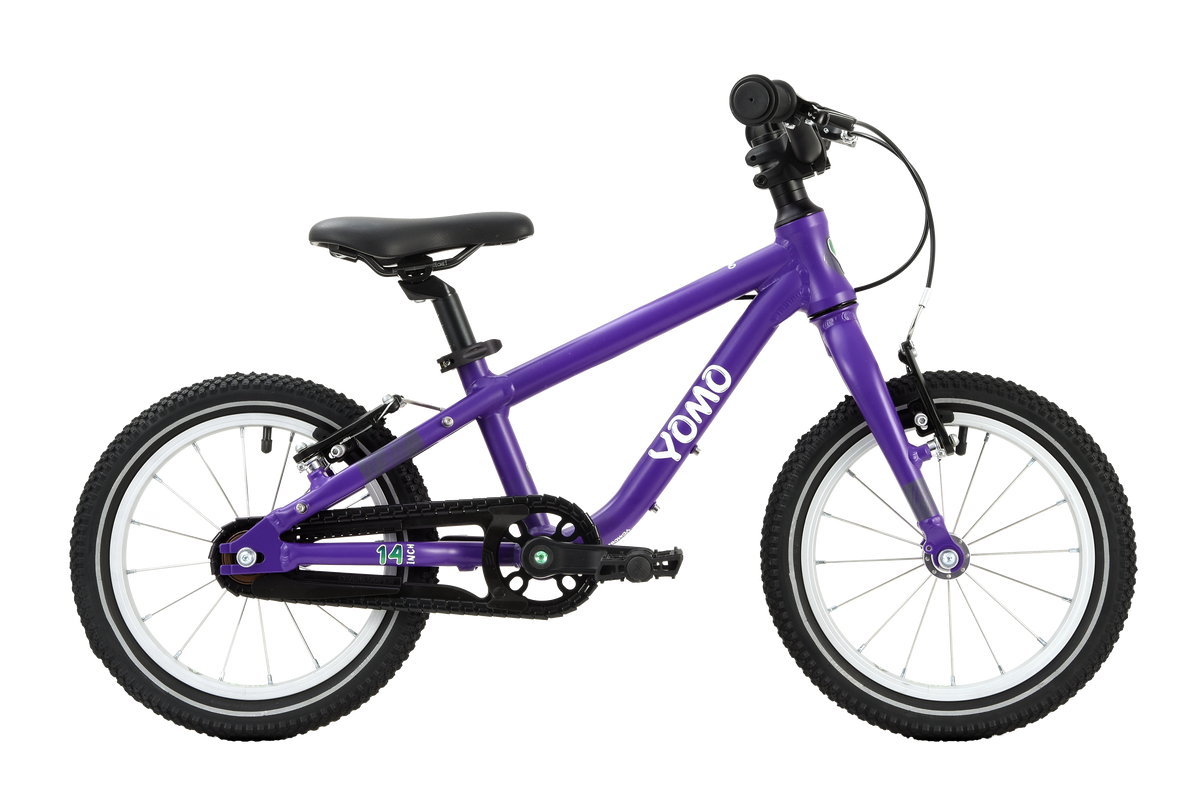
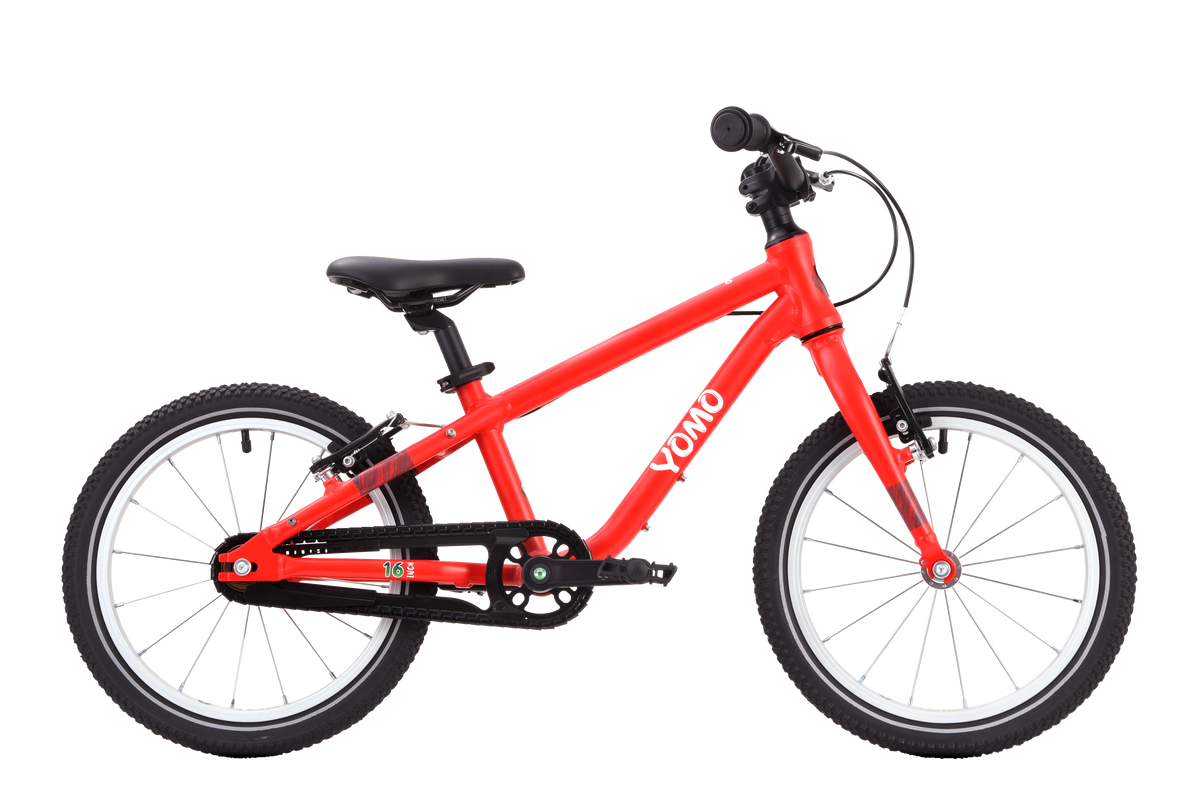
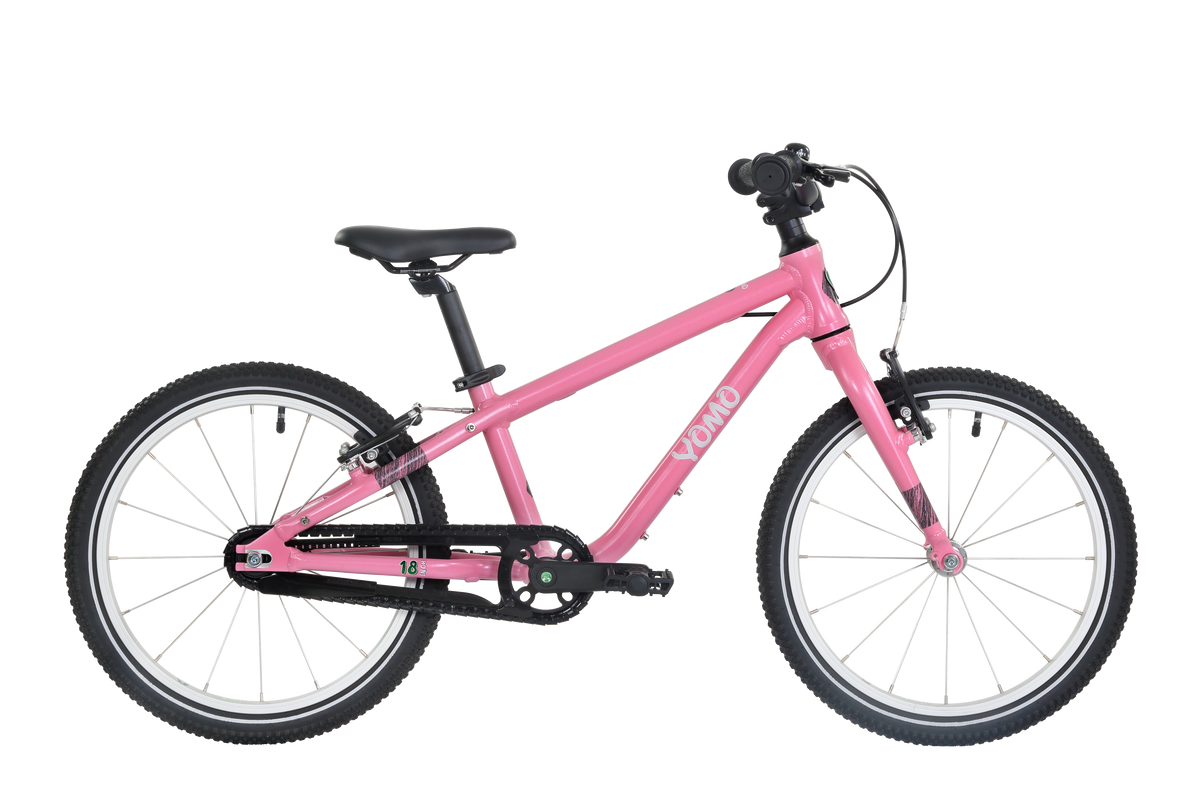
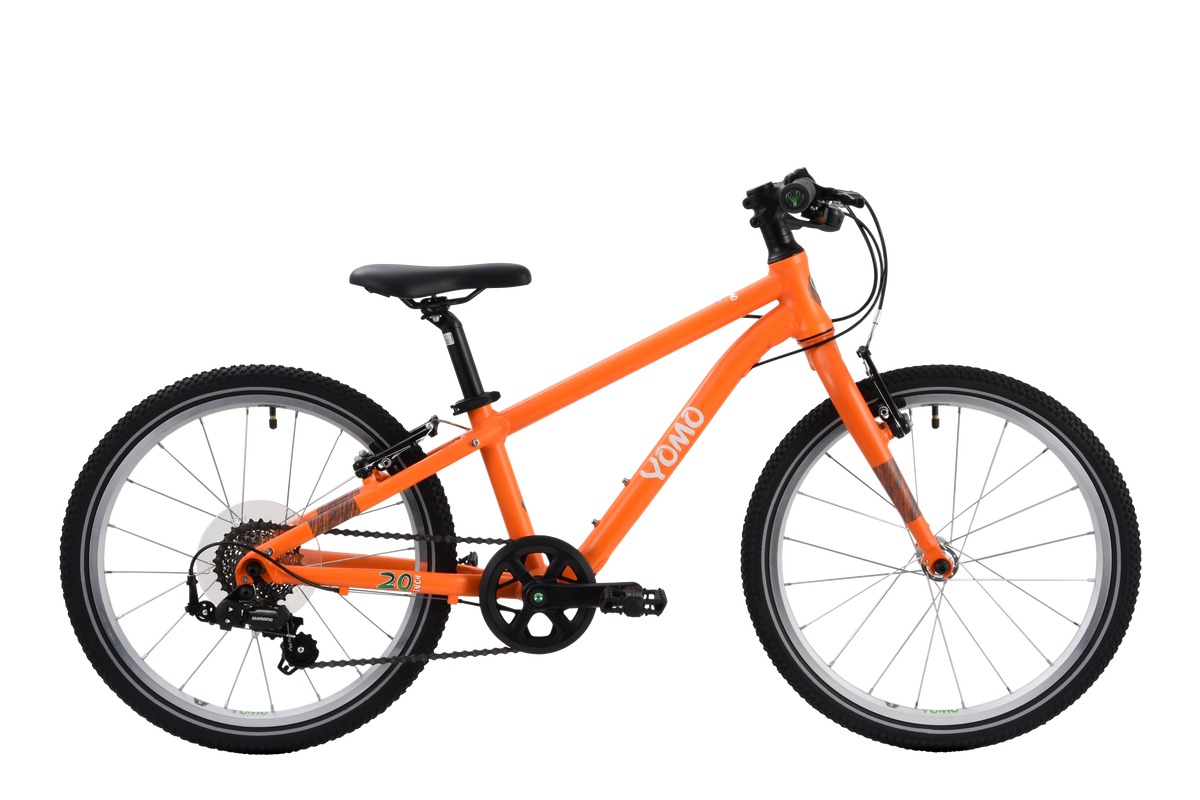
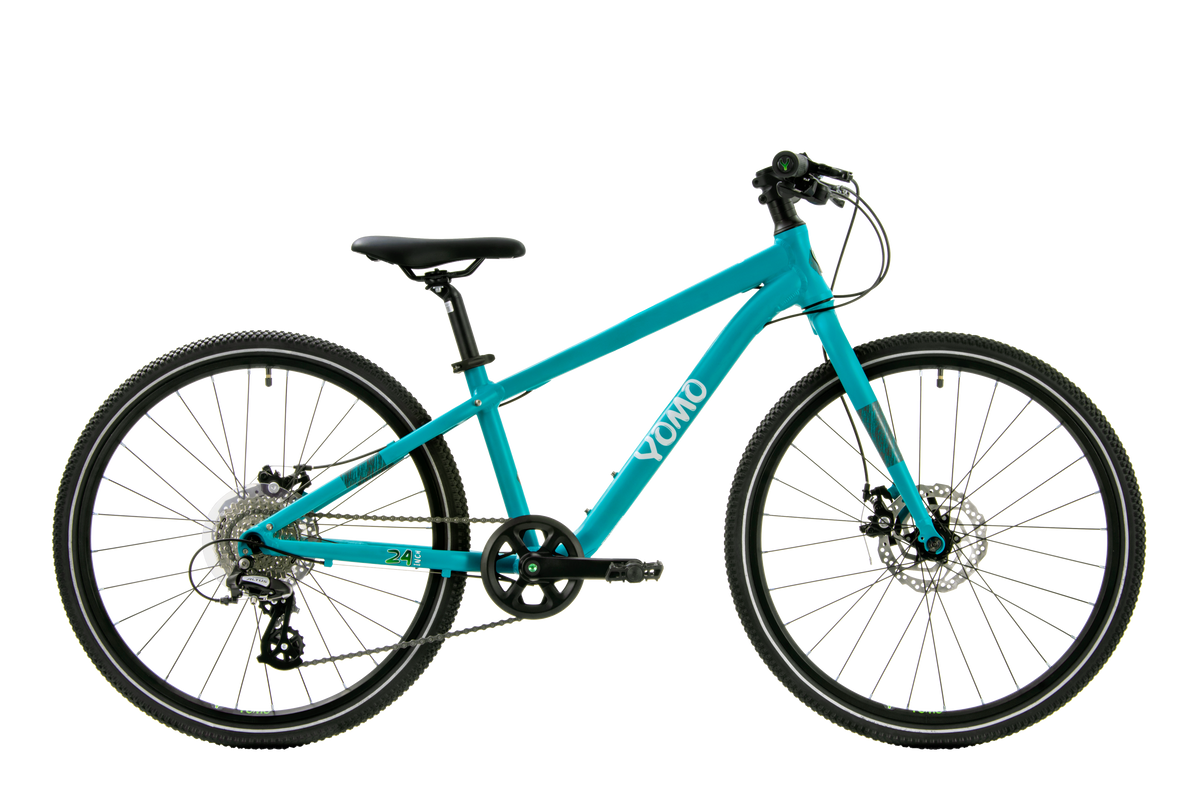
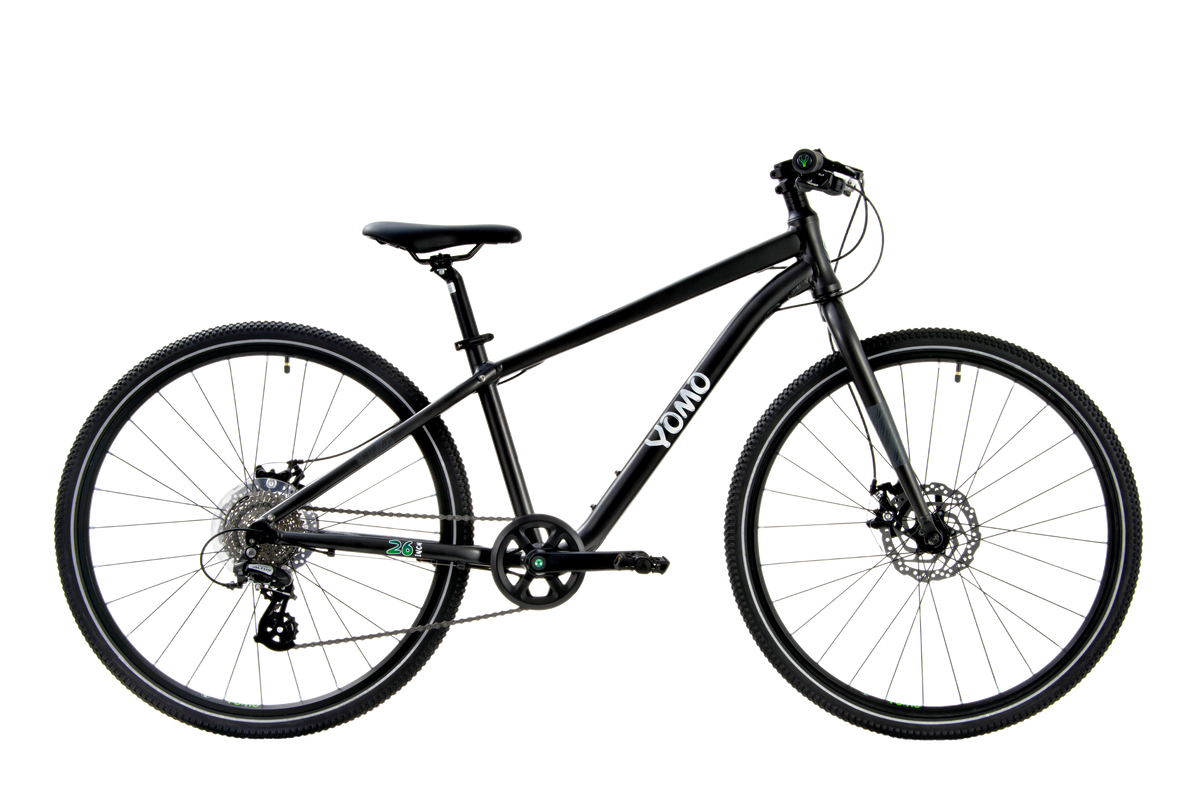
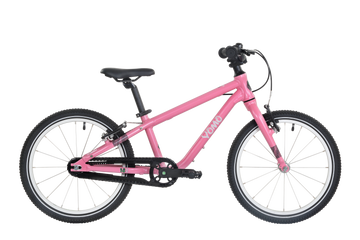
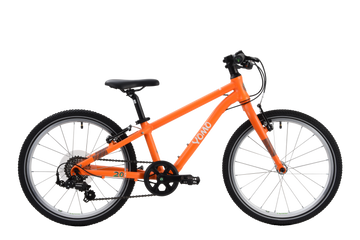
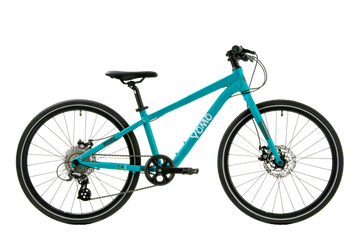
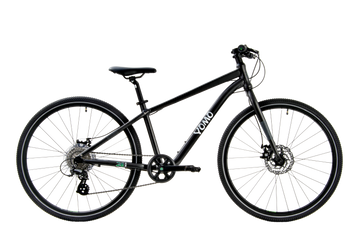
The current YOMO range runs from the lightweight single-speed YOMO 14, 16 and 18 through to the geared YOMO 20, 24 and 26 for growing riders.
But the model name or wheel size isn't the starting point.
Fit comes first.
Measure your child's inside leg and height, consider how confidently they currently ride and choose the bike they can comfortably control now.
Use the YOMO Perfect Size Finder or explore the YOMO children's bike range.
Building cycling confidence doesn't need to feel like a lesson
Children become confident riders through lots of small experiences where the bike gradually feels easier and more familiar.
Choose manageable environments. Keep instructions simple. Let them repeat things. Finish before frustration takes over. Make sure the bike fits. And allow the child to progress at a pace that works for them.
You might not notice one dramatic moment when confidence arrives.
More often, you'll realise one day that you're no longer holding the bike, reminding them to brake or persuading them to ride.
They're simply getting on and going.


