


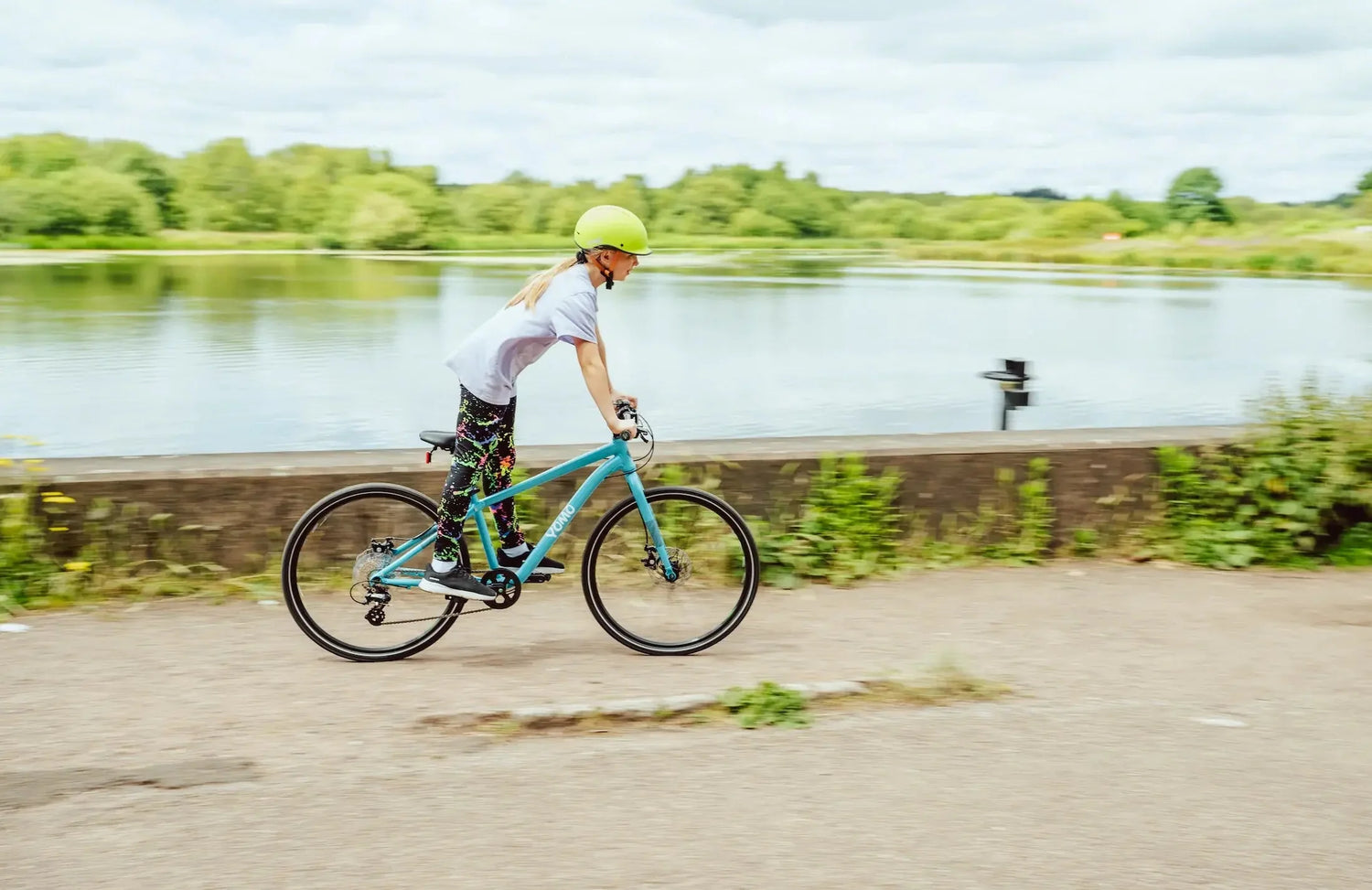
After a winter of lighter use, storage or wet-weather riding, spring is a good time to give your child's bike a proper check before regular cycling starts again.
Tyres can lose pressure. Chains can become dry or dirty. Children can grow enough over a few months for a previously comfortable bike to feel noticeably smaller.
A simple spring bike check helps you spot those issues before the first longer ride.
Here are the seven key areas to check on a child's bike before spring riding, plus guidance on what you can safely inspect at home and when it's better to visit a bike shop.
Kids' bike spring maintenance checklist
Before heading out, check:
- Frame and fork
- Tyres and wheels
- Brakes
- Chain, gears and drivetrain
- Handlebars and saddle
- Lights and reflectors
- Helmet and bike fit
If anything looks damaged, loose or doesn't operate as expected, resolve it before your child rides.
1. Check the frame and fork
Start by cleaning enough dirt from the bike that you can properly see the frame and fork.
Look carefully for:
- cracks;
- significant dents;
- bent components;
- unusual corrosion;
- loose or missing fasteners; and
- anything that looks different from when the bike was last used.
Pay particular attention if the bike has been involved in a crash or has been stored somewhere damp.
If you find a crack, significant deformation or structural damage, don't let your child ride the bike until it has been professionally assessed.
2. Check the tyres and wheels
Tyres naturally lose air while a bike is stored, so don't assume they're ready simply because they still look inflated.
Check tyre pressure
Use a bicycle pump with a pressure gauge and inflate the tyres within the pressure range printed on the tyre sidewall.
A squeeze test can reveal an obviously flat tyre, but it isn't an accurate substitute for checking pressure properly.
Inspect the tyres
Look for:
- cuts;
- cracking;
- excessive wear;
- bulges;
- embedded glass or sharp objects; and
- damage to the tyre sidewall.
Check the wheels
Lift each end of the bike and gently spin the wheel.
Check that:
- the wheel rotates freely;
- it is securely attached;
- there isn't excessive side-to-side movement;
- nothing is rubbing unexpectedly; and
- the rim or disc isn't visibly damaged.
If a wheel is noticeably loose, badly out of true or you aren't confident diagnosing the problem, take the bike to a qualified mechanic.
3. Test both brakes carefully
Brakes are one of the most important checks before a child's first spring ride.
Operate each brake lever separately.
The lever should feel controlled and should not simply pull all the way back to the handlebar without effective braking.
Then check the braking system itself.
For rim brakes
Look at the brake pads and make sure they:
- still have usable material remaining;
- contact the braking surface correctly;
- don't contact the tyre; and
- move and release normally.
For disc brakes
Check that the brake operates correctly and that there is no obvious damage or contamination.
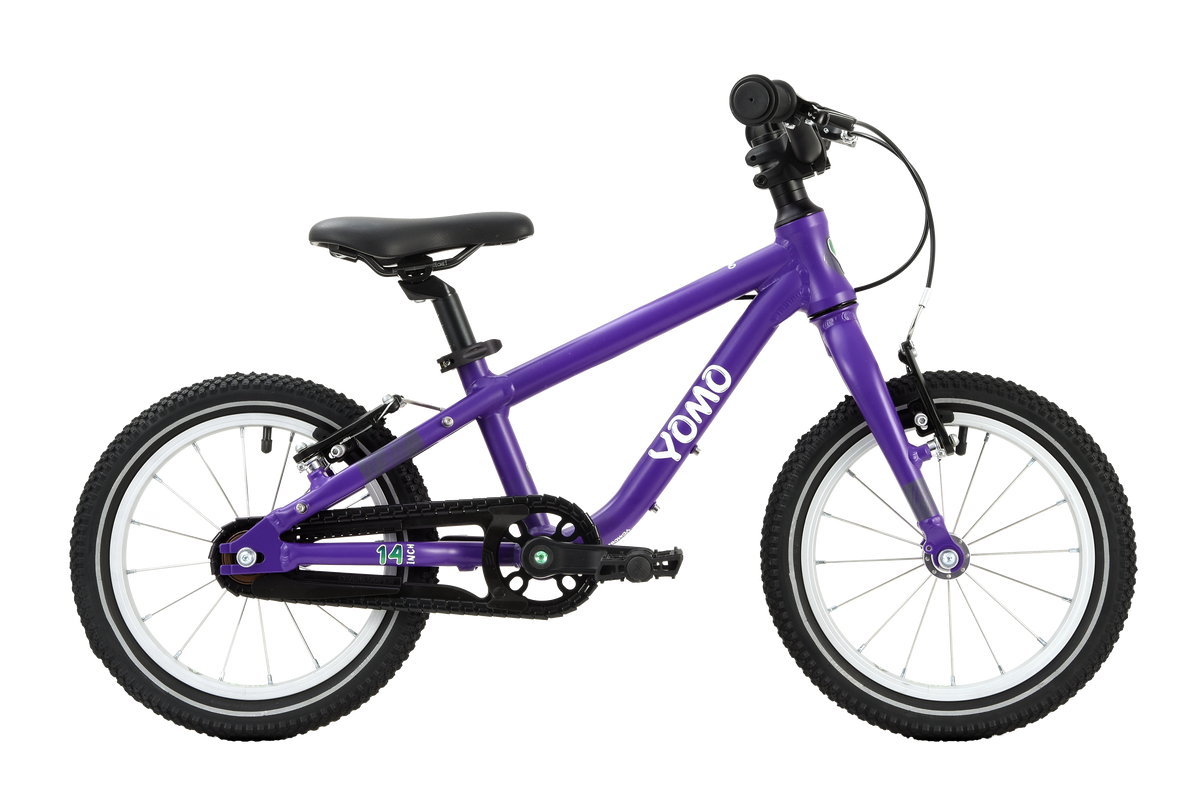
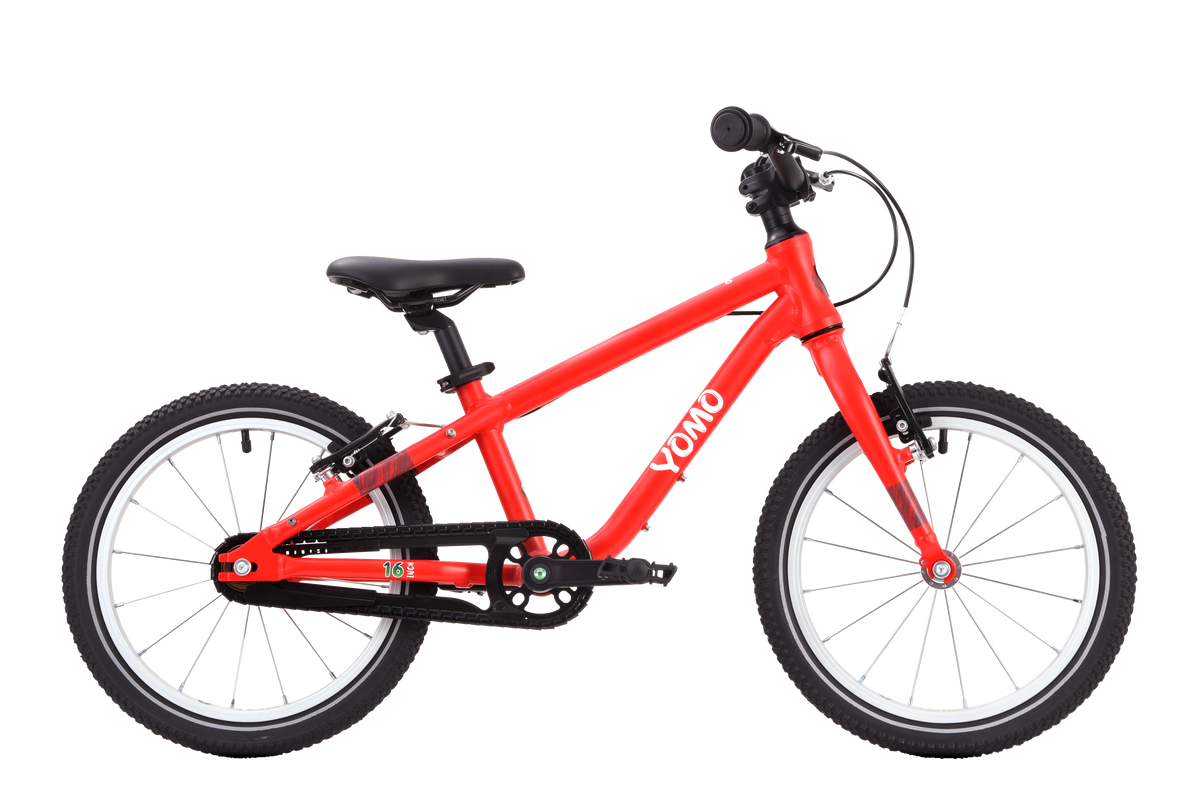
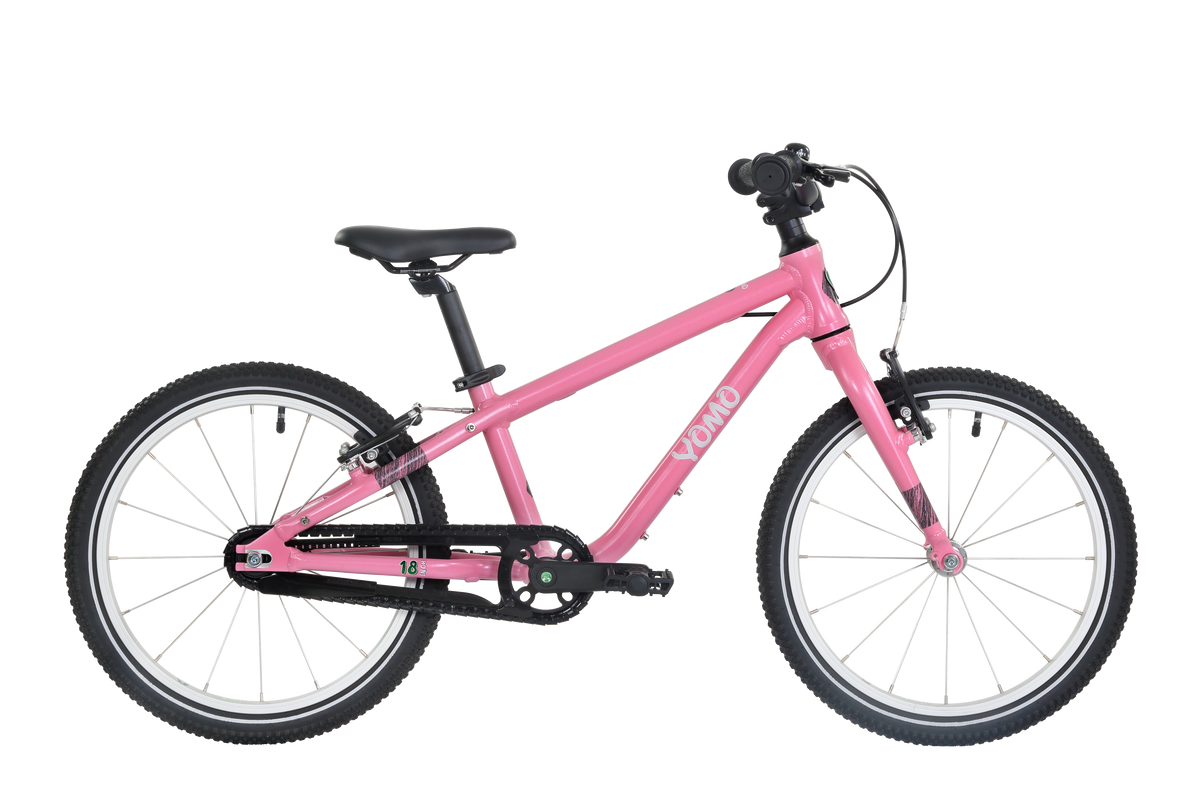
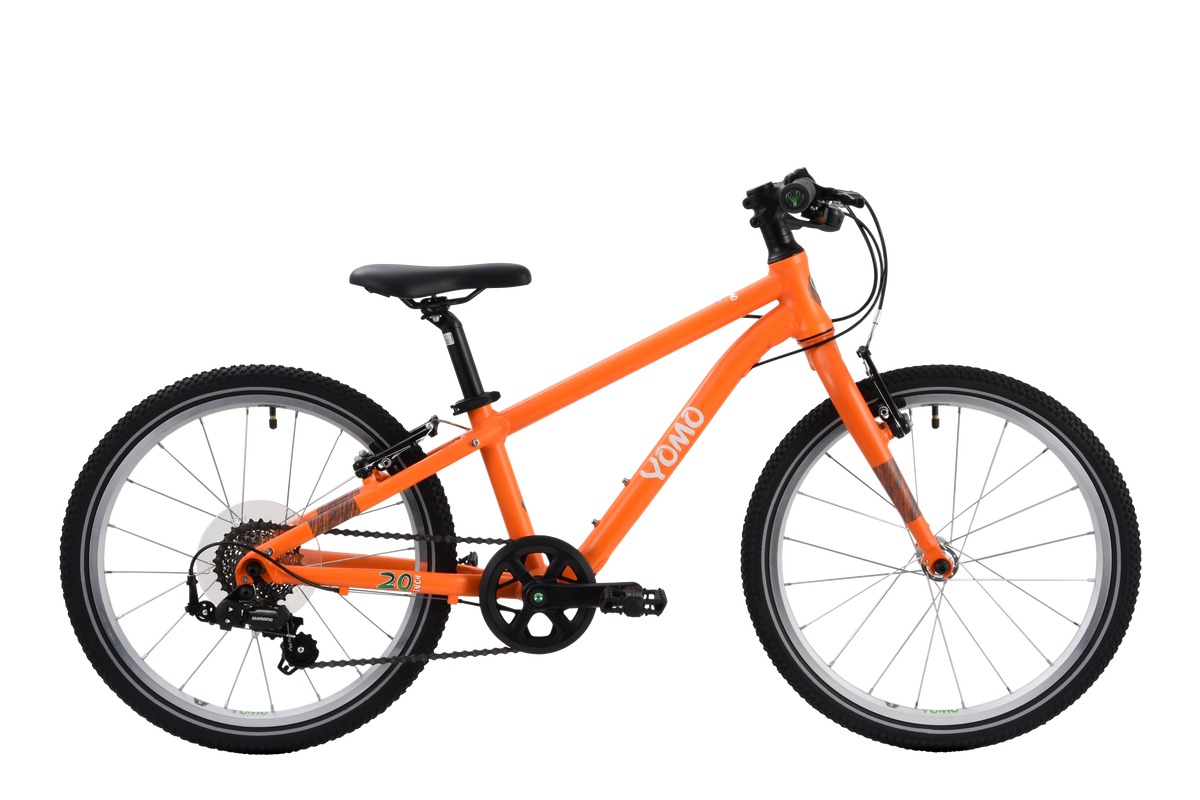
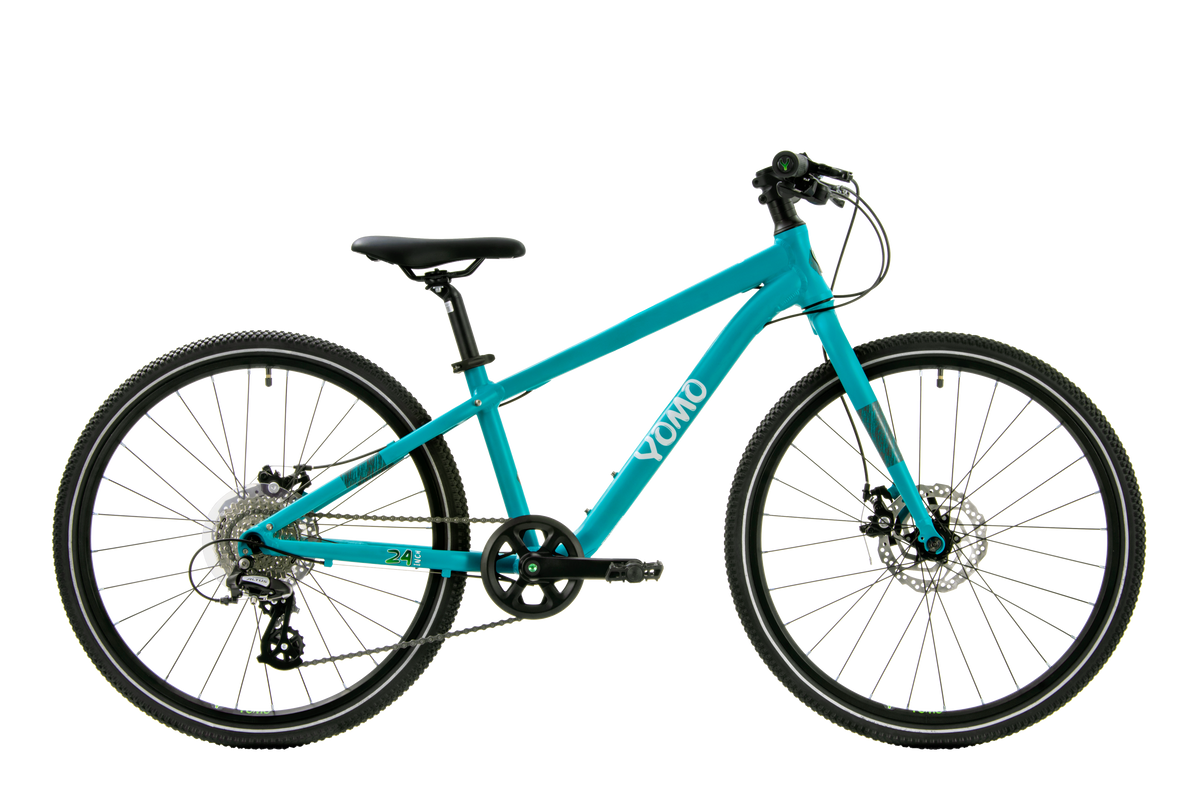
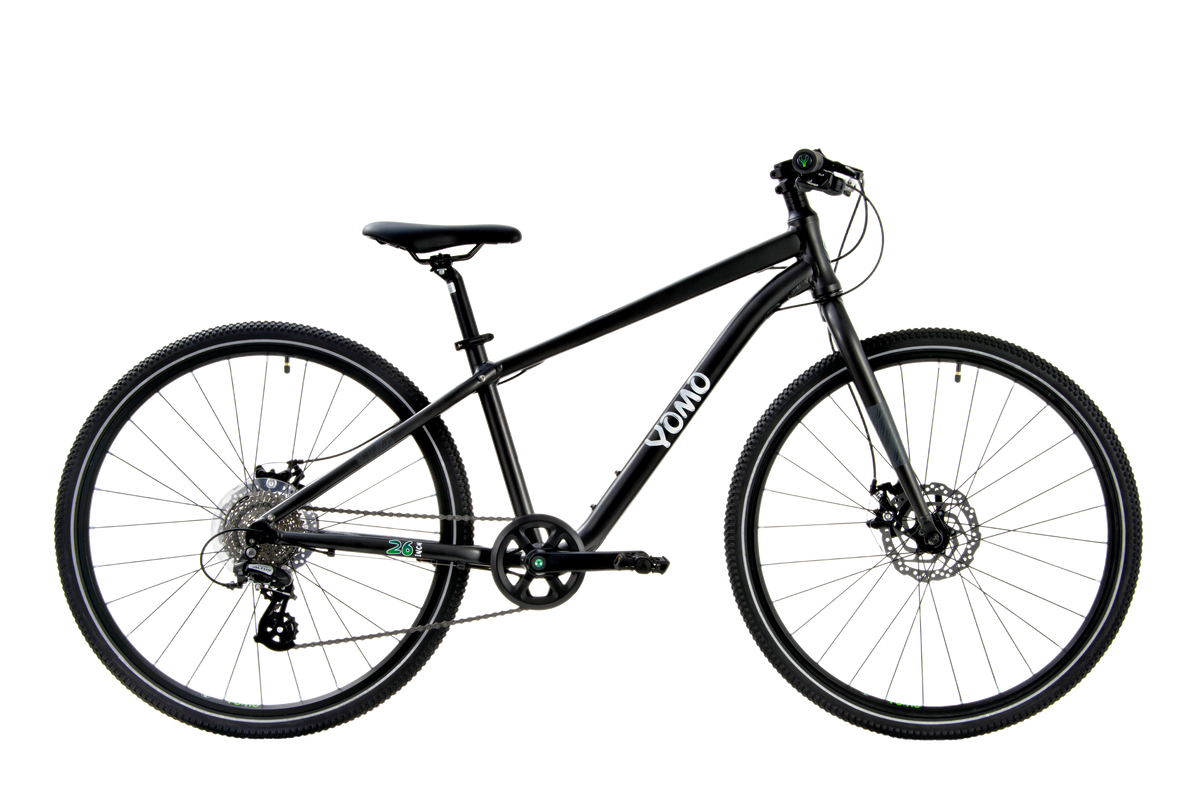
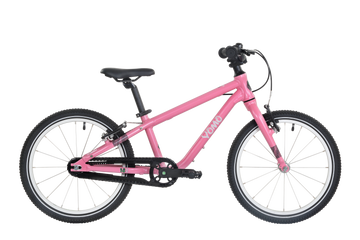
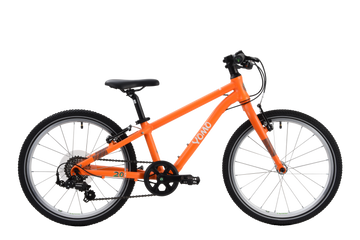
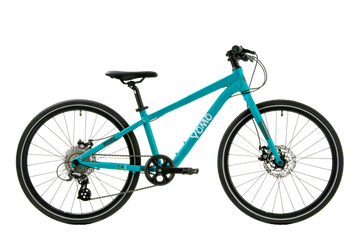
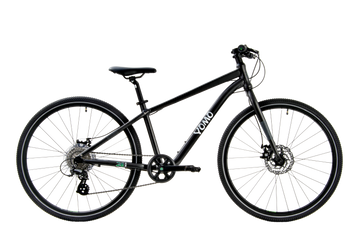
The YOMO 24 and YOMO 26 use mechanical disc brakes, while smaller YOMO models use rim-brake systems.
If braking feels weak, inconsistent, excessively noisy or you aren't confident adjusting it correctly, have the bike checked by a bike shop.
4. Check the chain, gears and drivetrain
A chain that has been sitting through winter may have collected dirt or become dry.
Check for:
- significant rust;
- dirt or grit;
- stiff links;
- obvious damage; and
- anything preventing the drivetrain from moving smoothly.
If necessary, clean the chain using a suitable bicycle cleaning product and apply an appropriate bicycle chain lubricant.
After lubricating, wipe away excess lubricant rather than leaving the chain heavily coated.
Check the gears
On geared bikes, shift through the available gears while the rear wheel is safely raised or during a controlled test ride.
Gears should change predictably without the chain repeatedly skipping or falling off.
The YOMO range progresses from single-speed bikes for younger riders to Shimano-geared models on the YOMO 20, 24 and 26.
If gears repeatedly skip, the derailleur appears bent or you're unsure about adjustment, a professional service is the safer option.
5. Check the handlebars and saddle
Children can grow considerably between autumn and spring, so this isn't only a mechanical check.
Handlebars
Make sure the handlebars:
- are correctly aligned;
- don't rotate unexpectedly;
- are securely fastened; and
- allow your child to comfortably reach the controls.
Saddle
Check that the saddle:
- is secure;
- is positioned appropriately;
- has not been raised beyond any minimum-insertion or maximum-height markings; and
- still suits your child's current leg length and riding confidence.
If your child has grown significantly, remeasure them rather than simply raising the saddle as far as possible.
Use the YOMO Perfect Size Finder to check whether their current bike still fits.
6. Check lights and reflectors
If the bicycle has lights, check that they work and that the batteries or charge level are sufficient.
Also make sure reflectors are:
- present where required;
- secure;
- clean; and
- not obscured by bags, mud or other equipment.
At night, a bicycle must have an illuminated white front light and red rear light, together with the legally required reflectors.
Even during spring, evening rides can continue after daylight fades, so don't wait until autumn to think about visibility.
7. Recheck helmet fit and bike size
A helmet that fitted last season may not fit exactly the same after several months of growth.
Check that it:
- is the correct size;
- sits level rather than tilted backwards;
- remains secure on the head;
- has correctly adjusted straps; and
- has not been damaged in an impact.
A helmet that has been involved in a significant impact should be dealt with according to the manufacturer's replacement guidance rather than judged purely by its appearance.
You can read our kids' bike helmet sizing and fit guide or view the YOMO Kids' Helmet range.
Has your child outgrown their bike over winter?
This is one of the easiest spring problems to miss.
The bicycle may be mechanically perfect but no longer fit the child properly.
Signs that it's worth checking size include:
- the saddle has reached the top of its permitted adjustment range;
- your child's knees look excessively cramped while pedalling;
- the cockpit feels crowded;
- they struggle to find a comfortable riding position; or
- their current height or inside leg has moved beyond the bike's recommended range.
Don't choose the next size from age alone.
For YOMO bikes, inside leg should lead the sizing decision, supported by height and current riding confidence.
Check your child's current bike size.
A quick pre-ride safety check
Even after doing a more thorough spring inspection, a shorter check before individual rides is still useful.
Before setting off, quickly confirm:
- the tyres are properly inflated;
- both brakes work;
- the wheels are secure;
- the handlebars and saddle are secure;
- the drivetrain operates normally; and
- nothing appears loose, damaged or unusual.
For a child's bike, these basic checks are particularly worthwhile because children may not recognise that something has changed mechanically.
How to clean a kids' bike after winter
You don't need specialist machinery to remove ordinary winter dirt.
Start with:
- water;
- a mild bike-appropriate cleaner;
- a sponge or soft brush;
- clean cloths; and
- suitable chain lubricant.
Avoid directing a high-pressure washer at bearings, seals and other sensitive areas, as pressurised water can force contamination into places you don't want it.
After cleaning, dry the bike appropriately and relubricate the chain if necessary.
Common spring bike problems
| What you notice | What to check | Next step |
|---|---|---|
| Tyre keeps going soft | Valve, tube and tyre for damage | Repair or replace the affected component |
| Chain sounds dry or squeaky | Dirt, dryness or corrosion | Clean and lubricate appropriately |
| Brake feels weak | Pads, cables and braking surfaces | Adjust correctly or visit a bike shop |
| Wheel doesn't run normally | Wheel security, alignment and damage | Do not ride if unsure; have it inspected |
| Gears skip repeatedly | Drivetrain condition and adjustment | Service or professional adjustment |
| Child looks cramped | Inside leg, height and saddle adjustment | Recheck bike size |
What basic tools are useful for kids' bike maintenance?
For simple checks at home, useful items include:
- a bicycle pump with a pressure gauge;
- the correct Allen keys or bike-specific tools;
- clean cloths;
- a soft brush;
- suitable bicycle cleaner; and
- bike-specific chain lubricant.
Don't use a tool simply because it fits. Bicycle components have specific adjustment and tightening requirements, so follow the manufacturer's instructions where applicable.
When should you take a child's bike to a bike shop?
Some maintenance is straightforward at home. Other problems are better handled by someone with the correct knowledge and equipment.
Seek professional help if:
- you find frame or fork damage;
- a wheel is noticeably loose, damaged or badly out of true;
- the brakes don't operate correctly and you aren't confident adjusting them;
- gears repeatedly skip or the chain comes off;
- the steering or headset feels loose;
- the drivetrain appears damaged;
- you aren't confident that a component has been correctly installed; or
- the bike simply doesn't feel right after your checks.
If in doubt, getting the bike inspected is better than experimenting with a safety-critical adjustment.
Spring riding means checking the rider too
Spring preparation isn't only about the bicycle.
Before heading out after a long winter break, think about your child's current confidence.
They may need a little time to become comfortable again with:
- starting;
- braking;
- cornering;
- using gears;
- looking around while riding; and
- longer distances.
Start with a familiar, manageable ride rather than assuming they will immediately feel exactly as confident as they did several months ago.
For more help, read our guide to building cycling confidence in kids.
Frequently asked questions about spring kids' bike maintenance
What should I check on my child's bike before spring?
Check the frame and fork, tyres, wheels, brakes, chain, gears, handlebars, saddle, lights and reflectors. Also recheck your child's helmet and bike fit because they may have grown over winter.
How often should I check my child's bike?
Basic safety items such as tyres, brakes, wheel security and obvious damage should be considered regularly and before rides. More detailed maintenance depends on how frequently the bike is ridden, the conditions it is used in and the manufacturer's maintenance guidance.
Does a kids' bike need servicing every year?
There isn't one service interval that suits every child and every bicycle. A frequently ridden bike used in wet or muddy conditions may need attention sooner than one used occasionally in dry weather. Follow the bike manufacturer's maintenance guidance and arrange professional servicing when necessary.
What tyre pressure should a children's bike use?
Use the pressure range specified on the particular tyre fitted to the bicycle. Don't assume every children's bike requires the same PSI.
How do I know whether my child's brakes are safe?
Both brakes should operate predictably and provide effective stopping. If a lever pulls excessively towards the handlebar, braking feels weak or inconsistent, components appear excessively worn or you aren't confident assessing the system, have it checked professionally.
How do I know if my child has outgrown their bike?
Measure their inside leg and height and compare them with the manufacturer's fit guidance. Also check whether the bike can still be adjusted comfortably within its permitted ranges.
YOMO owners can use the Perfect Size Finder to check current fit.
Get the bike ready before the first big spring ride
A spring bike check doesn't need to become a major workshop project.
The aim is simply to identify problems before you're several miles from home with a child who wants to keep riding.
Check the bike carefully, recheck your child's fit after their winter growth and deal with anything you're unsure about before setting off.
Once the bike and rider are ready, you can concentrate on the part that matters: getting back outside and enjoying the ride.
If your child has outgrown their current YOMO, check their next size or explore the YOMO children's bike range.
Eligible outgrown YOMO bikes may also qualify for YOMO BikeTrade, offering up to 50% credit, subject to inspection, towards an eligible next-size bike.


