


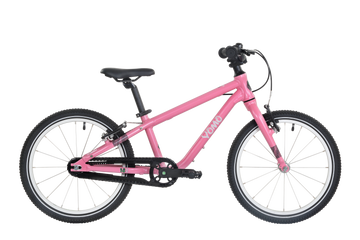
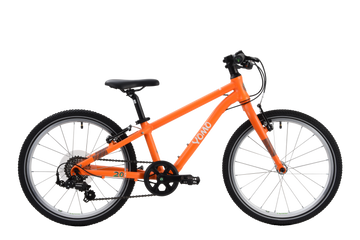
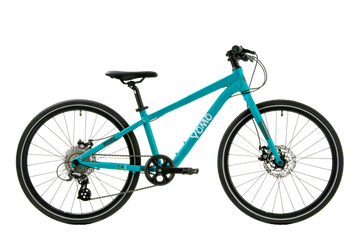
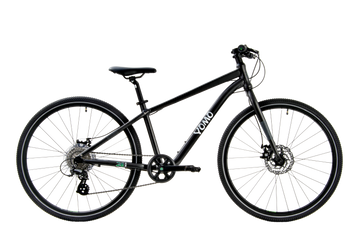
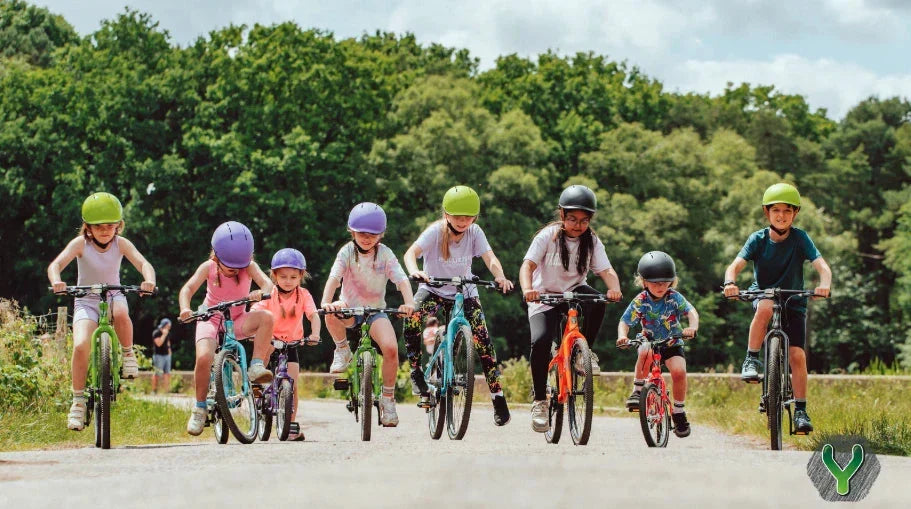
A children's bike shouldn't simply be a smaller version of an adult bike.
Children have different proportions, less body weight and smaller hands, and they are often still developing the balance and coordination that experienced cyclists take for granted. That means the details that make a bike feel right for a child are different too.
At YOMO, our bikes are designed around young riders from the beginning. From frame geometry and overall weight to brake reach, pedal position and handlebar dimensions, each part has a job: help the child feel comfortable, capable and in control.
Here’s a closer look at the thinking behind YOMO children's bikes and why apparently small design details can make such a noticeable difference on the ride.

Designed around children, not scaled down from adults
Reducing the wheel size of an adult-style bicycle isn't enough to make a genuinely child-friendly bike.
The relationship between the saddle, pedals, handlebars and wheels determines how naturally a rider sits on the bike and how easily they can control it.
YOMO uses child-specific geometry across the range, with frame dimensions and contact points designed around younger riders rather than adult proportions.
The aim is a riding position that helps children steer predictably, reach the controls comfortably and feel balanced rather than stretched across the bike.
You can explore the design principles in more detail on our Why YOMO page.
Why lightweight children's bikes matter
Bike weight matters more for a child than it does for most adults because the bicycle represents a much larger proportion of the rider's own body weight.
A lighter bike can be easier for a young rider to start, steer, manoeuvre and pick up. This is particularly important while a child is still learning or building confidence.
YOMO uses lightweight aluminium frames and components selected to keep unnecessary weight down while maintaining the durability required for everyday family riding.
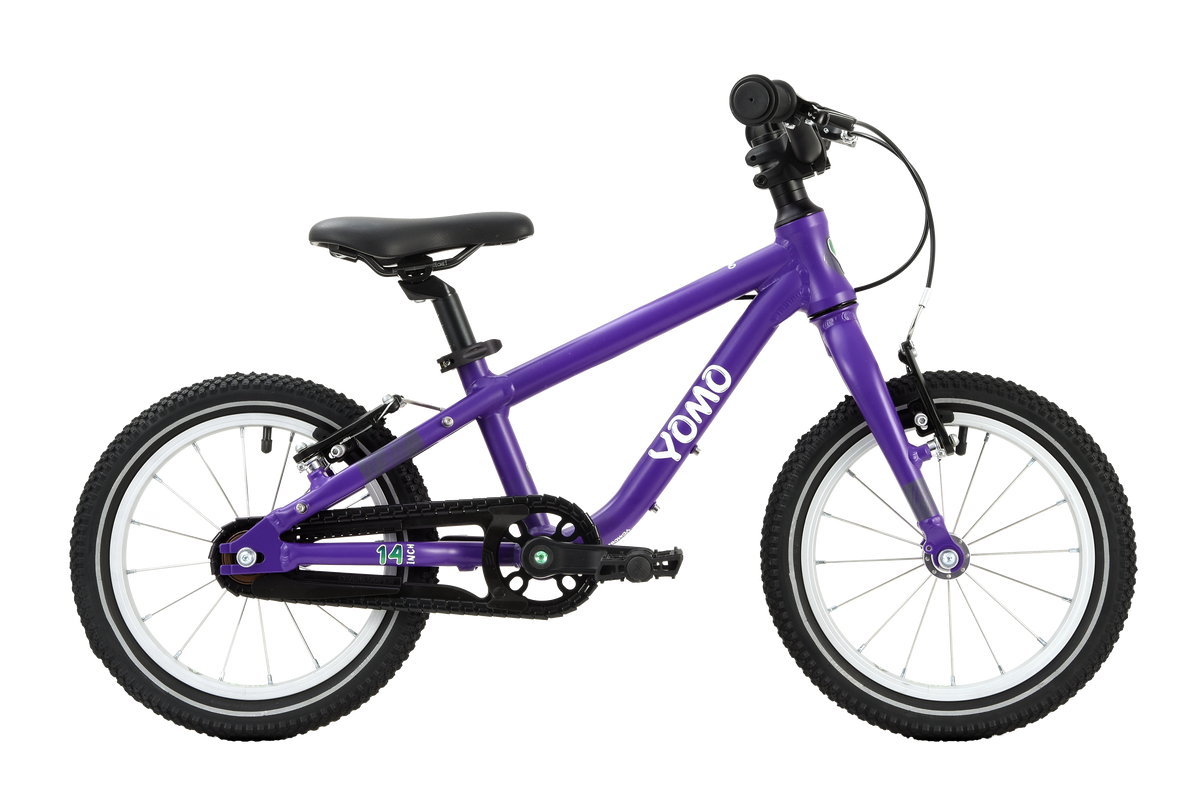
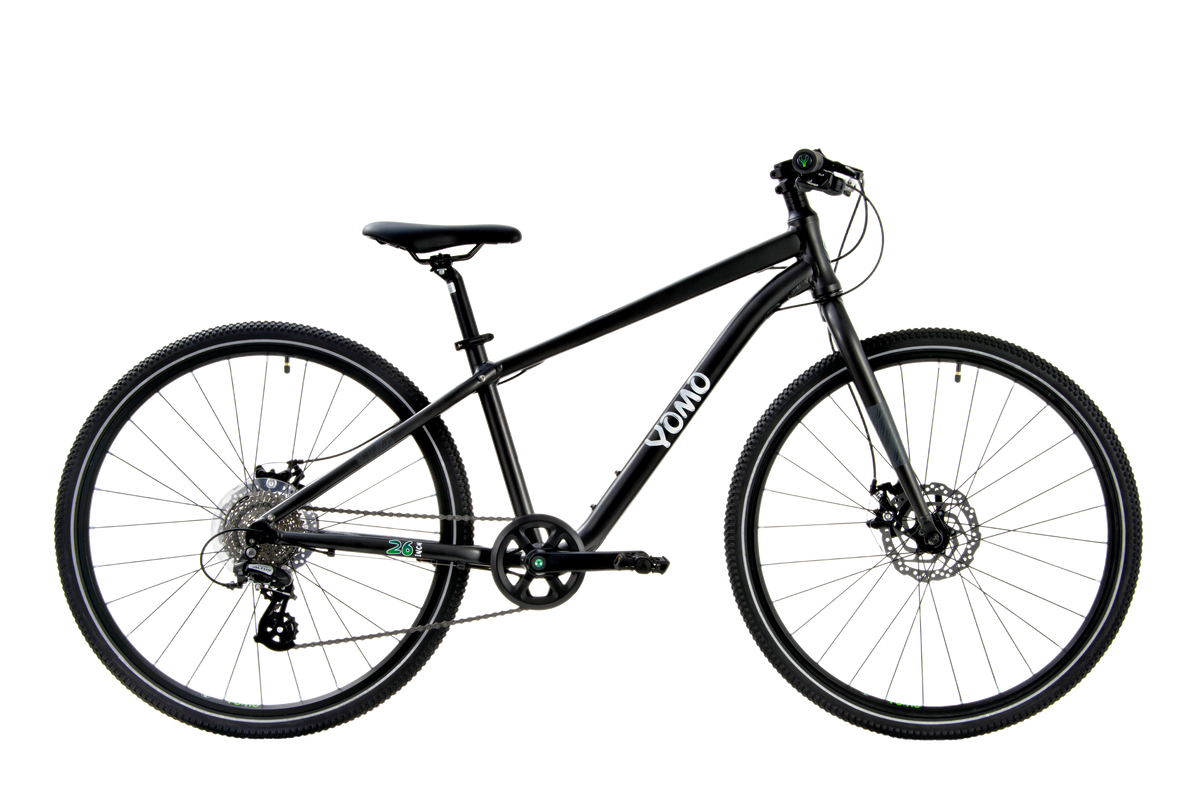
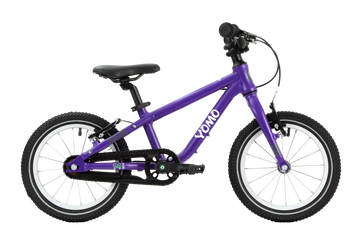
For example, the current YOMO range starts with the 5.5 kg YOMO 14, while even the full-size 26-inch YOMO weighs approximately 9.9 kg.
Controls designed for smaller hands
Adult-sized controls can feel awkward to a young rider even when the frame itself appears to fit.
YOMO uses components selected around children's proportions, including appropriately sized handlebars and grips together with reach-adjustable brake levers.
This helps place important controls where smaller hands can use them comfortably rather than forcing the rider to stretch.

A more natural pedalling position
Good children's bike design doesn't stop at the handlebars.
The distance between the pedals, commonly described using Q-factor, affects how wide apart a rider's feet and knees sit while pedalling.
Because children generally have narrower hips than adults, YOMO uses child-appropriate cranksets and narrow pedal spacing to support a more natural pedalling position.
Crank lengths are also selected for the size of the rider rather than using disproportionately long adult-style components.
Predictable steering while confidence develops
Young riders can make sudden steering movements while they are learning, particularly at low speed.
YOMO's smaller bikes use a safety headset that limits excessive handlebar rotation. The aim isn't to steer the bike for the child, but to make steering behaviour more predictable while their balance and coordination develop.
Combined with child-specific geometry and manageable weight, this helps create a bike that feels less intimidating during those early rides.
Simple when simple is better
More gears and components do not automatically make a better children's bike.
For younger riders, learning to start, stop, steer and pedal comfortably is usually more important than learning to operate gears.
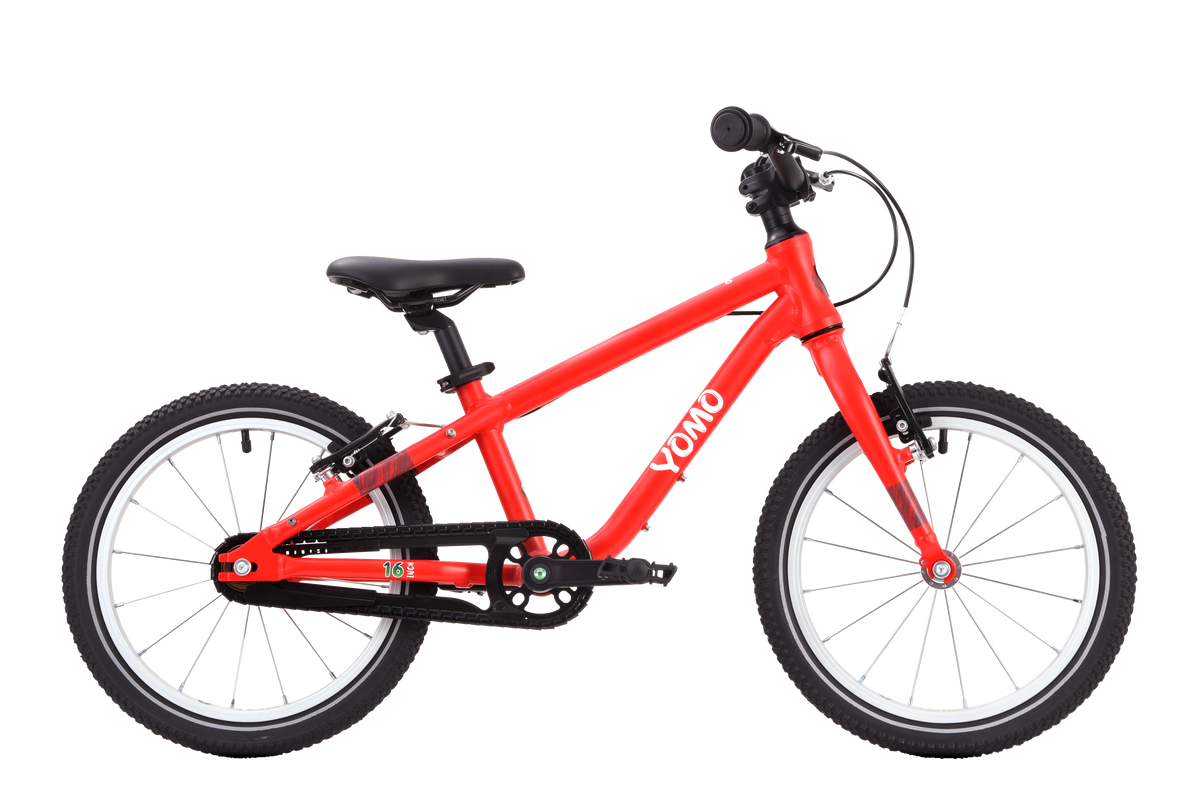
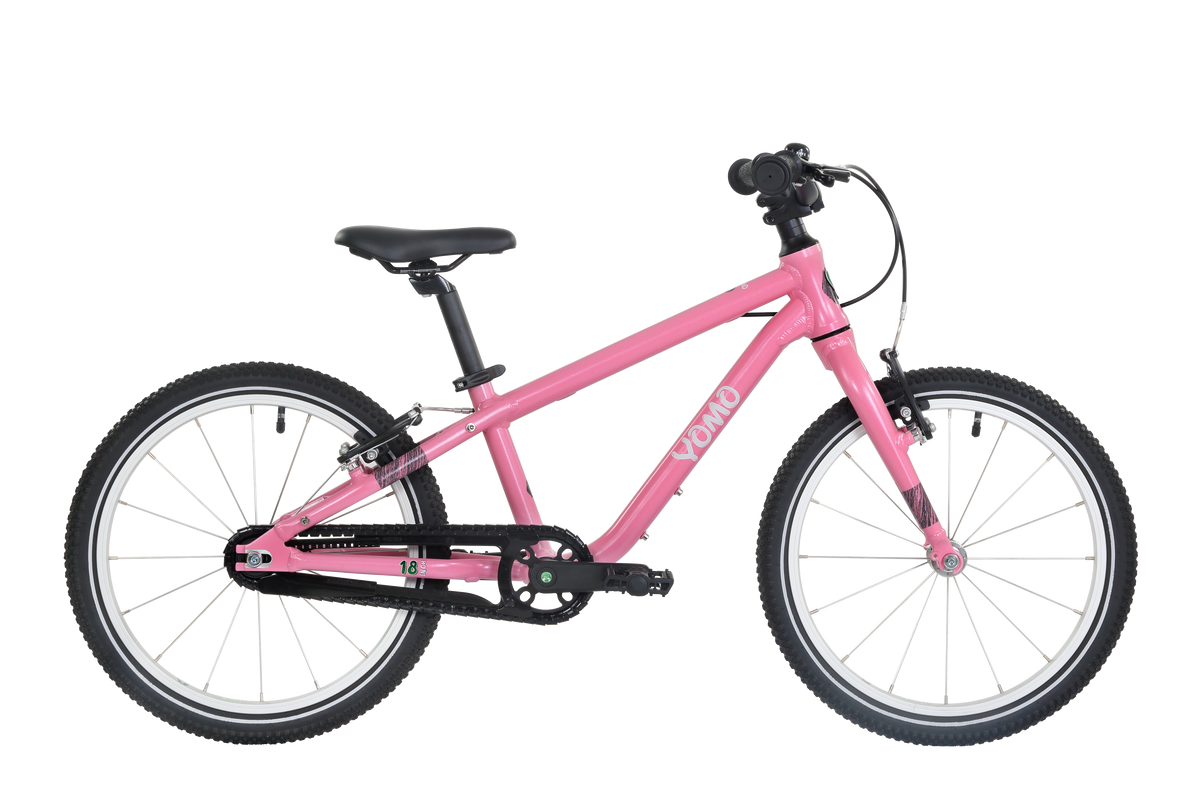
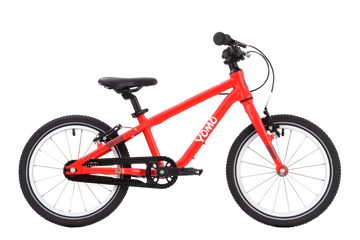
That is why the YOMO 14, YOMO 16 and YOMO 18 use simple single-speed drivetrains.
The YOMO 18 is an important part of that progression. Its 18-inch wheels bridge the gap between the 16-inch and geared 20-inch models, giving growing riders additional room without forcing them onto gears before they need them.
Gears when riders are ready to explore further
As children become stronger and start riding longer distances or tackling hills, gears become genuinely useful.
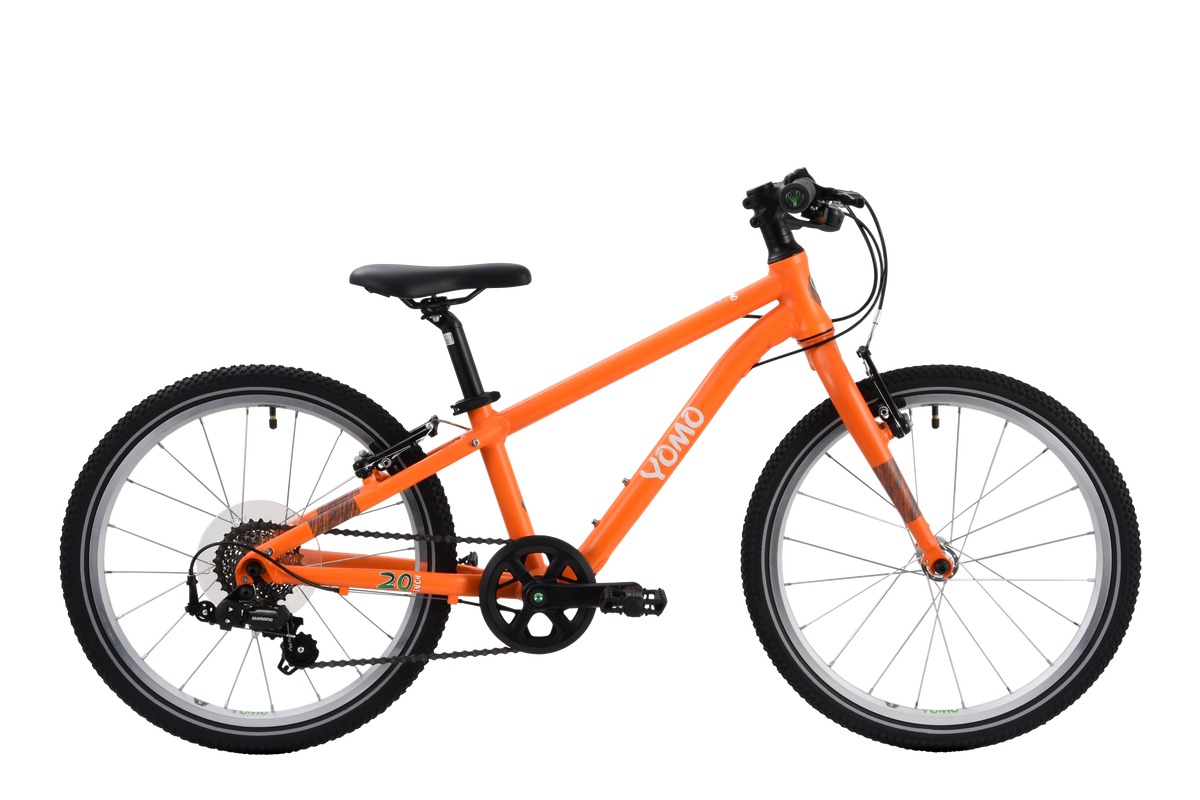
The YOMO 20 introduces a Shimano 7-speed drivetrain while keeping the bike to approximately 7.65 kg.
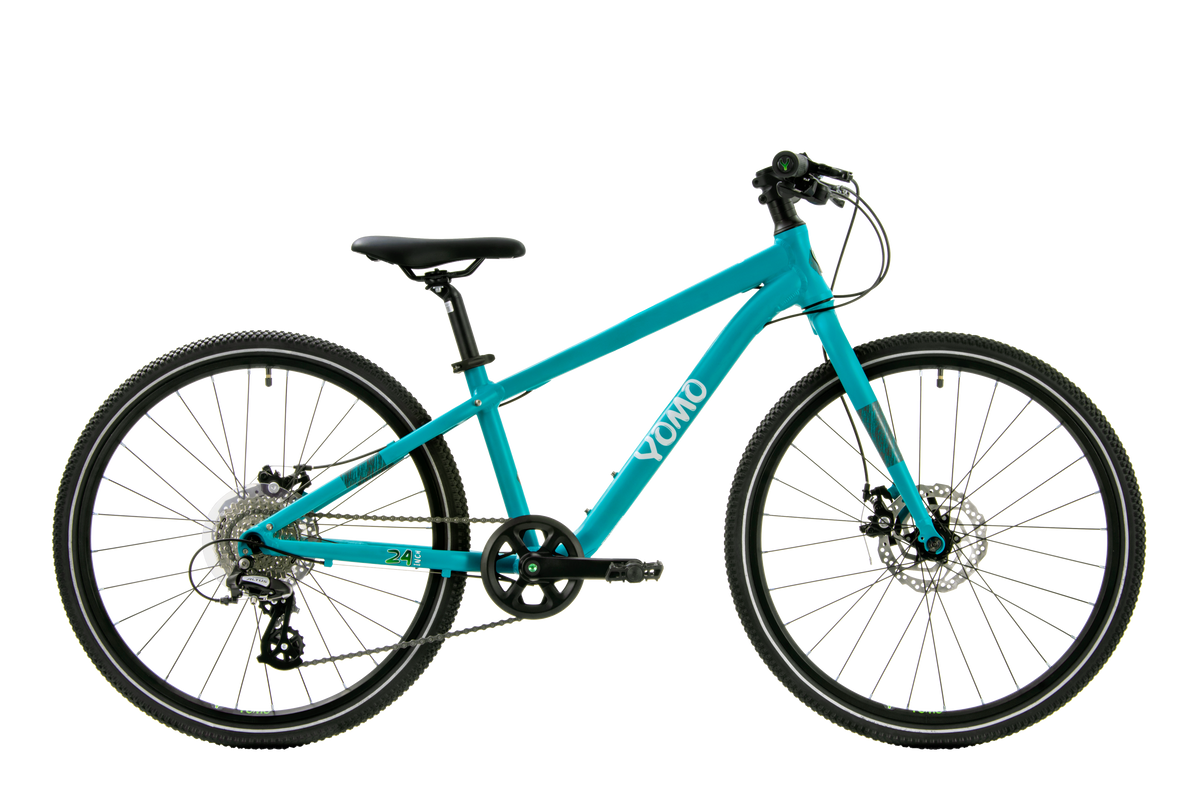
For older riders, the YOMO 24 and YOMO 26 use Shimano 8-speed drivetrains, giving children a useful range of gears for hills, longer family rides and varied terrain.

Braking develops with the rider too
As riders become older, faster and more adventurous, their braking requirements change.
The smaller YOMO models use lightweight braking systems with reach-adjustable controls designed around young riders.
On the larger YOMO 24 and YOMO 26, mechanical disc brakes provide consistent braking control as children begin riding further and across more varied terrain.

Components chosen for real family riding
Children's bikes have to cope with far more than a gentle Sunday ride.
They get used on school runs, family rides and muddy paths. They get leaned against walls, loaded into cars and sometimes dropped on the ground.
That is why durability matters alongside low weight.
Across the YOMO range, details such as aluminium frames, sealed-bearing hubs, stainless or corrosion-resistant hardware where specified, quality tyres and carefully selected drivetrains are intended to keep the bikes practical for regular use without adding unnecessary bulk.
The YOMO range at a glance
Each model represents a different stage rather than simply another wheel size.
| Model | Weight | Inside leg | Drivetrain |
|---|---|---|---|
| YOMO 14 | 5.5 kg | 41–53 cm | Single speed |
| YOMO 16 | 5.8 kg | 46–57 cm | Single speed |
| YOMO 18 | 6.6 kg | 49–60 cm | Single speed |
| YOMO 20 | 7.65 kg | 53–67 cm | Shimano 7-speed |
| YOMO 24 | 9.4 kg | 62–78 cm | Shimano 8-speed |
| YOMO 26 | 9.9 kg | 68–85 cm | Shimano 8-speed |
The ranges overlap deliberately. Children of the same height can have different leg lengths and very different levels of riding confidence.
That's why inside leg matters more than age when choosing between YOMO sizes.
The right YOMO is the one that fits now
Designing a good children's bike is only half of the equation. The bike still needs to fit the individual rider properly.
A confident rider may safely fit a larger model at a lower inside-leg measurement than a child who is still learning to start and stop independently.
If your child sits between two YOMO sizes, think about the decision as best fit now versus more room to grow, rather than automatically choosing the larger bike.
Our Perfect Size Finder uses your child's height, inside-leg measurement and current riding confidence to recommend the best fit now and, where appropriate, a safe option with more growing room.
You can also read our detailed guide to choosing the right children's bike size.
Designed to progress with young riders
The YOMO range is designed as a progression rather than a collection of unrelated bikes.
A child can move from the simple single-speed control of the 14, 16 and 18-inch models to the geared YOMO 20, then on to the additional capability of the YOMO 24 and 26 as their size, confidence and riding ambitions develop.

What makes a YOMO bike different?
It isn't one individual component.
It's the way weight, fit, geometry, controls, braking, drivetrain and child-specific components work together.
A beautifully finished bike might create the first smile. But a bike that feels light, natural and easy to control is much more likely to make a child want to ride it again tomorrow.
That's what YOMO is designed around.

Built to be outgrown, not thrown away
Even the best-fitting children's bike will eventually be outgrown.
YOMO BikeTrade helps eligible YOMO owners move to the next size while giving an outgrown bike another chapter.
Eligible bikes can receive up to 50% credit, subject to inspection, with the final value depending on factors including the bike's age, condition and completeness.
Learn more about YOMO BikeTrade, explore the full YOMO bike range or use the Perfect Size Finder to find the right bike for your child.


