


Learning to ride a bike is a milestone children and parents tend to remember. But before a child can concentrate on balancing, pedalling and enjoying the ride, there is one decision that can make a significant difference: choosing the right size bike.
A children's bike should not simply match an age on a size chart. The best fit depends on your child's inside-leg measurement, height and current riding confidence.
A bike that fits properly can feel easier to start, stop, steer and control. A bike that is too large may make all of those things unnecessarily difficult, particularly for a child who is still learning.
Why does the right bike size matter?
Children need to feel that they are controlling the bike rather than fighting against it.
If a bike is too large, a child may struggle to reach the ground comfortably, stretch too far towards the handlebars or find starting and stopping intimidating. If it is too small, their riding position can become cramped and uncomfortable.
The right size gives the rider a more natural position and allows them to concentrate on developing their cycling skills.
Inside leg matters more than age
Age is useful as a starting point when shopping for a children's bike, but it should not determine the final size.
Two five-year-olds can have very different heights, leg lengths and levels of cycling experience. One may already ride confidently while another is learning to pedal independently for the first time.
That is why inside-leg measurement is one of the most important measurements when choosing a children's bike.
It helps determine whether your child can reach the ground comfortably and whether the bike's minimum saddle position is appropriate for them.
If you're unsure which YOMO size fits your child, use our Perfect Size Finder. It considers height, inside leg and current riding confidence rather than relying on age alone.
How to measure your child's inside leg
You only need a tape measure and a hardback book.
- Ask your child to stand against a wall in socks, with their feet slightly apart.
- Place a book between their legs with the spine facing upwards.
- Raise the book gently until it sits where a bicycle saddle would.
- Keep the book level.
- Measure vertically from the top of the book to the floor.
Record the measurement in centimetres and use it alongside your child's height and riding ability when comparing bikes.
Try not to estimate the measurement from trouser size. A difference of only a few centimetres can matter when a child is close to the minimum fit of a particular bike.
Riding confidence changes the best fit
Measurements tell us whether a child can physically fit a bike, but their riding confidence also matters.
A confident child who can already start, stop and balance independently may be comfortable closer to the lower end of a bike's recommended fit range.
A beginner or more cautious rider will usually benefit from being able to reach the ground more securely while seated. That extra reassurance can make starting and stopping feel much more manageable.
This is why choosing a children's bike purely from an age chart can be misleading.
Should I buy a bigger bike for my child to grow into?
Buying a larger bike can seem like better value because your child will theoretically use it for longer. But if the bike is too large now, those extra months of potential use are not particularly useful.
A child may struggle to start independently, reach the brakes comfortably or put their feet down when stopping. That can make an otherwise capable young rider feel less confident.
When two sizes genuinely overlap, the choice is better thought of as:
- Best fit now – usually the more confidence-inspiring choice, particularly for a beginner.
- Lasts longer – potentially suitable for a confident rider whose measurements already place them safely within the larger bike's fit range.
The answer is not automatically the larger bike. Use the Perfect Size Finder to compare the options using your child's actual measurements and ability.
What size YOMO bike does my child need?
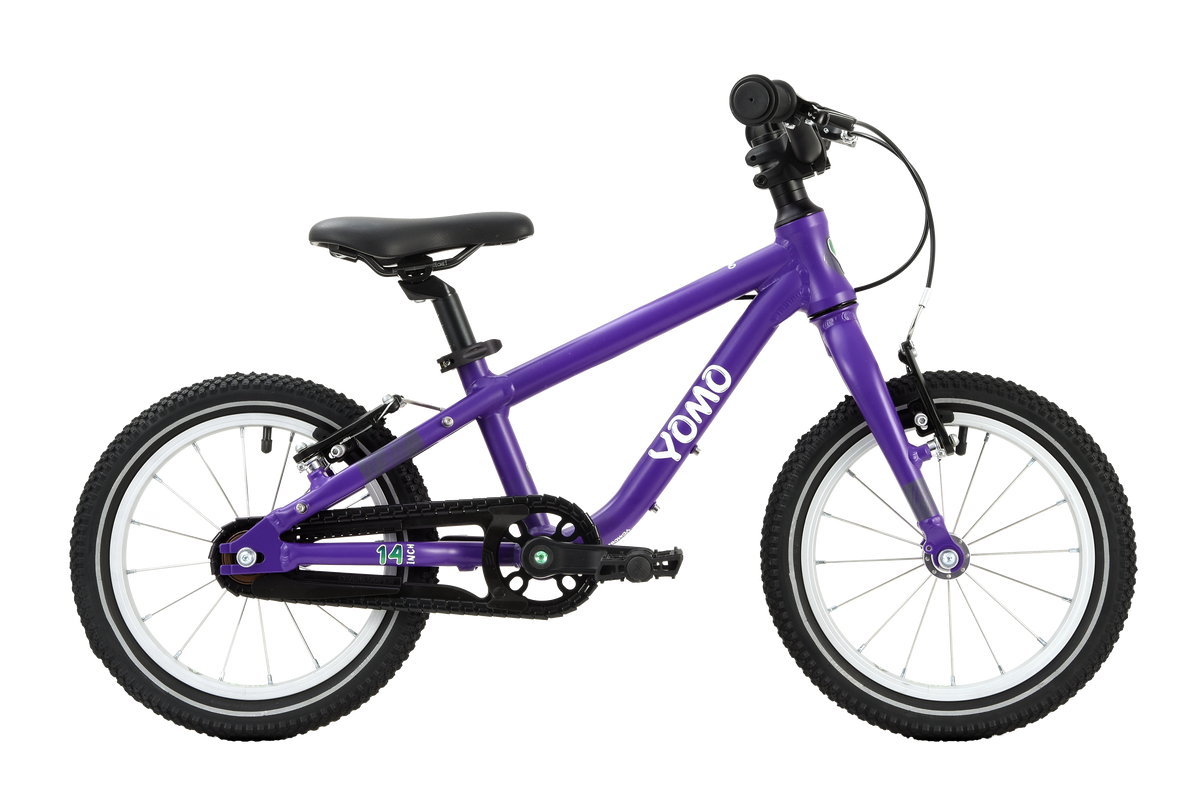
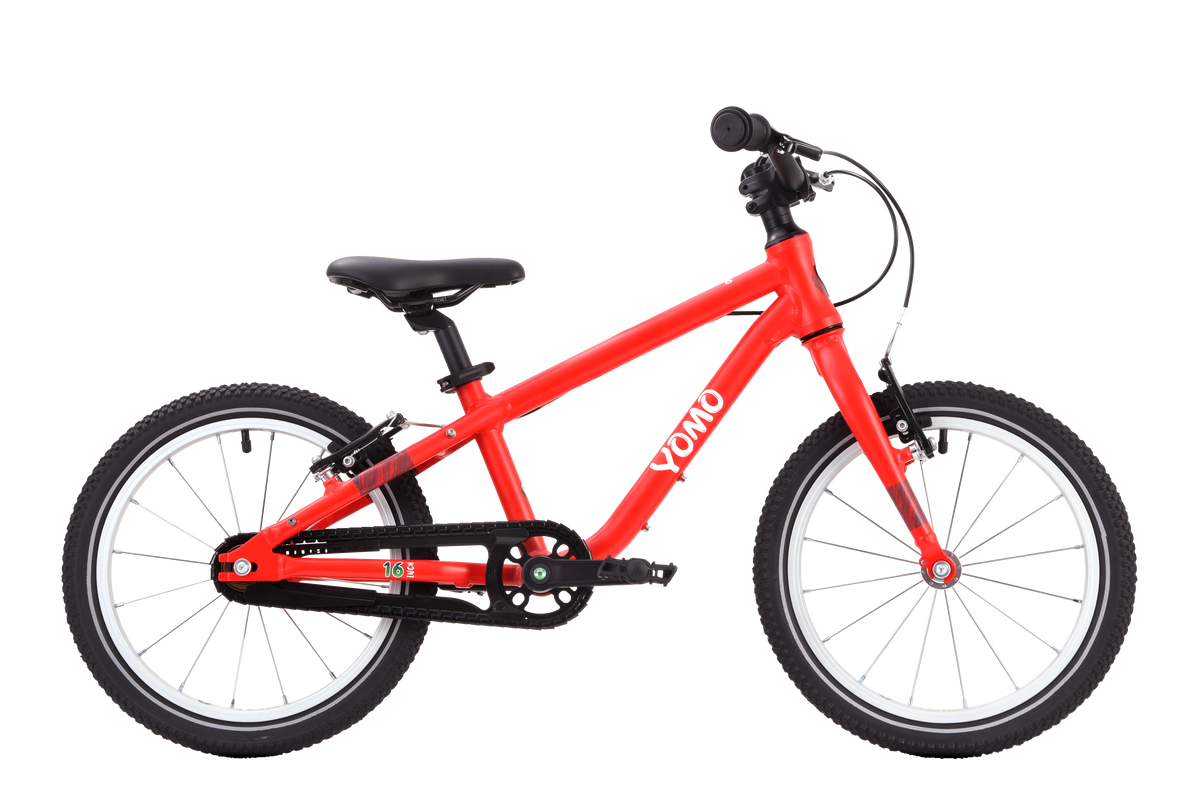
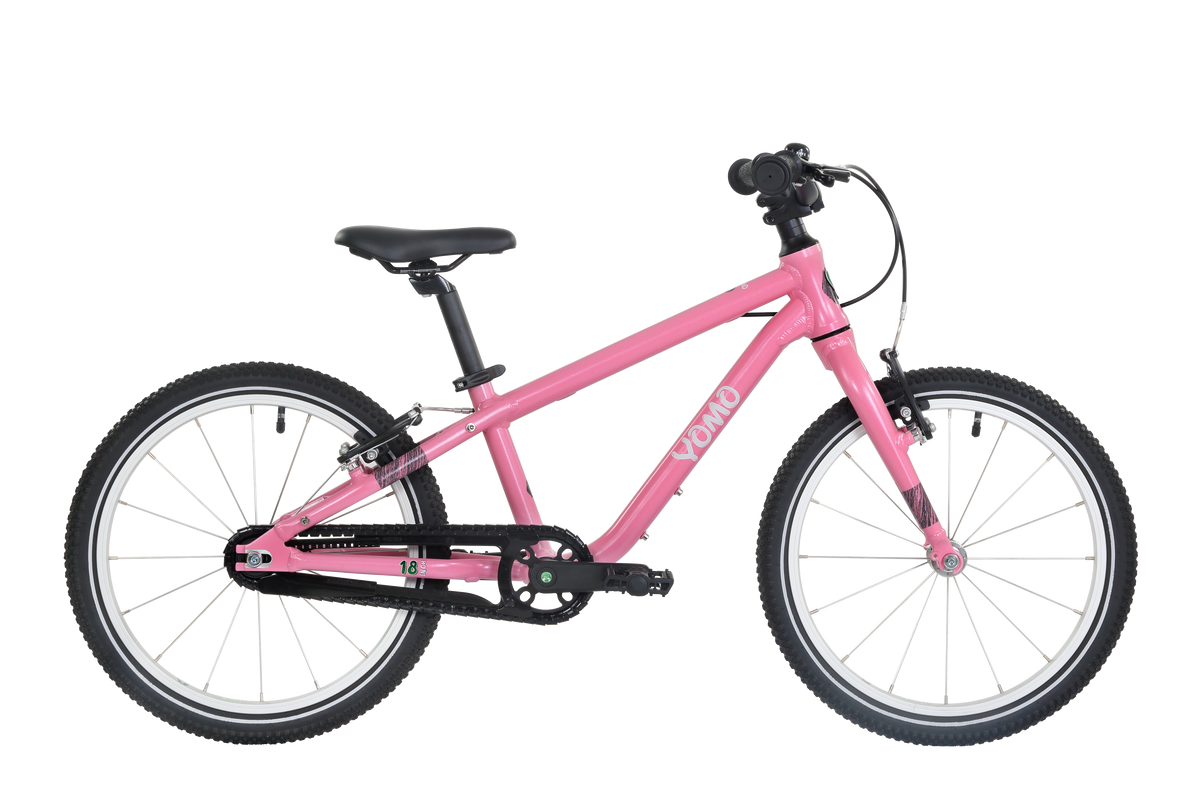
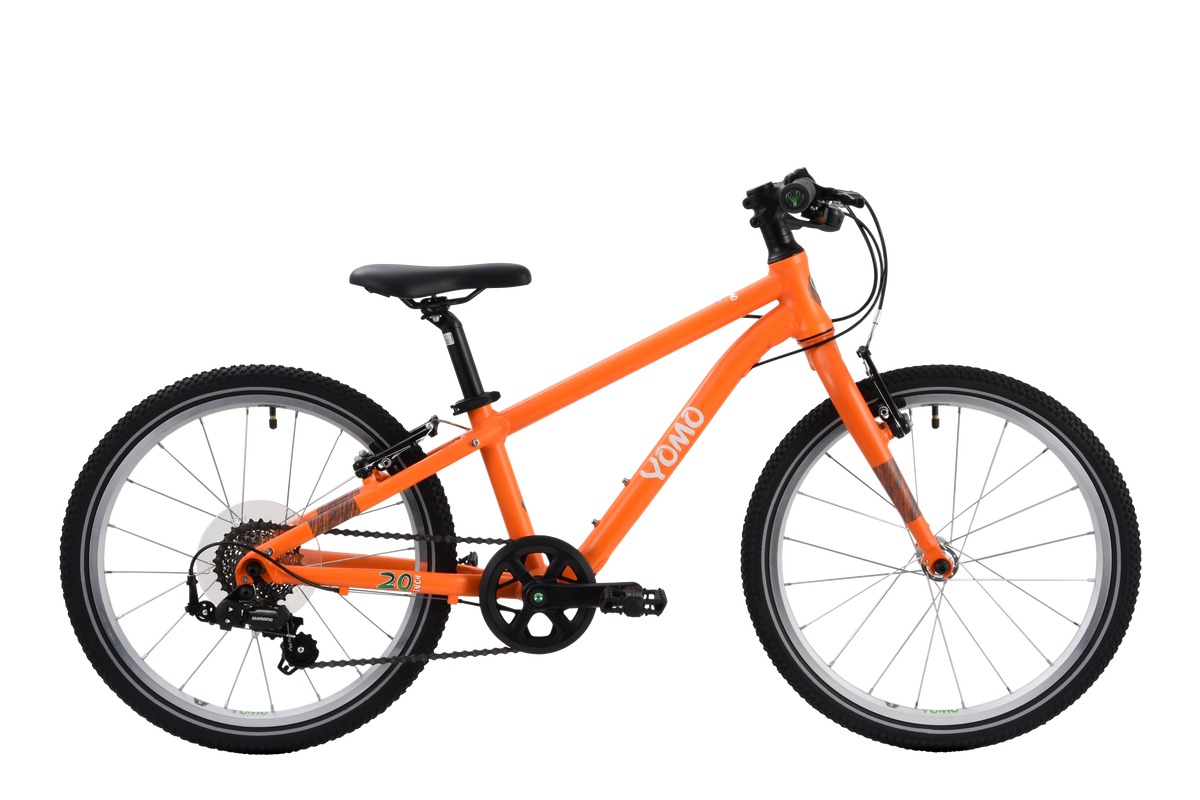
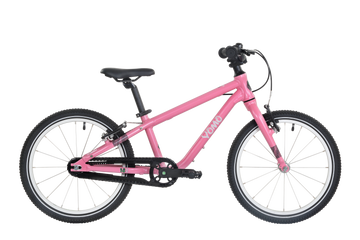
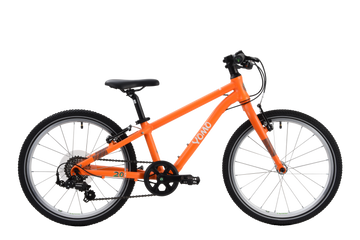
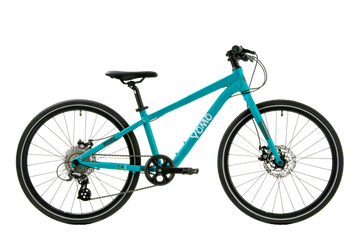
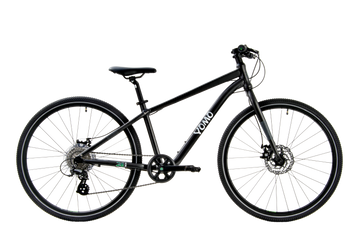
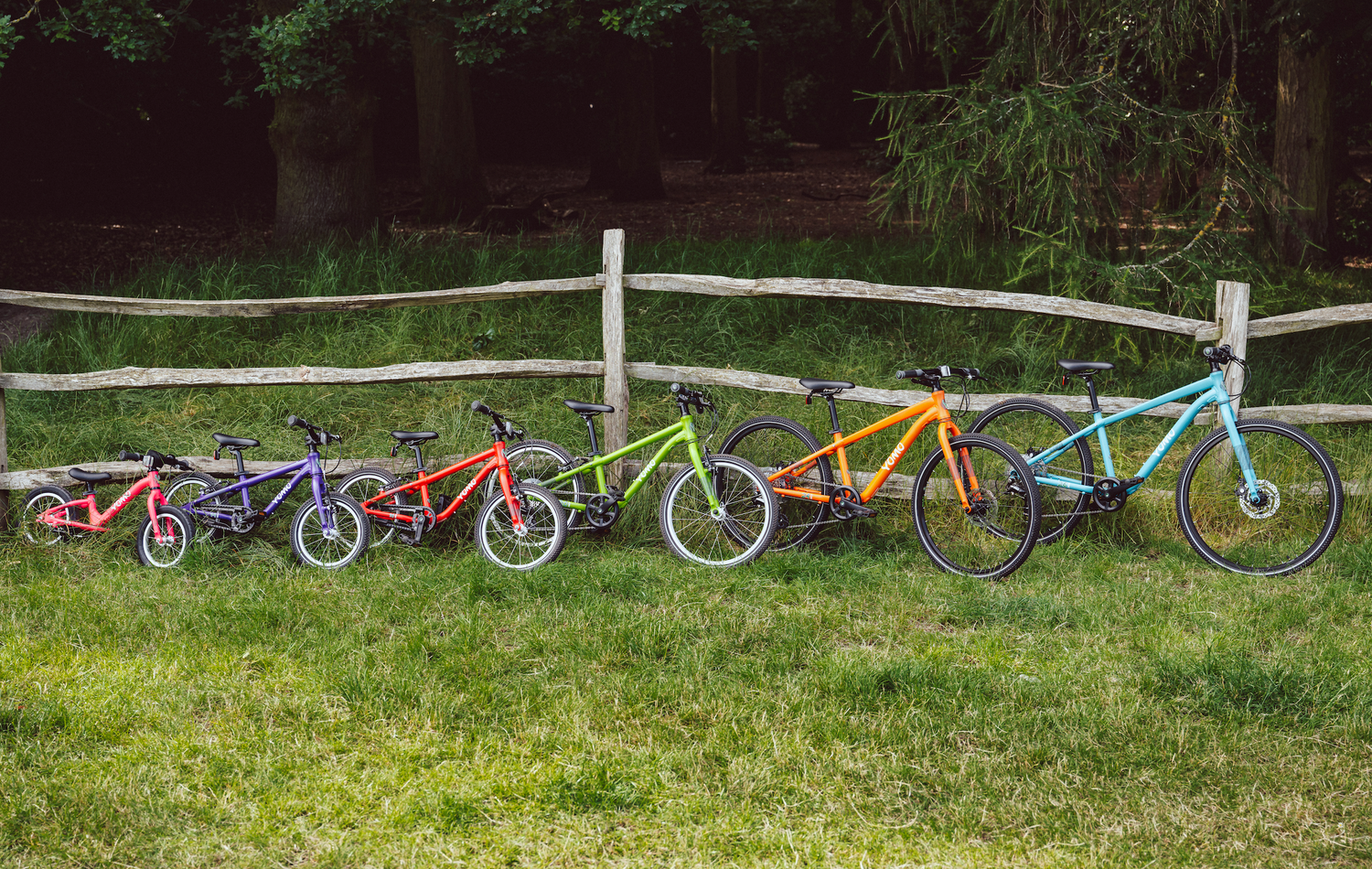
The table below gives a useful starting point for the current YOMO pedal-bike range. The age ranges are approximate. Always use inside leg and rider confidence to confirm the final size.
| Model | Wheel size | Approx. age | Published inside-leg range |
|---|---|---|---|
| YOMO 14 | 14 inch | 3–5 years | 41–53 cm |
| YOMO 16 | 16 inch | 4–6 years | 46–57 cm |
| YOMO 18 | 18 inch | 5–7 years | 49–60 cm |
| YOMO 20 | 20 inch | 6–9 years | 53–67 cm |
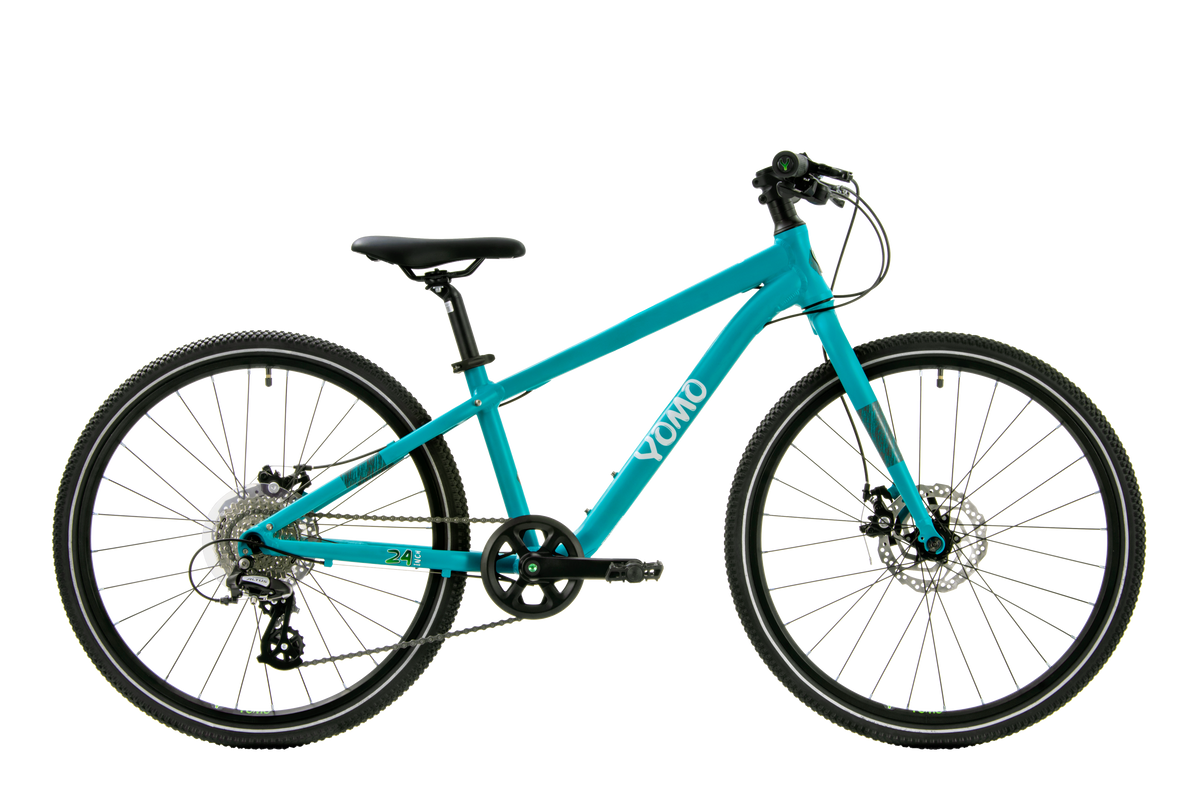
| YOMO 24 | 24 inch | 8–12 years | 62–78 cm |
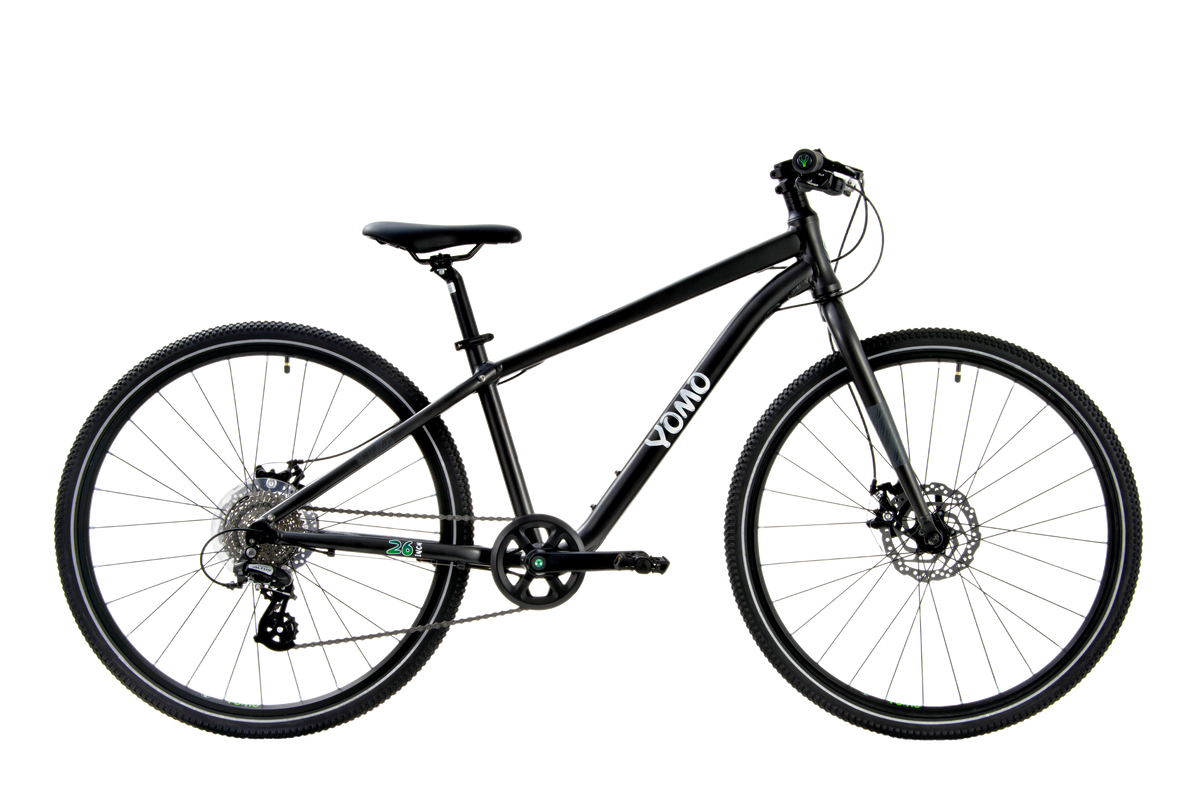
| YOMO 26 | 26 inch | 10–14 years | 68–85 cm |
These ranges overlap deliberately because children grow at different rates and ride with different levels of confidence.
Browse the full YOMO children's bike range or use the Perfect Size Finder before deciding between sizes.
Bike weight matters too
Correct sizing is important, but it is not the only factor that affects how manageable a children's bike feels.
Bike weight matters because a bicycle represents a much larger proportion of a child's body weight than an adult bike does for an adult rider.
A lighter bike can be easier for a child to start, steer, manoeuvre and lift. This becomes particularly important when a child is learning and still developing their balance and coordination.
YOMO bikes use lightweight aluminium frames and components selected around young riders, with the aim of making the bike feel manageable rather than unnecessarily heavy.
Child-specific geometry makes a difference
Wheel size alone doesn't tell you how a children's bike will feel.
Frame geometry determines where the child sits relative to the wheels, handlebars and pedals. YOMO bikes are designed around children's proportions rather than simply taking an adult bicycle and reducing its dimensions.
Features vary by model, but YOMO's child-focused design approach includes:
- Low, stable geometry designed to help young riders feel naturally in control.
- Child-sized handlebars and grips suited to smaller hands and shoulders.
- Easy-reach brake controls designed around children's hands.
- Child-appropriate crank lengths and narrower pedal spacing to support a more natural pedalling position.
- Lightweight construction to reduce unnecessary weight.
- Adjustable saddle height so the fit can be adapted as the rider grows.
You can read more about the thinking behind these features on our Why YOMO page.
How should a beginner's bike fit?
A child learning to ride generally benefits from a reassuring setup that makes stopping and recovering their balance easier.
They should be able to operate the handlebars and brakes comfortably without excessive stretching, and the saddle should be set appropriately for their current ability.
A beginner often needs greater access to the ground than an experienced rider. As confidence develops, the saddle can gradually be adjusted to support a more efficient pedalling position.
What happens when two bike sizes overlap?
Overlapping sizes are normal in a well-designed children's bike range.
For example, a child may technically fit both a smaller and larger model based on their inside-leg measurement. That does not mean the larger option is automatically better value.
Consider:
- Can they already start independently?
- Can they stop confidently?
- Are they comfortable balancing at low speed?
- Are they moving from a smaller pedal bike or learning for the first time?
- How securely can they reach the ground on the larger option?
A confident rider may be ready for the larger size, while a beginner with identical measurements may have a better experience on the smaller bike.
Frequently asked questions about children's bike sizing
What size bike should I buy for my child?
Start with your child's inside-leg measurement and height, then consider their current riding confidence. Age and wheel size are useful guides, but they should not be the only factors used to choose a bike.
Should both feet touch the ground?
For a child who is learning or lacks confidence, comfortable access to the ground can provide valuable reassurance when starting and stopping. More experienced riders may use a slightly higher saddle position once they have developed confident control.
Is a 16-inch bike suitable for every four-year-old?
No. Children of the same age can have very different measurements and abilities. Some four-year-olds may fit a 14-inch bike better, while others may already be suitable for a 16-inch bike. Measure their inside leg rather than choosing purely from their birthday.
Is it better to buy a bike that's slightly too big?
Not usually. If the larger bike makes starting, stopping or reaching the controls difficult, the additional growing room isn't worth the compromise. Where two sizes safely overlap, riding confidence should help decide between the best fit now and the option that lasts longer.
Does the weight of a children's bike matter?
Yes. A lighter bicycle can be easier for a young rider to start, steer, manoeuvre and lift. Weight should be considered alongside fit, geometry and suitable child-sized controls.
Choose the bike that fits your child now
The right children's bike should help the rider feel comfortable and in control from the beginning.
Start with inside leg and height, consider how confidently your child currently rides, and avoid automatically choosing a larger bike simply for additional growing room.
YOMO's range is designed around children's proportions, with overlapping sizes so parents can choose between the best fit now and, where appropriate, a size that offers more room to grow.
Use the YOMO Perfect Size Finder to find the right fit, or explore the full YOMO children's bike range.


