


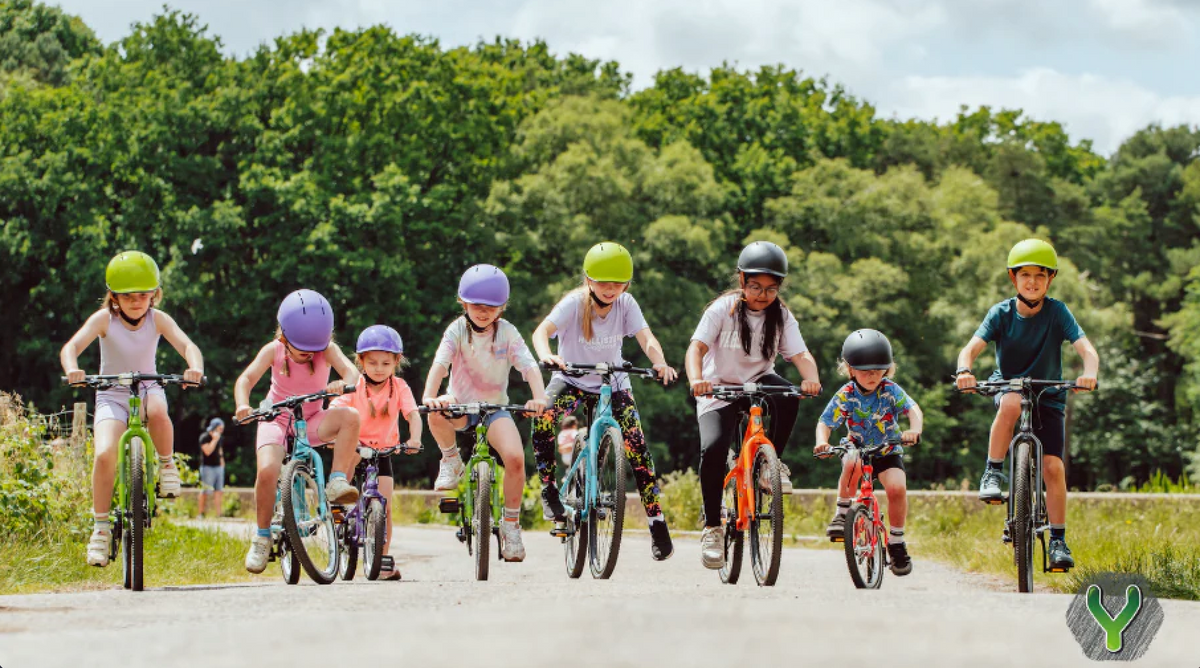
Cycle to School Week 2026 runs from Monday 5 to Friday 9 October.
Organised by The Bikeability Trust, the week encourages children, families and schools to try cycling as part of the everyday school journey.
Whether your child already rides regularly or you're considering their first cycle to school, it provides a useful reason to test the route, check the bike and see whether cycling could become part of your family's normal routine.
Here's what you need to know about Cycle to School Week 2026, how to take part and how to make the experience safe, manageable and enjoyable for children.
When is Cycle to School Week 2026?
Cycle to School Week 2026 takes place from Monday 5 October to Friday 9 October 2026.
The national campaign is run by The Bikeability Trust and encourages schools, families and individuals to make a cycling pledge.
You don't have to cycle every day to participate.
The current family pledge includes options such as:
- cycling to school every day;
- trying a cycling commute to school;
- discovering somewhere new by bike; and
- cycling with your family.
That makes the week useful even for families who simply want to try one school journey and see how it goes.
What is Cycle to School Week?
Cycle to School Week is a national celebration of everyday cycling.
The idea isn't simply to create five days of special cycling activity and then put the bikes away again.
It gives families an opportunity to try a different school journey, build cycling confidence and discover whether travelling by bike could work more regularly.
For schools, it can also be a way to introduce conversations around active travel, cycling skills, bike storage and safer school journeys.
How do you take part?
Bikeability currently offers separate pledges for schools and for families, individuals and organisations.
Both routes provide a free digital Pledge Pack with resources designed to help participants take part.
You can make your pledge on the official Cycle to School Week page.
But don't worry if your family hasn't registered formally. The most important part is simply finding a realistic opportunity to try cycling.
Start with one school journey
If your child doesn't normally cycle to school, there's no reason to commit immediately to five consecutive days.
Choose one suitable morning and treat it as a trial.
This gives you an opportunity to learn:
- how long the journey actually takes;
- which route works best by bike;
- whether your child is comfortable with the distance;
- what the school bike-storage arrangements are;
- which junctions need more thought; and
- how much additional preparation you need in the morning.
If it works well, you can repeat it.
If it doesn't, you can adjust the route or wait until your child's skills have developed further.
Don't assume your driving route is the best cycling route
The quickest route by car isn't necessarily the most suitable route for a child on a bicycle.
Before Cycle to School Week, look for alternatives such as:
- dedicated cycleways;
- traffic-free paths;
- quieter residential streets;
- lower-speed roads;
- School Streets; and
- crossings that make busy roads easier to navigate.
Ride the route together at a quieter time before trying it during the morning school run.
Pay particular attention to junctions, driveways, parked vehicles and any sections where your child needs to merge with traffic or cross a road.
Check whether your child is ready to cycle to school
Being able to ride a bike in the park doesn't automatically mean a child is ready for every school route.
Useful skills include being able to:
- start independently;
- ride in a controlled line;
- brake smoothly;
- stop where intended;
- look around while maintaining control;
- control speed on slopes;
- respond to instructions from an accompanying adult; and
- understand the hazards on the particular route.
If your child isn't ready for the full journey, Cycle to School Week can still be useful.
Practise cycling skills somewhere quieter or complete only an appropriate part of the journey by bike.
Consider Bikeability cycle training
Bikeability provides practical cycle training designed to help riders develop the skills and understanding needed for today's roads.
For families in England, you can use Bikeability's online service to look for local training or ask whether your child's school provides Bikeability sessions.
Training availability differs elsewhere in the UK, so check the relevant local programme where you live.
Find Bikeability cycle training.
Check that the bike fits before the school run
A school journey is not the time to discover that your child's bicycle has become too small or that the next bike was bought too large.
Correct fit helps children manage:
- starting;
- stopping;
- steering;
- reaching the brakes;
- low-speed control; and
- putting a foot down when necessary.
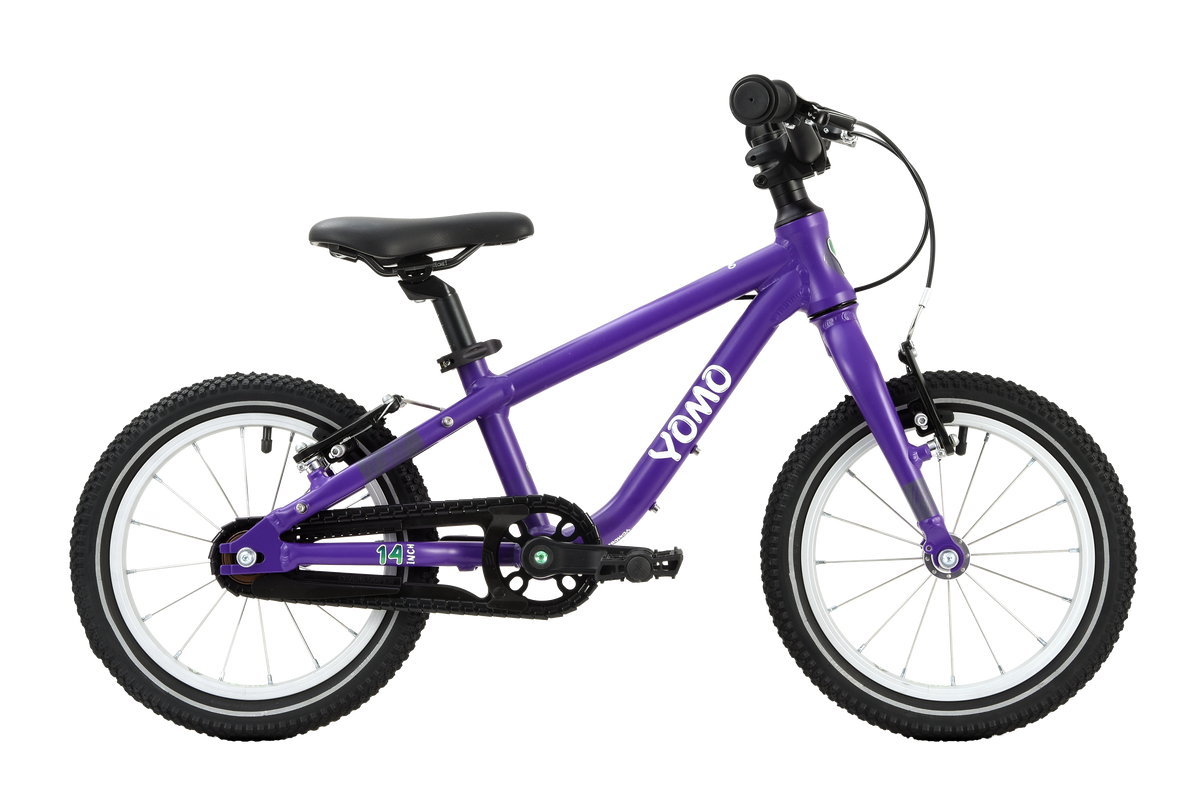
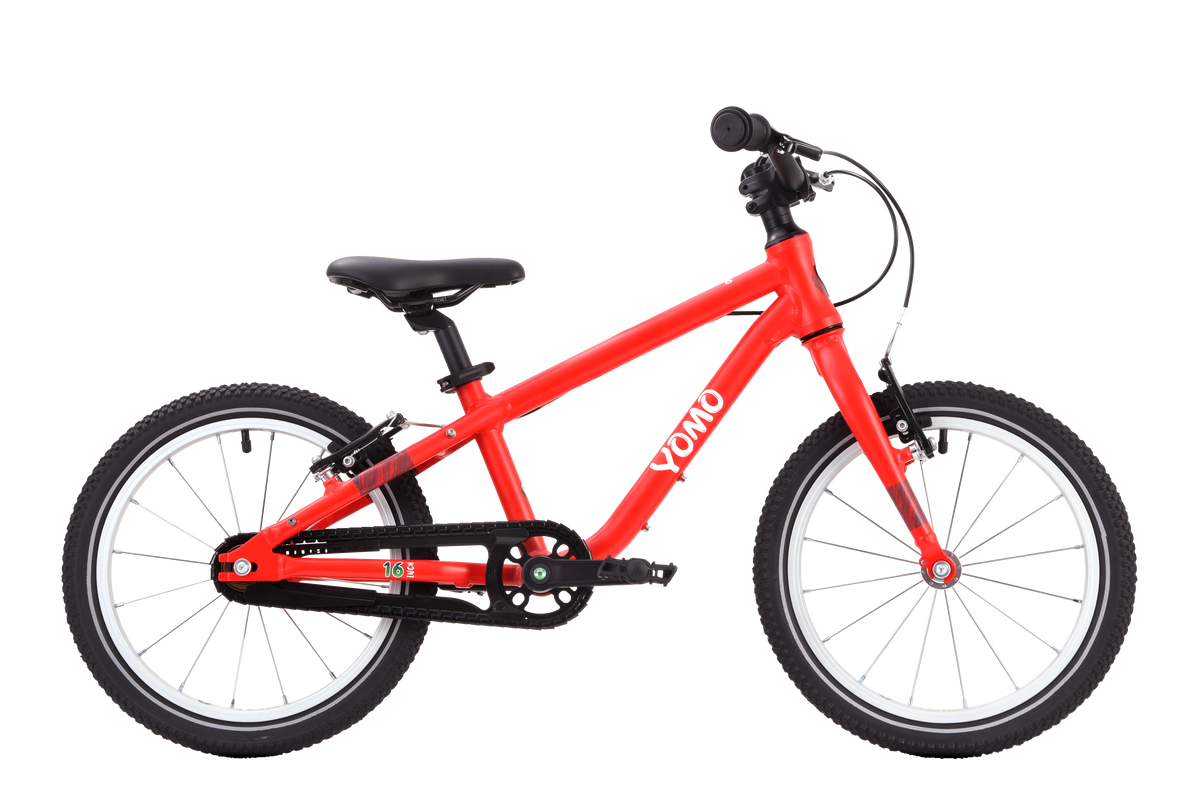
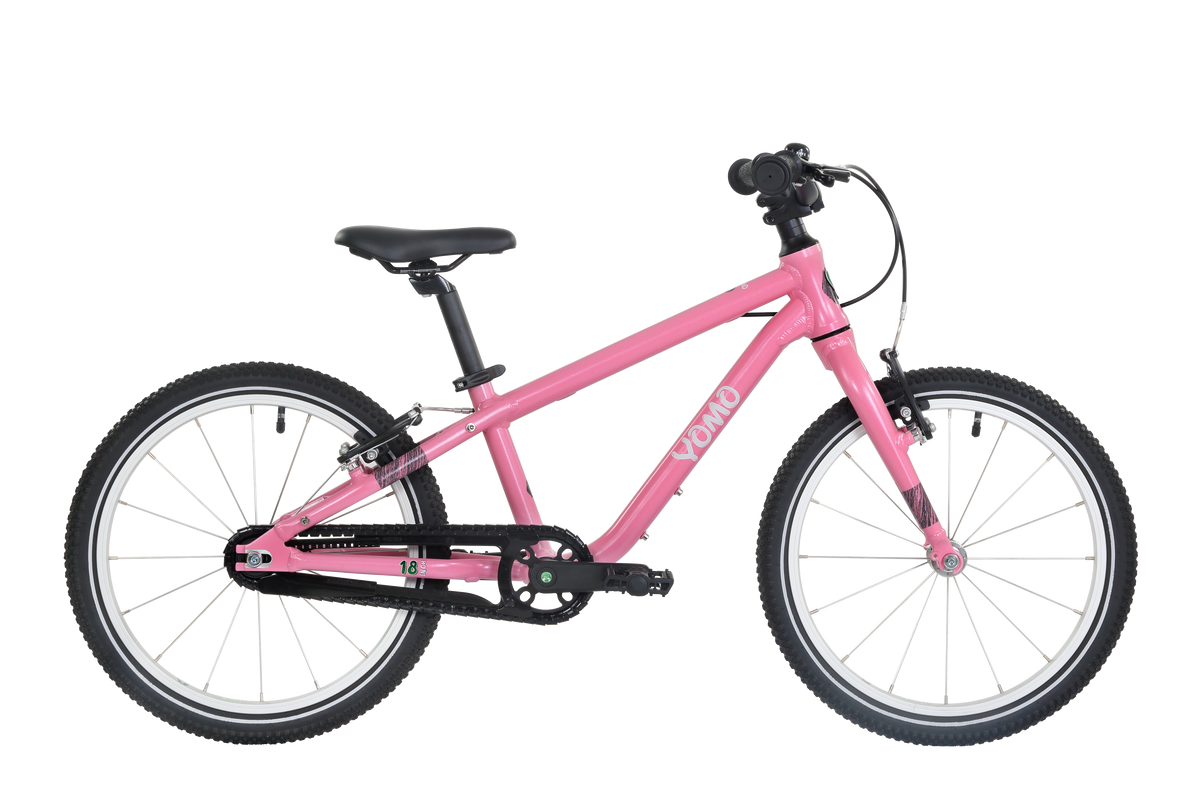
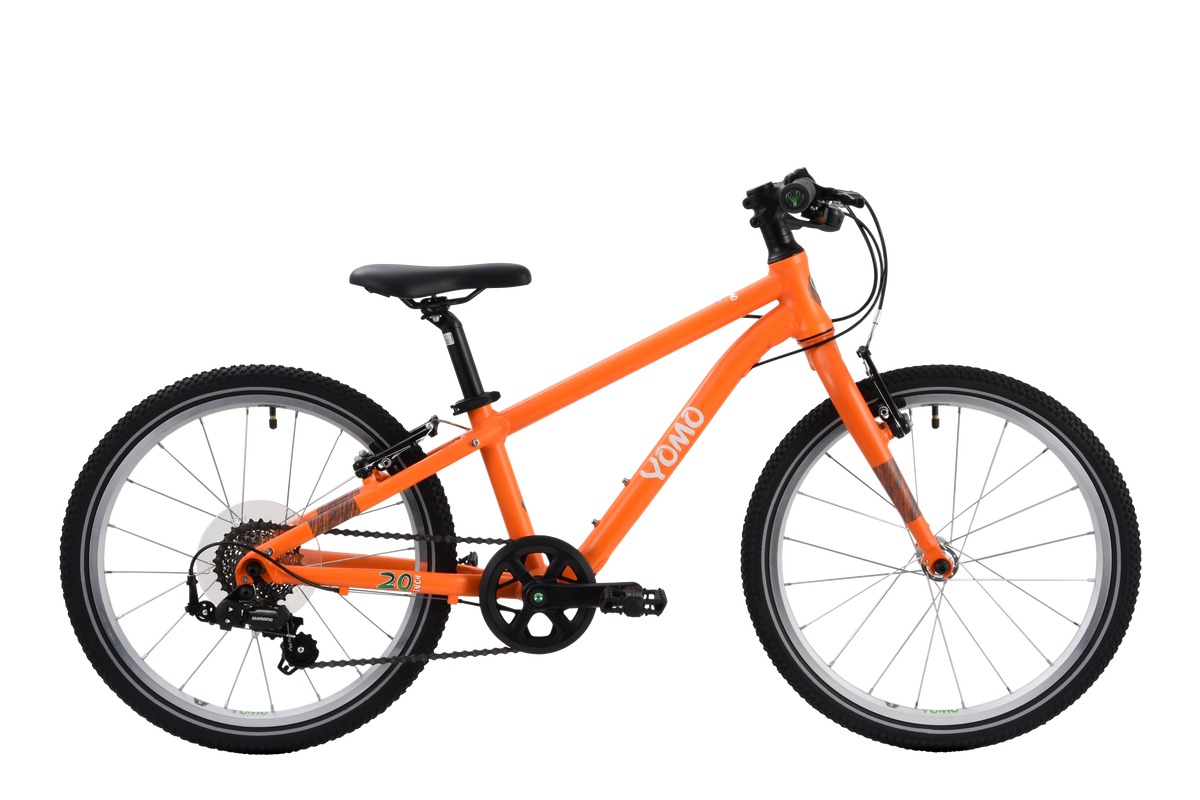
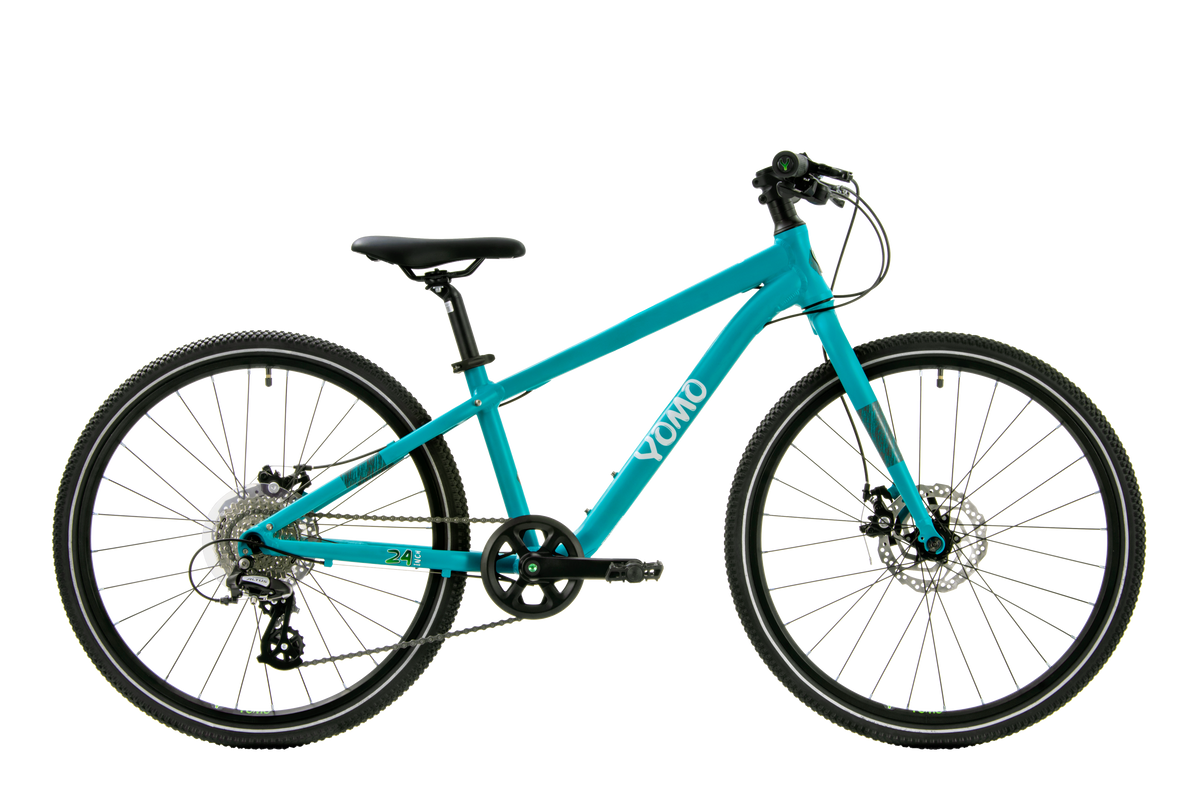
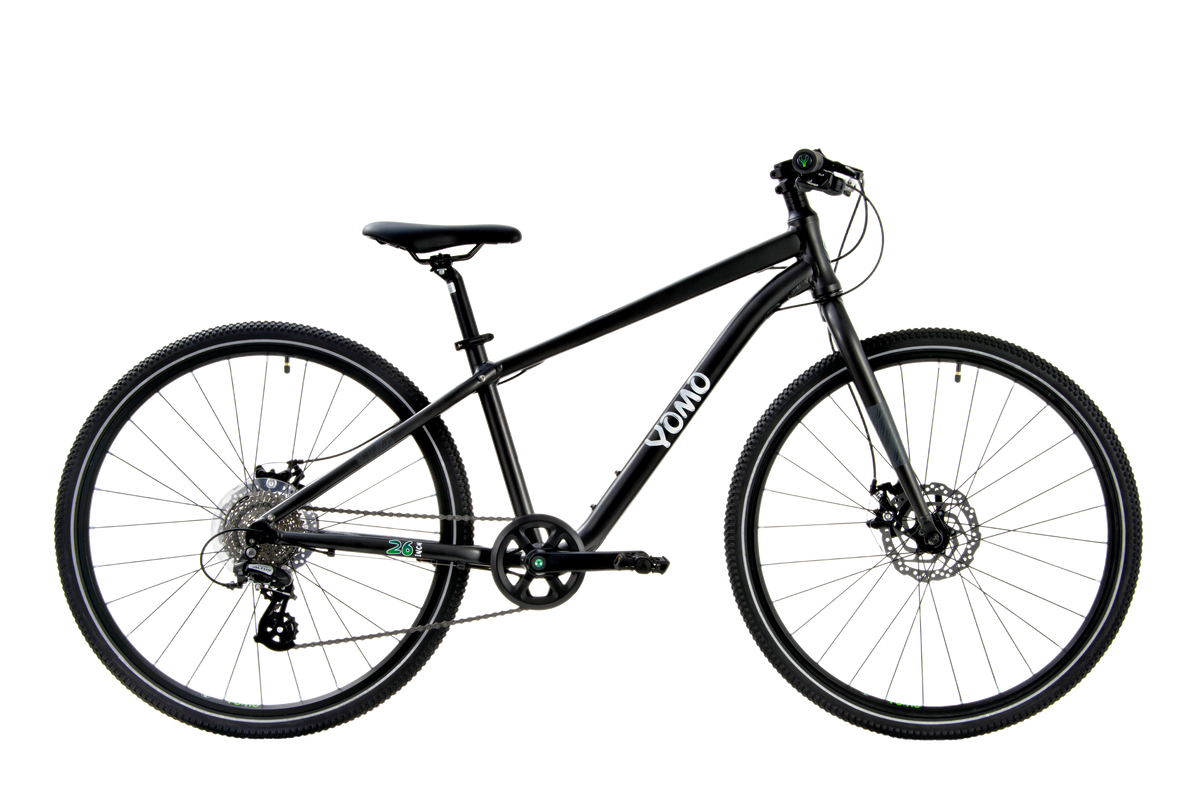
For YOMO bikes, sizing should prioritise inside-leg measurement, rider confidence and current fit, with age used only as a guide.
Use the YOMO Perfect Size Finder if you're unsure whether your child's current bike is suitable.
Give the bike a quick safety check
Before the first school ride, check the bicycle rather than simply taking it out of the shed and setting off.
Look at:
Tyres
Make sure they are in good condition and inflated within the pressure range stated on the tyre.
Brakes
Check that both brakes operate predictably and effectively.
Wheels
Make sure both wheels are correctly secured and rotate normally.
Chain and gears
Check that the drivetrain operates smoothly and that geared bikes shift correctly.
Handlebars and saddle
Make sure both are secure and correctly positioned.
Lights and reflectors
Check that any fitted lights work and that reflectors are clean and unobstructed.
If you're unsure about the mechanical condition of the bicycle, have it checked before the school journey.
Make sure your child's helmet still fits
A child's helmet should be selected by head circumference rather than age.
Check that it:
- is the correct size;
- sits level on the head;
- doesn't move excessively;
- has correctly adjusted straps; and
- fastens securely.
If your child has grown since their last regular cycling period, don't assume their old helmet still fits correctly.
You can read our children's helmet sizing and fit guide or view the YOMO Kids' Helmet range.
Think about visibility in October
Cycle to School Week takes place in October, when mornings and afternoons can already be darker and weather conditions less predictable.
Consider:
- bright or reflective clothing and accessories;
- working bicycle lights;
- keeping reflectors clean;
- making sure bags don't obscure lights; and
- checking the weather before leaving.
At night, bicycles must have an illuminated white front light and red rear light together with the legally required reflectors.
Make the morning easier by preparing the night before
The biggest obstacle to cycling to school can simply be a rushed morning.
The night before, prepare:
- helmets;
- appropriate clothing;
- school bags;
- bike locks;
- lights;
- waterproof layers if needed; and
- anything else required at school.
Give yourself a little more time than you think you'll need for the first journey.
Once the route becomes familiar, the morning routine normally becomes much easier.
Check where the bike will go at school
Before the first ride, find out:
- where bicycles should be stored;
- whether racks are covered;
- whether your child needs their own lock;
- where helmets can be stored;
- whether the school operates a School Street; and
- whether there are specific arrival or departure arrangements for cyclists.
It's much easier to sort these details in advance than while standing outside the school gates with a bike.
What if you live too far away to cycle the whole route?
Cycle to School Week doesn't have to be all or nothing.
Depending on your circumstances, you may be able to combine cycling with another form of transport or ride only an appropriate section of the journey.
The aim is to find something realistic enough that your family might actually want to repeat it.
What if the weather is bad?
Ordinary autumn weather doesn't necessarily mean abandoning the bike, but conditions should always be assessed realistically.
Rain may simply mean waterproof clothing, slower riding and additional braking distance.
However, conditions such as:
- ice;
- flooding;
- very strong winds;
- severely reduced visibility; or
- significant weather warnings
may make another form of transport the better choice.
There is no need to complete a cycling pledge at the expense of sensible judgement.
How can schools take part in Cycle to School Week?
Schools can make their own pledge through Bikeability and receive the current free School Pledge Pack.
Depending on the school, activities might include:
- promoting cycling during assemblies;
- using classroom resources;
- encouraging families to try one cycling journey;
- reviewing bike-storage facilities;
- supporting Bikeability training;
- organising suitable cycling activities; and
- asking pupils what would make cycling to school easier.
The most useful outcome isn't necessarily achieving the biggest number of rides during one week.
It can be identifying practical changes that make cycling easier throughout the school year.
How to make Cycle to School Week fun for children
A school commute doesn't have to become a competition.
Simple ideas include:
- cycling with a friend or neighbour;
- letting your child help choose the route;
- spotting landmarks along the journey;
- trying one new traffic-free section;
- keeping track of how many school journeys they complete; or
- finishing the week with an enjoyable family ride.
For younger or less confident riders, simply completing one comfortable journey can be a meaningful achievement.
Can Cycle to School Week become a longer-term habit?
It doesn't need to end on Friday 9 October.
If the trial went well, choose a frequency that works for your family.
That might be:
- one cycling school run each week;
- cycling only on suitable-weather days;
- a regular ride with another family;
- cycling to particular after-school activities; or
- gradually increasing the journey as your child's confidence develops.
A manageable routine is more valuable than an ambitious plan that disappears after one week.
Frequently asked questions about Cycle to School Week 2026
When is Cycle to School Week 2026?
Cycle to School Week 2026 runs from Monday 5 October to Friday 9 October 2026.
Who organises Cycle to School Week?
The campaign is organised by The Bikeability Trust.
Do you have to cycle to school every day?
No. Bikeability's current family pledge includes several ways to participate, including simply trying a cycling commute or cycling with your family.
How do schools sign up?
Schools can make a pledge through the official Cycle to School Week website and receive the current School Pledge Pack.
What if my child isn't confident enough to cycle on the road?
Don't rush them. Practise in a suitable quieter environment, explore traffic-free route options and consider appropriate cycle training. The school commute should match your child's current ability.
What size bike does my child need for cycling to school?
There isn't a special “school bike” size. Choose the bicycle that correctly fits the child.
Inside leg, height and riding confidence are more useful than age alone.
Use the YOMO Perfect Size Finder if you need help.
Take part in Cycle to School Week 2026
Cycle to School Week is a useful opportunity to test something that might otherwise keep getting postponed.
Check the bike, practise the route, prepare the night before and try one realistic school journey.
If it works, you may discover that cycling isn't just something your child does at weekends. It can become a practical way to get somewhere.
Make your Cycle to School Week 2026 pledge with Bikeability.
For more school-run guidance, read 5 Reasons to Cycle to School and How to Do It Safely.
If you need to check your child's bike size first, use the YOMO Perfect Size Finder or explore the YOMO children's bike range.


