


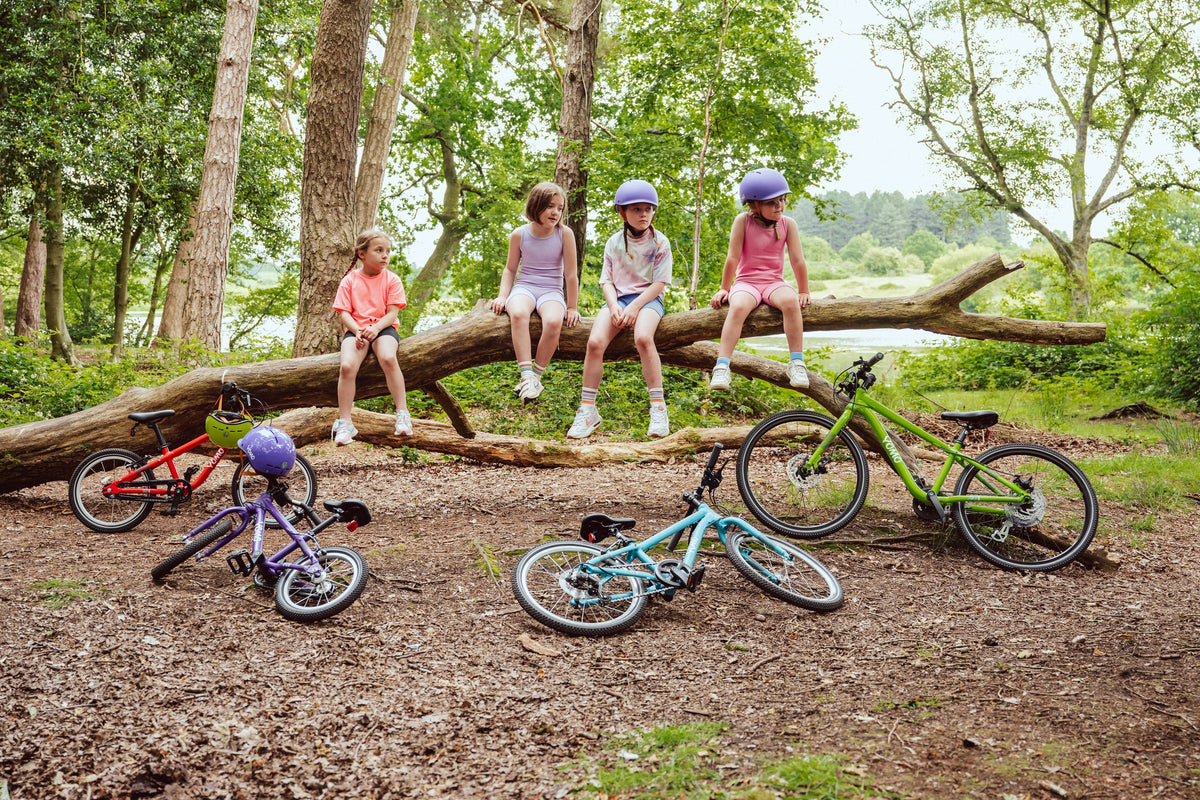
Children's bikes can vary enormously in price, so it's reasonable for parents to ask whether paying more for a lightweight, child-specific bike is really worth it.
The answer isn't simply “the more expensive bike is better”.
What matters is what you're paying for: appropriate fit, manageable weight, child-sized components, reliable parts and a bike your child actually wants to ride.
A premium children's bike can represent good long-term value when those features make cycling easier and the bike gets plenty of use. But price alone doesn't guarantee the right bike.
Here's how to compare the real value of children's bikes before deciding what is worth spending for your family.
Why do some kids' bikes cost more than others?
Two children's bikes with the same wheel size can look similar while being very different underneath.
Differences can include:
- frame material and construction;
- overall bike weight;
- geometry designed specifically for children;
- brake-lever size and reach;
- handlebar width and grip diameter;
- crank length and pedal position;
- quality of wheels, bearings and drivetrain components;
- gearing;
- assembly and quality control;
- availability of replacement parts; and
- after-sales support.
That's why comparing children's bikes on wheel size and price alone can be misleading.
Is a lightweight kids' bike worth paying more for?
For many children, lower bike weight can make a noticeable practical difference.
A child is much lighter and less powerful than an adult, so the weight of their bicycle represents a much larger proportion of their body weight.
A lighter bike can generally be easier for a child to:
- push away from a standing start;
- steer;
- manoeuvre at lower speeds;
- ride uphill;
- move around when they're not riding; and
- pick up after putting it down.
That doesn't mean the lightest bike automatically wins.
Weight should be considered alongside fit, geometry, brakes, components and intended use.
A very light bike that doesn't fit your child properly isn't a good purchase.
Why bike fit matters more than price
The first question shouldn't be:
“How much should I spend?”
It should be:
“Which bike fits my child properly now?”
An appropriately sized bicycle can help a child comfortably:
- reach the handlebars;
- operate the brakes;
- start and stop;
- control the bike at low speeds;
- pedal in a natural position; and
- build confidence as their skills develop.
Buying a larger bike because it appears to offer better value by lasting longer can work against you if your child struggles to control it during the period when they're learning.
For YOMO bikes, sizing prioritises inside-leg measurement, rider confidence and current fit, with age used only as a guide.
Use the YOMO Perfect Size Finder before comparing models or prices.
What does child-specific geometry actually mean?
A children's bicycle shouldn't simply be an adult bicycle made smaller.
Young riders have different proportions, smaller hands and less strength, so details throughout the bike can influence how natural it feels to ride.
Child-specific design can include:
- a reach appropriate for shorter arms;
- handlebars proportioned for children;
- smaller grips;
- brake levers designed to be accessible to small hands;
- appropriately sized cranks;
- a narrower pedalling position; and
- geometry intended to provide predictable handling for a smaller rider.
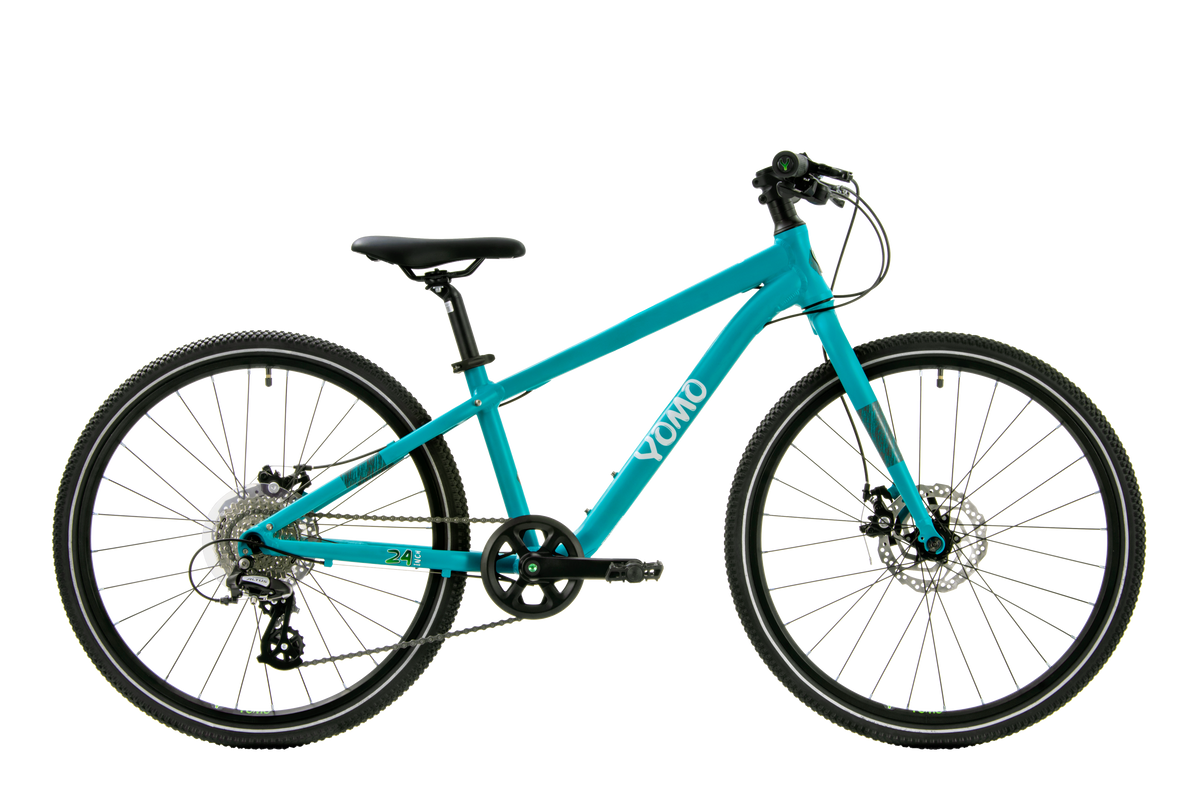
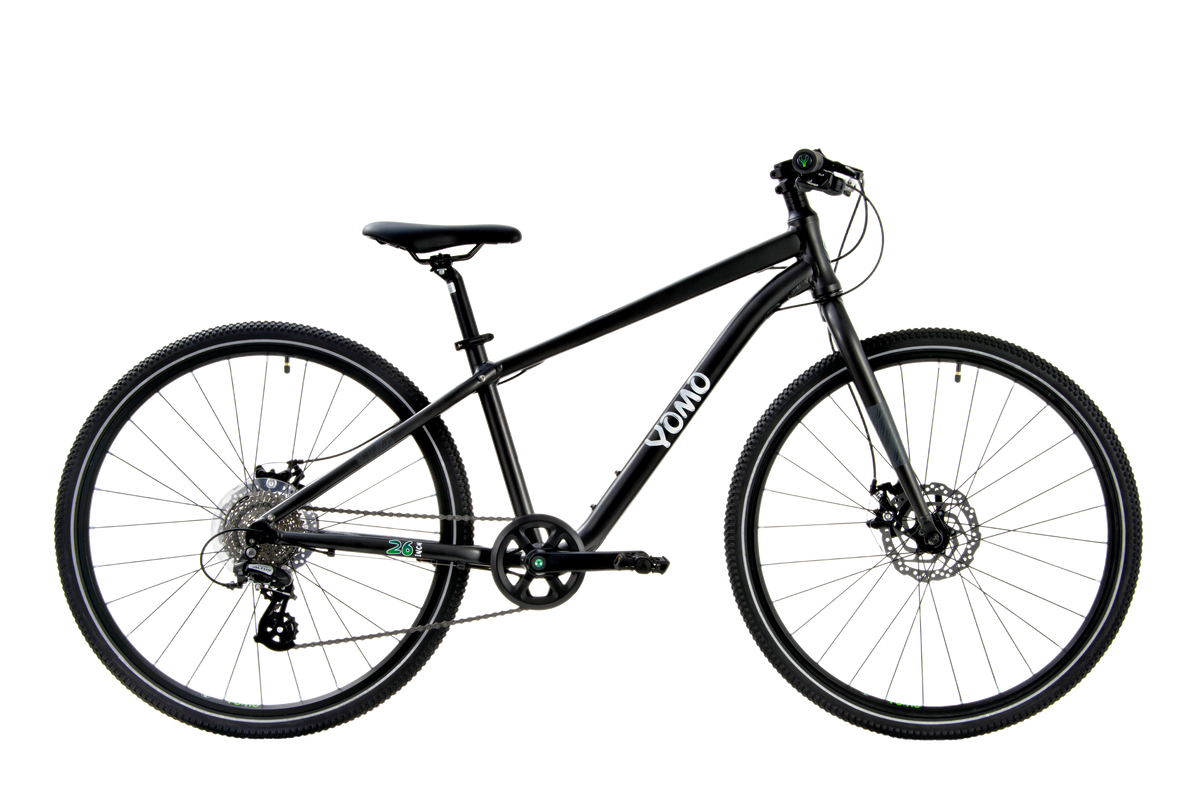
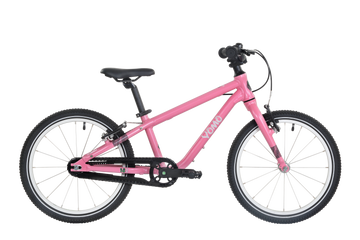
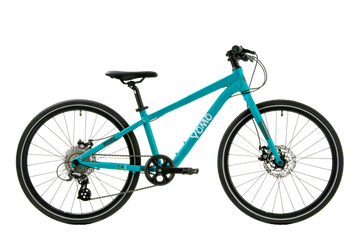
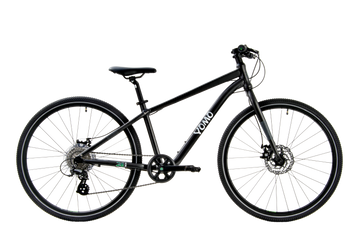
YOMO bikes are designed around children's proportions, with scaled controls and contact points rather than simply reducing the frame size of an adult bicycle. :contentReference[oaicite:0]{index=0}
You can explore the design approach in more detail on our Why YOMO page.
Does a heavier bike stop a child learning to ride?
Not necessarily.
Children can learn to ride many different bicycles.
But unnecessary weight can make some parts of riding harder, particularly:
- starting;
- climbing;
- low-speed manoeuvring;
- recovering from a wobble; and
- handling the bicycle when they're not riding it.
For a confident rider on flat ground, the difference may matter less than it does to a cautious beginner tackling hills.
That's why it's better to think about weight as one part of the complete riding experience rather than a specification to chase in isolation.
A real example: what does lightweight mean on a 20-inch bike?
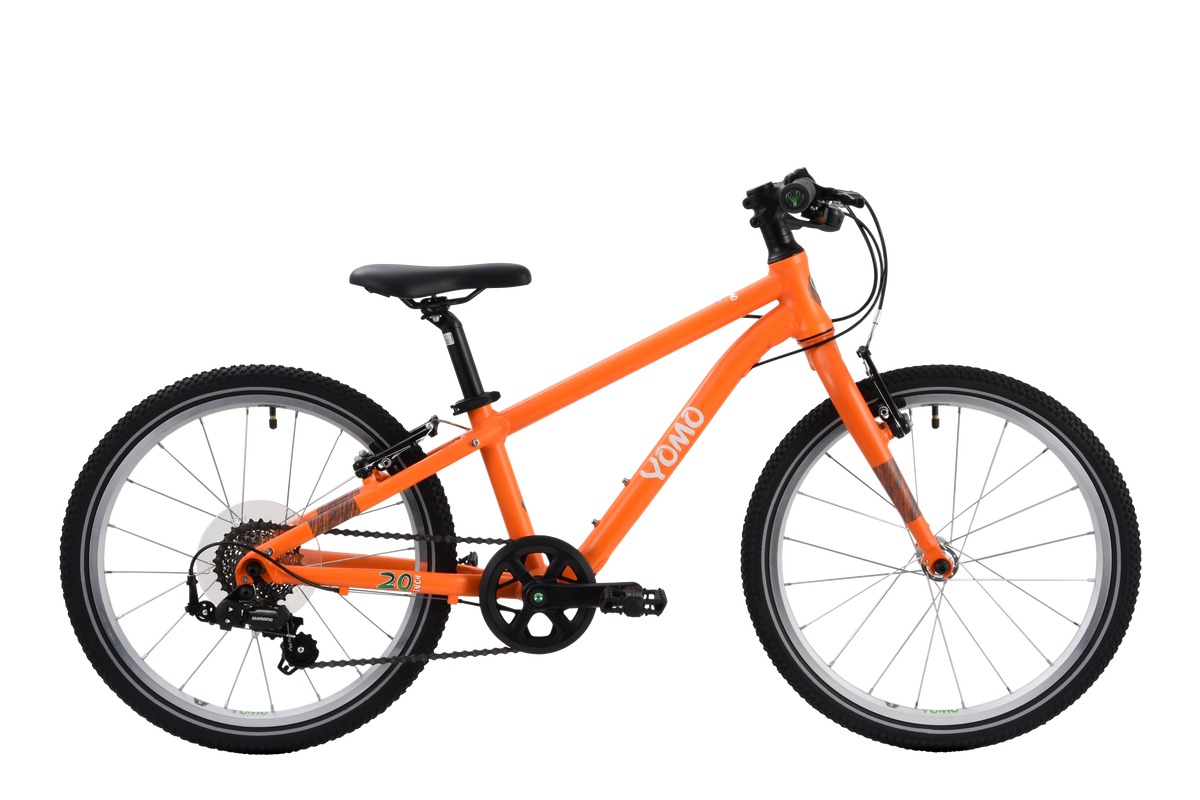
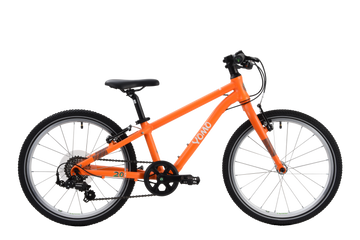
The current YOMO 20 weighs approximately 7.65 kg.
It combines that lightweight build with child-specific geometry, easy-reach controls and a Shimano 7-speed drivetrain for riders progressing towards longer rides and hills. :contentReference[oaicite:1]{index=1}
The important point isn't simply the number on the scales.
The bike still needs to fit the child.
The current YOMO 20 fit range is approximately 53–67 cm inside leg, so a child shouldn't move onto it simply because they want gears or because a larger bike seems better value. :contentReference[oaicite:2]{index=2}
Does buying a better bike mean fewer repairs?
Not automatically.
All bicycles require maintenance.
Tyres wear. Chains need attention. Brake pads eventually need replacing. Gears may require adjustment.
A bicycle with appropriate, serviceable components can make ongoing ownership easier, but maintenance costs depend heavily on:
- how often the bike is ridden;
- weather and riding conditions;
- how it is stored;
- how well it is maintained;
- crashes and accidental damage; and
- which parts eventually wear out.
So I wouldn't buy a premium children's bike on the promise that it will never need repairs.
Instead, look for a bike built with recognised, replaceable components and backed by useful after-sales support.
How to think about cost per ride
Purchase price isn't the only way to judge value.
Consider two hypothetical bikes.
One costs less but your child finds it heavy and rides it only occasionally.
The other costs more but fits well, feels manageable and is used several times a week.
The second bike may deliver considerably more value to that family even though its initial purchase price was higher.
A useful way to think about value is:
Purchase cost ÷ meaningful use.
You don't need to literally calculate every ride.
The point is that a bicycle sitting unused in a garage isn't good value simply because it was inexpensive.
Ask what your child will actually use the bike for
You don't necessarily need every feature available.
Consider where your child rides most often.
Learning and local park rides
A lightweight single-speed bike can keep things simple.
Longer family rides and hills
Appropriate gears may become more useful as children progress.
Regular school journeys
Fit, manageable weight, reliable brakes and suitable gearing for the route may matter more than specialist off-road features.
Mountain-bike trails
The terrain may require different tyres, gearing and components than ordinary leisure cycling.
Paying for features your child doesn't need doesn't automatically create better value.
Single-speed or geared: which offers better value?
Neither is automatically better.
For younger children, a single-speed drivetrain can reduce complexity while they're concentrating on:
- balance;
- steering;
- pedalling;
- braking; and
- looking where they're going.
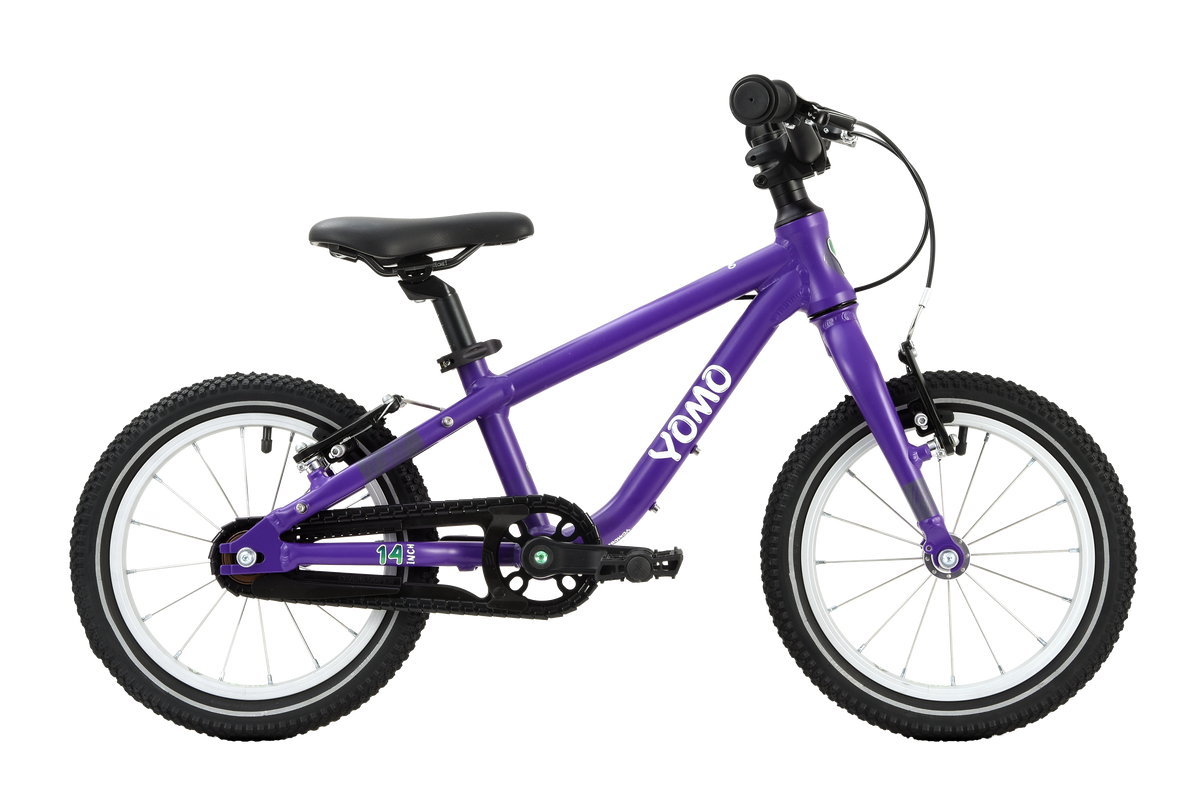
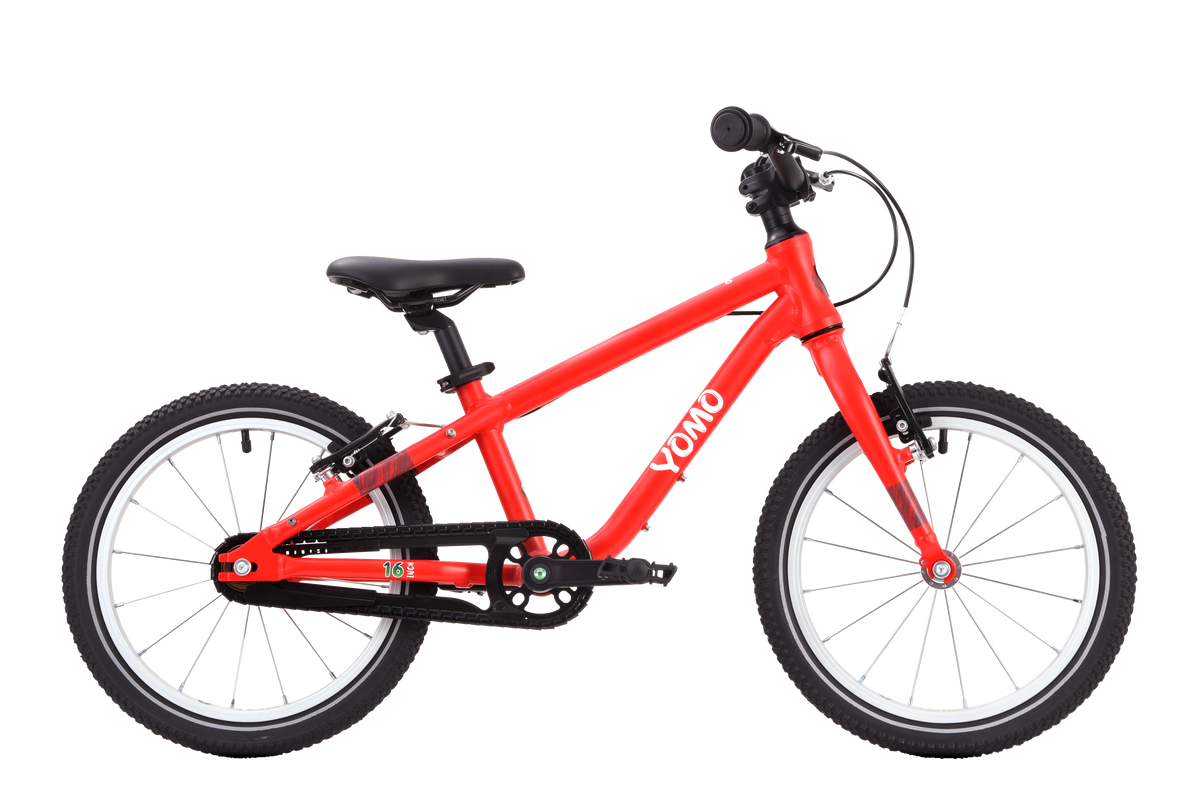
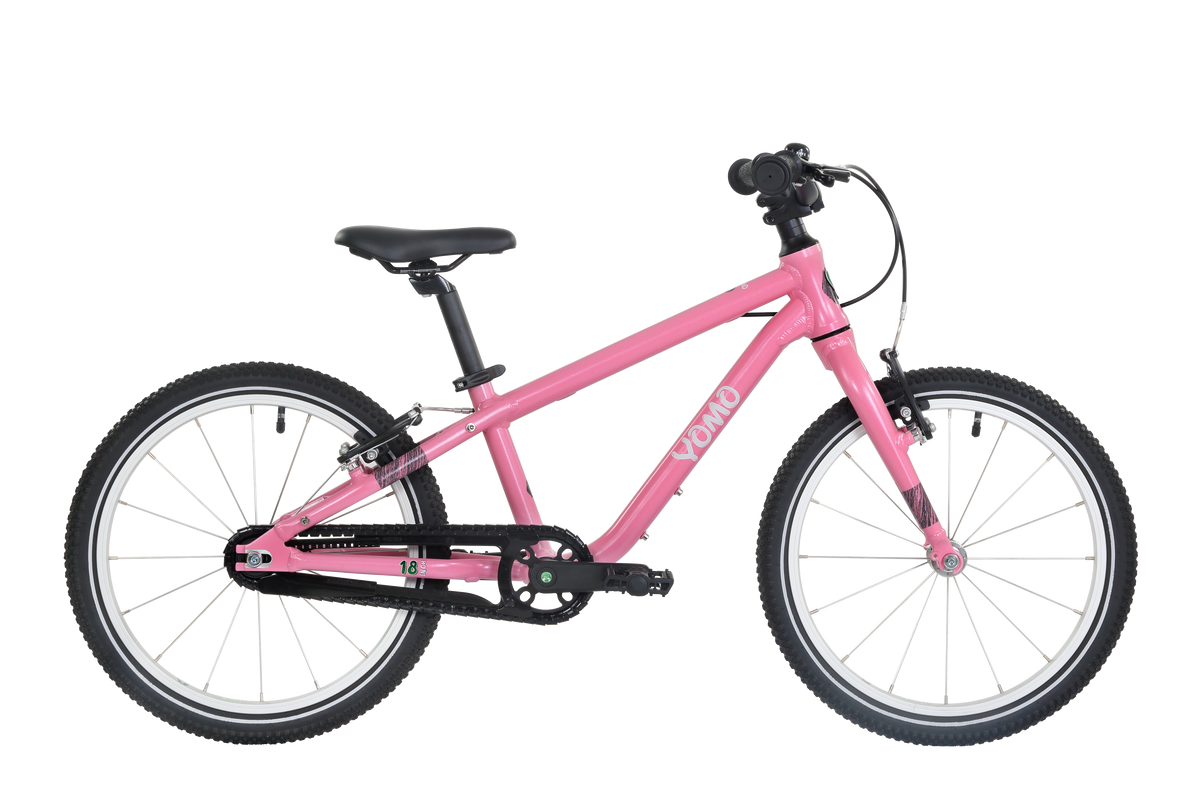
That's why YOMO 14, 16 and 18 are single-speed bikes.
As riders progress towards longer journeys and more varied terrain, gears become increasingly useful.
YOMO introduces Shimano gears from the YOMO 20 onwards.
The right drivetrain is the one appropriate to the rider and the type of cycling they'll actually do.
What about resale value?
Some well-maintained children's bikes retain useful second-hand value because children eventually outgrow them while the bicycle itself may still have plenty of usable life remaining.
But resale prices are never guaranteed.
They depend on factors such as:
- brand;
- model;
- age;
- condition;
- maintenance history;
- current demand;
- original specification; and
- whether important parts or accessories are missing.
If future resale matters to you, looking after the bike properly is important.
YOMO BikeTrade can change the ownership calculation
Children eventually outgrow even the best-fitting bike.
YOMO BikeTrade is designed to make that next-size transition easier for eligible YOMO owners.
Under the current programme, eligible bikes can receive up to 50% credit, subject to inspection, towards an eligible next-size YOMO.
The final value depends on factors including the bike's age, model, condition and completeness.
You can read the current eligibility and inspection terms on the YOMO BikeTrade page.
YOMO currently describes BikeTrade as a way for owners to trade in an eligible bike and receive up to 50% credit towards the next size. :contentReference[oaicite:3]{index=3}
Does buying the right size mean replacing bikes more often?
Potentially, but that isn't a reason to deliberately buy an oversized bike.
Children grow.
A correctly sized bicycle is therefore a product they will eventually outgrow.
When a child falls between two sizes, think about the choice as:
best fit now versus more room to grow.
A confident rider whose measurements comfortably meet the larger bike's requirements may reasonably choose the larger option.
A cautious beginner near the boundary may benefit more from the smaller bike.
The goal is to maximise useful riding time without compromising today's fit.
Could a second-hand premium kids' bike be better value?
It can be.
A well-maintained used children's bicycle in the correct size may be a better purchase than a poorly fitting new one.
If buying second-hand, check carefully for:
- frame or fork damage;
- wheel condition;
- brake performance;
- tyre wear;
- chain and drivetrain condition;
- missing or substituted components;
- correct operation of gears;
- seatpost and handlebar adjustment limits; and
- anything suggesting crash damage or inappropriate repairs.
If you're unsure about the condition, have the bike inspected by a qualified mechanic before your child rides it.
When might a less expensive bike make sense?
A premium bicycle isn't automatically the right purchase for every family.
A less expensive option can make sense when:
- it fits your child correctly;
- the weight is manageable;
- the controls are appropriate;
- the components work properly;
- the bike is mechanically sound; and
- it suits how often and where your child will ride.
The point isn't to buy the most expensive bike you can afford.
It's to avoid choosing solely from price while overlooking fit and usability.
Where is paying more most worthwhile?
If you're comparing two children's bikes, I would prioritise your budget in roughly this order:
- Correct fit
- Manageable overall weight
- Child-sized controls and geometry
- Reliable, serviceable brakes and components
- Appropriate gearing for the rider
- Good support, spare parts and warranty
- Features your child will genuinely use
Colour and styling matter — children should like their bicycle — but they shouldn't come at the expense of fit or control.
Think about the cost of family cycling itself
You also don't need to spend money every time you ride.
Once your family has suitable bikes and essential equipment, many enjoyable cycling activities can be inexpensive or free.
Ideas include:
- local parks;
- traffic-free trails;
- converted railway paths;
- family rides to a picnic;
- cycling to a playground;
- appropriate sections of the National Cycle Network; and
- cycling as part of suitable everyday journeys.
Our UK family cycling destination guide has more ideas for planning family rides.
Look after the bike to protect its value
Whatever you spend, basic maintenance can help the bicycle remain enjoyable and serviceable.
Regularly check:
- tyre pressure and condition;
- brakes;
- wheels;
- chain condition;
- gears where fitted;
- handlebar and saddle security; and
- any unusual noises or damage.
Store the bike somewhere reasonably dry where possible.
Our kids' bike maintenance checklist explains the key areas to inspect.
Don't forget the cost of buying the wrong bike
One of the poorest-value purchases can be a bicycle bought too large because it was intended to last for years.
If your child spends the first year struggling with:
- reach;
- starting;
- stopping;
- brake control; or
- the overall size of the bike,
then the theoretical extra lifespan hasn't necessarily created useful value.
A bicycle should work for the child during the time they own it, not only at the end of that period.
Frequently asked questions about lightweight kids' bikes
Are lightweight kids' bikes worth the money?
They can be, particularly when lower weight is combined with correct fit, child-specific geometry and appropriate components. The value depends on how well the bike suits your child and how much they use it, rather than weight or price alone.
Does an expensive kids' bike automatically last longer?
No. Durability depends on construction, components, riding conditions, maintenance and how the bicycle is treated. Higher price alone does not guarantee a longer life.
Is a cheap kids' bike unsafe?
Price alone doesn't determine whether a bicycle is safe. Any bike should be the correct size, mechanically sound, correctly assembled and maintained, with brakes and components that work properly.
Why does bike weight matter for children?
Children have less body mass and strength than adults, so bicycle weight represents a larger proportion of what they need to control. A lighter bike can make starting, steering, climbing and manoeuvring easier.
Should I buy the next bike size up to save money?
Not automatically. If the larger bike is currently too big, your child may struggle to control it. When measurements overlap two YOMO sizes, compare the best fit now with the option that offers more room to grow and consider your child's confidence.
Do kids' bikes hold their value?
Some children's bicycles have useful second-hand value, but resale prices aren't guaranteed. Brand, model, age, condition, maintenance and market demand all influence the eventual value.
What happens when my child outgrows a YOMO?
Eligible YOMO bicycles may qualify for YOMO BikeTrade, currently offering up to 50% credit, subject to inspection, towards an eligible next-size bike. Check the current programme terms before relying on a particular trade-in value.
So, is a premium kids' bike worth it?
It can be — but not simply because the label says “premium”.
The value comes from choosing a bicycle that:
- fits your child properly;
- is manageable for them to control;
- uses components suited to young riders;
- matches the type of cycling they'll actually do;
- can be maintained and supported; and
- encourages them to keep riding.
That's a better way to judge value than comparing price tags alone.
A well-fitting bike that your child rides regularly can deliver years of experiences even if the bicycle itself only fits them for part of childhood.
If you're comparing sizes, start with the YOMO Perfect Size Finder.
You can also explore the YOMO children's bike range or read why YOMO bikes are designed differently.


