



Kids grow quickly, which can make choosing a new bike feel harder than it should be. Should you choose by age? Wheel size? Height? Or buy the next size up so it lasts longer?
The simplest answer is to start with inside-leg measurement, then consider your child's height and how confidently they currently ride.
Age is useful as a rough guide, but children of the same age can have very different proportions and cycling abilities. Here's how to choose a bike that fits your child properly now, while still considering how long it is likely to last.

How to choose the right kids' bike size
Use these three factors together:
- Inside leg – the most important measurement for establishing whether your child can safely and comfortably fit the bike.
- Height – helps confirm the overall reach and cockpit fit.
- Riding confidence – determines how close your child can comfortably ride to the minimum fit of a particular model.
Our Perfect Size Finder uses all three to recommend the most appropriate YOMO size.
Step 1: Measure your child's inside leg
Inside leg is the most useful measurement when sizing a children's bike because it helps determine whether the rider can comfortably reach the ground.
To measure it:
- Ask your child to stand against a wall in socks, with their feet slightly apart.
- Place a hardback book between their legs, with the book level with the floor.
- Raise it firmly until it sits where a bicycle saddle would.
- Measure vertically from the floor to the top edge of the book.
- Record the measurement in centimetres.
Measure two or three times if necessary. A few centimetres can make a meaningful difference when your child is close to the minimum fit for a bike.
Step 2: Measure their height
Height is useful for confirming how your child will fit the overall bike, including the distance to the handlebars.

Ask your child to stand straight against a wall without shoes. Place a flat book on top of their head, keep it level, mark the wall and measure from the floor to the mark.
Height helps confirm overall fit, but inside leg remains the primary sizing measurement.
Step 3: Consider how confidently they ride
This is the part traditional age-and-wheel-size charts often miss.
Two children with exactly the same measurements may need different bike sizes if one is learning and the other is already an independent rider.
Learning or cautious rider
A child who still needs help starting, braking or stopping generally benefits from greater access to the ground and a more reassuring fit.
Confident and independent rider
A child who can start, brake and stop independently may be comfortable nearer the lower end of a larger bike's safe fit range.
If you're unsure which description fits your child, choose the more cautious option.
YOMO minimum inside-leg guide
These are the current YOMO minimum inside-leg references for confident riders compared with beginners or more cautious riders.
| Model | Confident rider | Beginner / cautious rider |
|---|---|---|
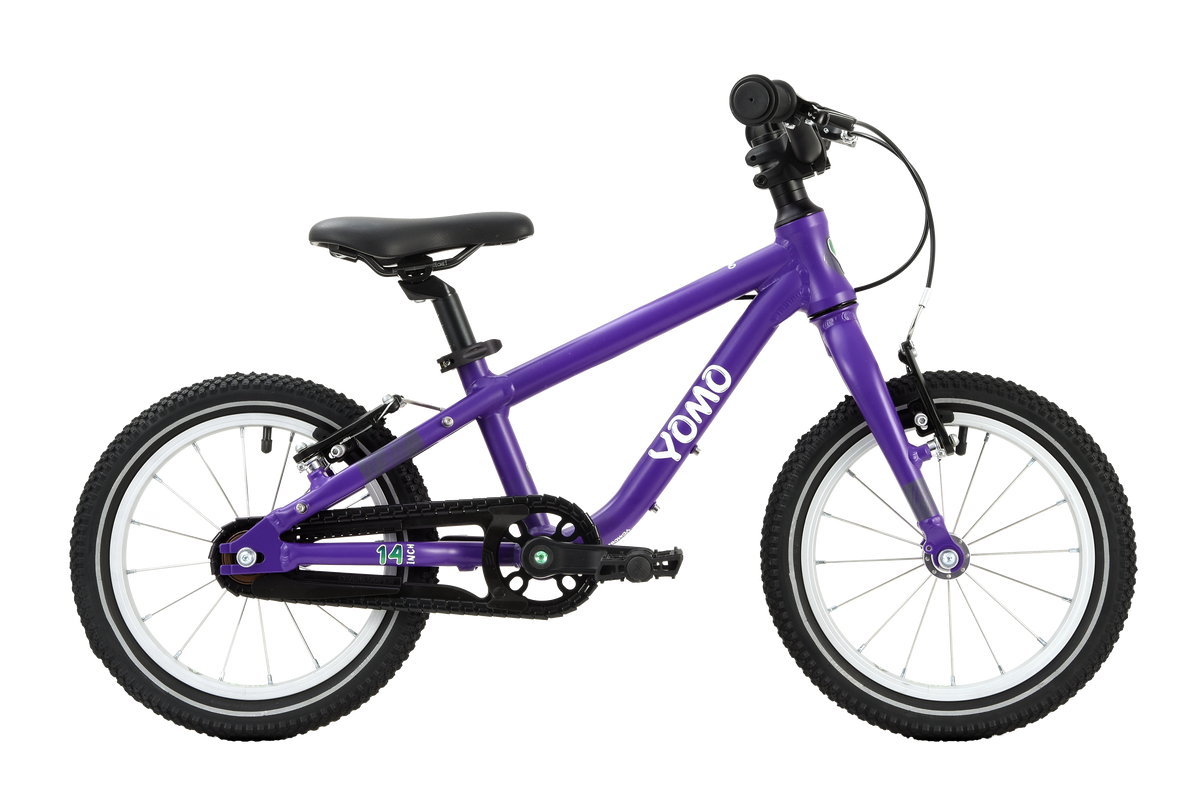
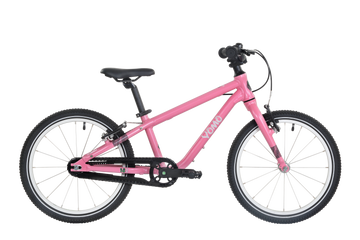
| YOMO 14 | 40.5 cm | 45.0 cm |
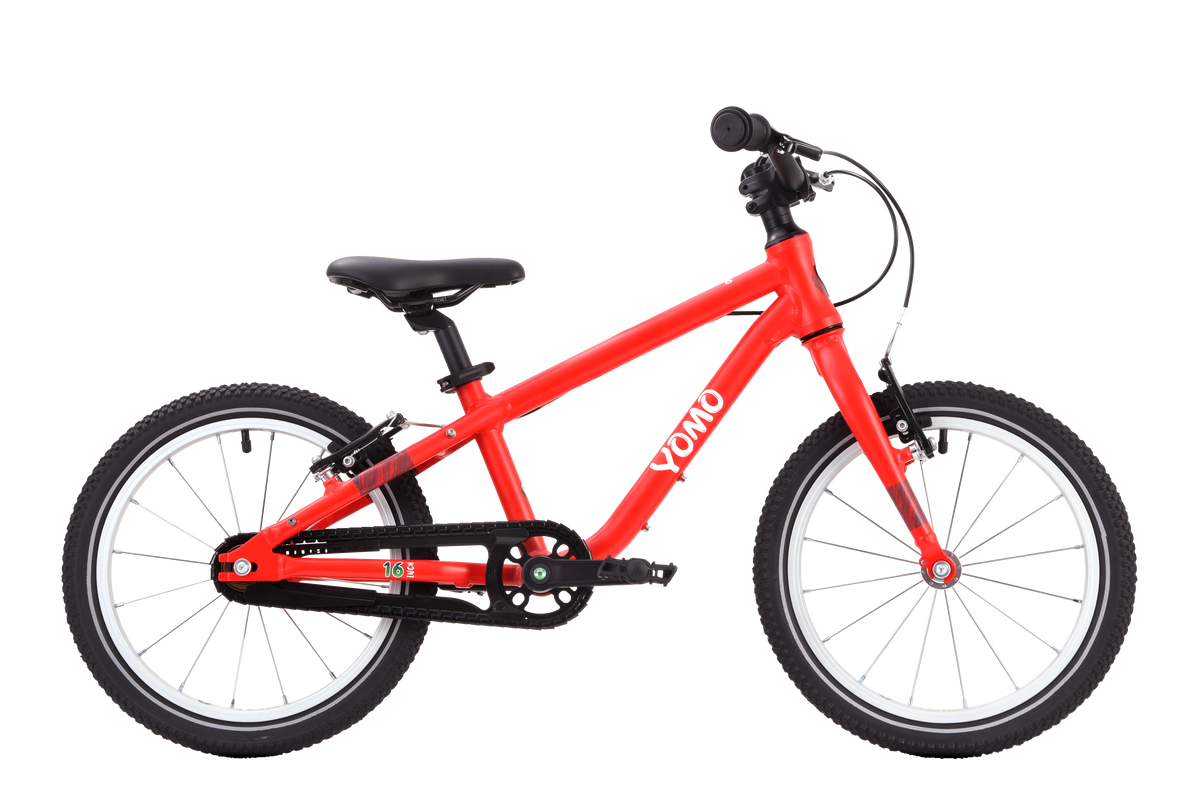
| YOMO 16 | 46.0 cm | 48.8 cm |
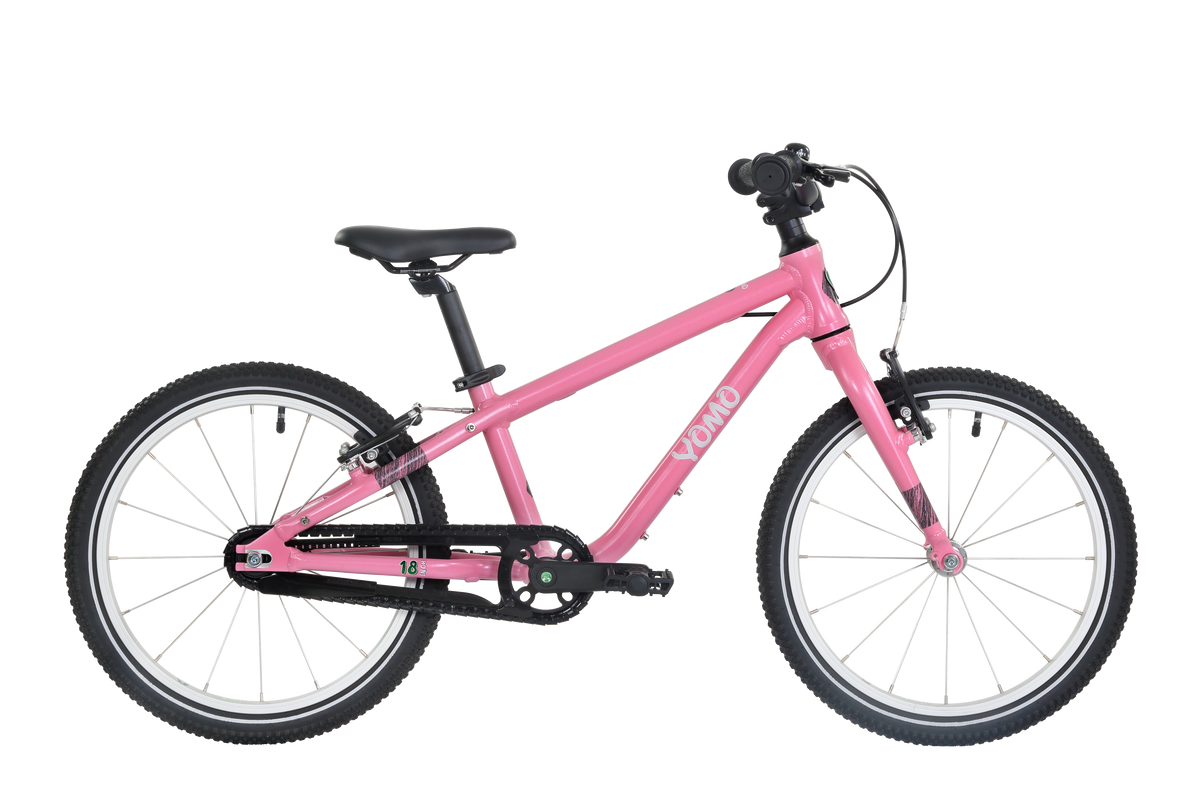
| YOMO 18 | 48.5 cm | 51.5 cm |
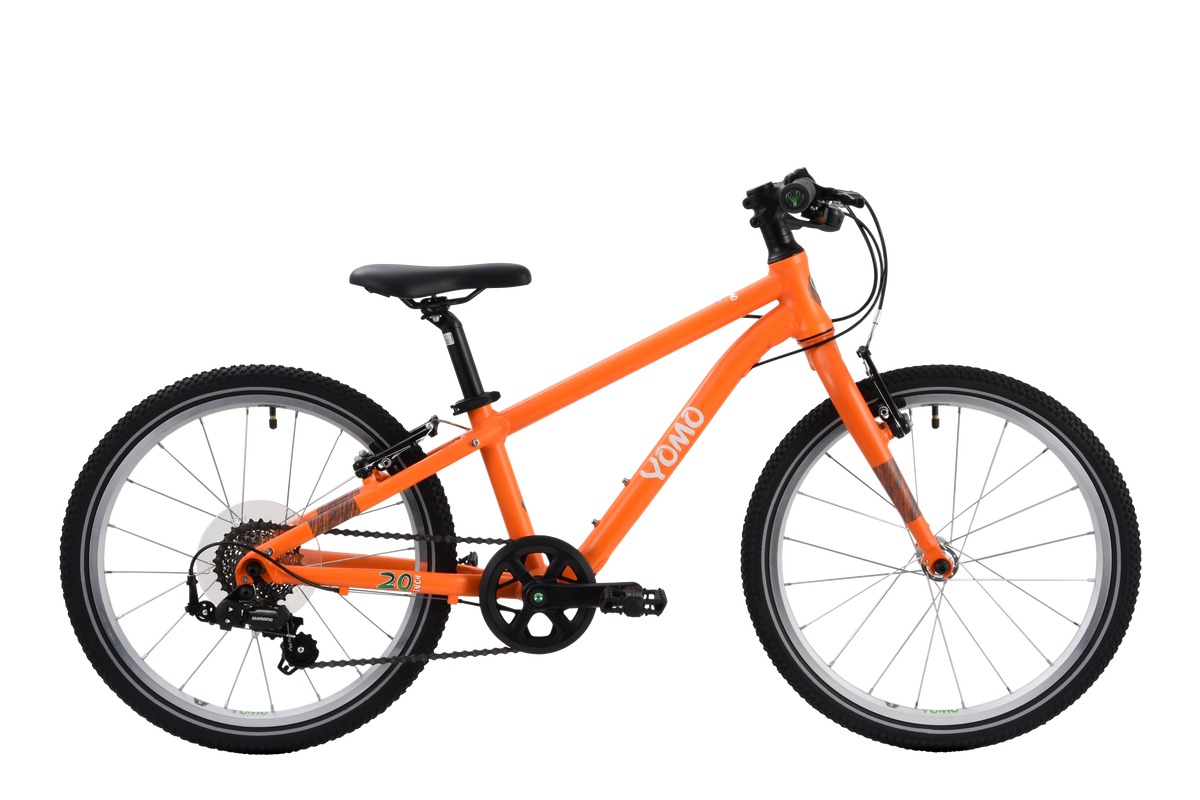
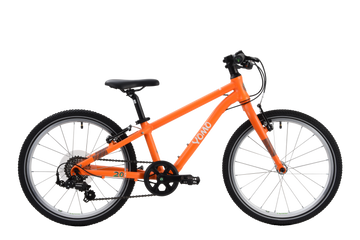
| YOMO 20 | 53.0 cm | 55.0 cm |
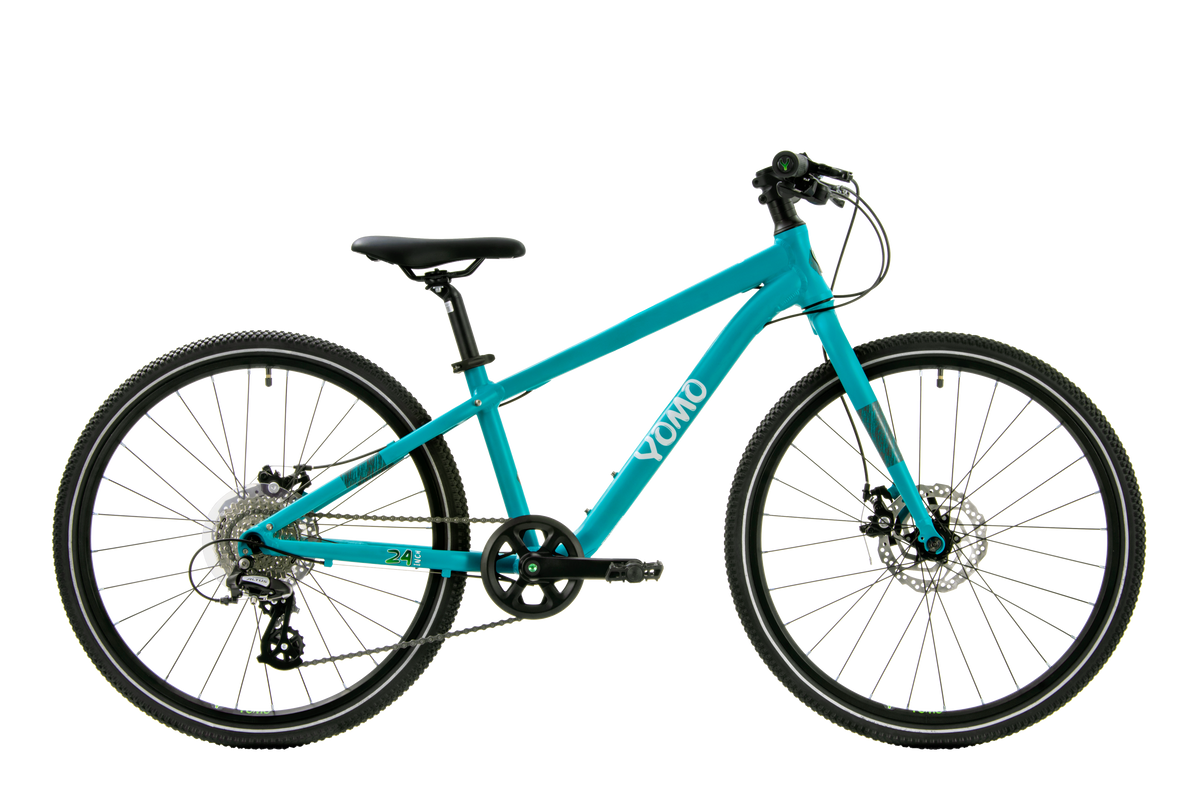
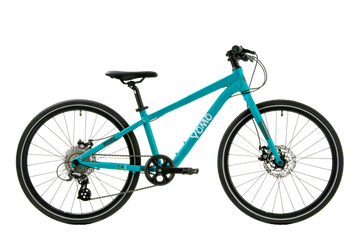
| YOMO 24 | 62.0 cm | 65.8 cm |
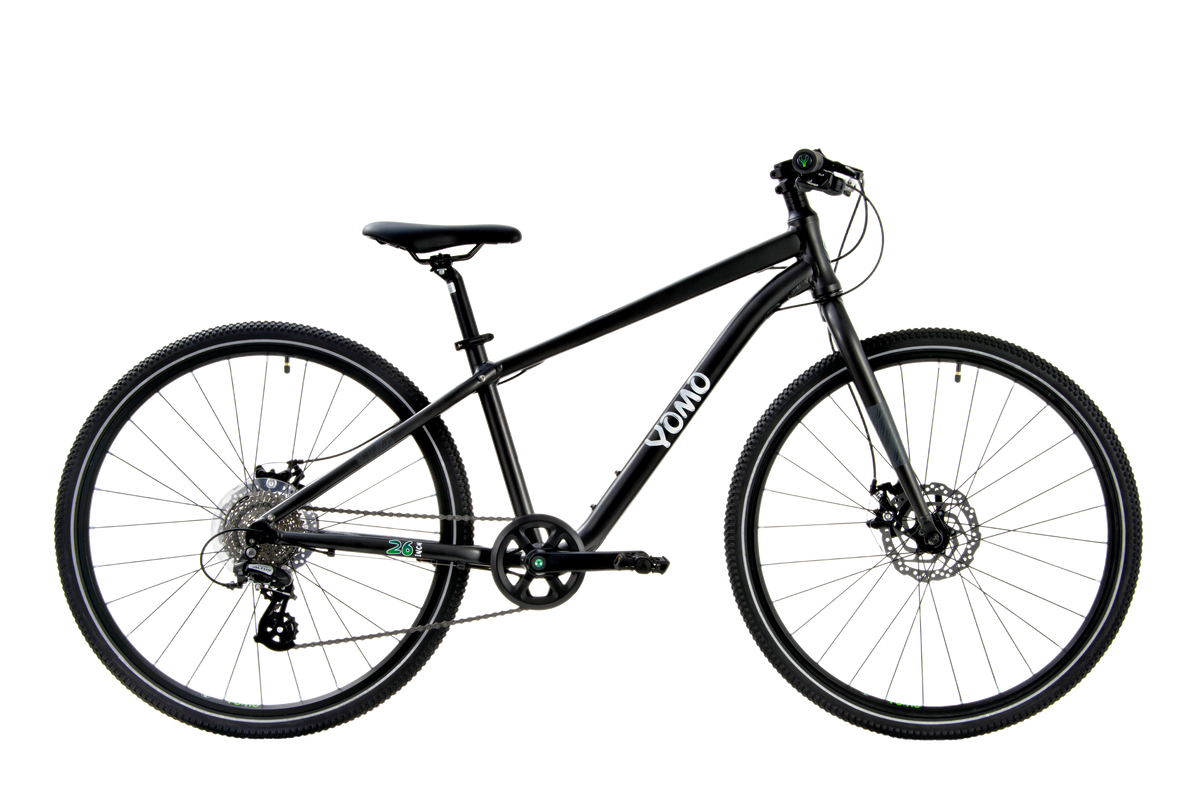
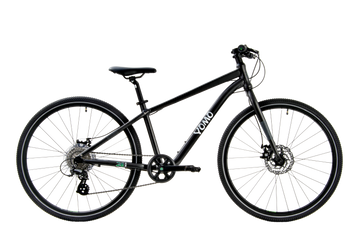
| YOMO 26 | 67.5 cm | 72.8 cm |
These figures are useful minimum references, not a reason to choose the largest bike your child can technically reach.
Use the Perfect Size Finder to combine inside leg, height and riding confidence before making the final decision.
Should you buy a bigger bike for your child to grow into?
It can be tempting to move up a size because the larger bike should theoretically last longer.
But the biggest bike your child can reach is not necessarily the best bike for them to ride.
If the bike is too large, they may struggle to start independently, reach the controls comfortably or put a foot down confidently when stopping.
When two sizes genuinely overlap, think about the decision as:
- Best fit now – generally the more confidence-inspiring choice, especially for a learner or cautious rider.
- More room to grow – potentially appropriate for a confident rider who already fits the larger model safely.
The Perfect Size Finder is designed to help with exactly this decision.
Does wheel size tell you what size bike your child needs?
Wheel size is useful for describing a bike category, but it shouldn't be used on its own to choose the correct fit.
Two different 20-inch children's bikes, for example, can have different frame geometry, saddle heights and reach measurements.
Start with your child's measurements, then use wheel size to understand which part of the range you are comparing.
Why age charts can be misleading
You will often see children's bikes described using ages such as 3–5, 4–6 or 8–12.
These ranges are useful for quickly narrowing your search, but they cannot account for differences in leg length, height or confidence.
A tall four-year-old and a shorter four-year-old may need different bikes. A confident rider may also suit a different fit from a beginner of the same size.
So use age as a starting point, not the final answer.
How should a bike fit a beginner?
A child who is still learning generally needs a more confidence-inspiring setup than an experienced rider.
They should be able to:
- reach the handlebars without excessive stretching;
- operate the brake levers comfortably;
- start and stop without feeling that the bike is too tall;
- reach the ground securely enough for their current ability; and
- steer the bike without feeling overwhelmed by its size or weight.
As their confidence develops, the saddle can gradually be raised to support more efficient pedalling.
What if my child sits between two YOMO sizes?
This is normal. Children's bike ranges overlap because children grow differently.
If your child's measurements fit two models, look at their current riding ability.
A cautious child learning to start and stop independently will usually benefit from the smaller option. A confident rider may be ready for the larger bike if their inside leg, height and reach are already comfortably within its safe range.
This is where the distinction between best fit now and more room to grow becomes useful.
What if my child's measurements are outside the recommended range?
Don't force a recommendation simply because a particular wheel size seems appropriate for their age.
Check the measurements again first. If they still fall outside the verified fit range, wait until the child fits safely or consider another suitable bike size.
Correct control is more important than moving to the next wheel size early.
Why bike weight matters alongside size
A bike can technically fit a child and still feel difficult to handle if it is unnecessarily heavy.
Because children weigh much less than adults, the bicycle represents a larger proportion of their body weight. A lighter bike can therefore be easier to start, steer, manoeuvre and pick up.
That is why YOMO combines sizing with lightweight construction and child-specific geometry rather than treating wheel diameter as the only measure of fit.
Use the YOMO Perfect Size Finder
If you already have your child's measurements, you don't need to work through a complicated sizing chart yourself.
Open the YOMO Perfect Size Finder and enter:
- your child's height;
- their inside-leg measurement; and
- whether they are learning/cautious or confident/independent.
The tool will identify the best fit now and, where appropriate, show another safe option offering more room to grow.
What happens when they outgrow their YOMO?
Children will eventually outgrow even a perfectly fitted bike. That doesn't mean you need to compromise their fit today just to extend how long the bike lasts.
YOMO BikeTrade allows eligible YOMO owners to move up to a larger model and receive up to 50% credit, subject to inspection.
Learn more about YOMO BikeTrade.
Choose the bike your child can control confidently now
The right bike size is not determined by one number.
Start with inside leg, use height to confirm overall fit, and then consider how confidently your child currently starts, stops and controls a bike.
When two sizes overlap, don't automatically choose the larger one. Compare the best fit now with the option that offers more room to grow and choose the bike your child can comfortably control today.
Find your child's YOMO size or explore the full YOMO children's bike range.
If you'd like to understand why correct fit makes such a difference when children are learning, read our guide to why choosing the right size bike matters.


