


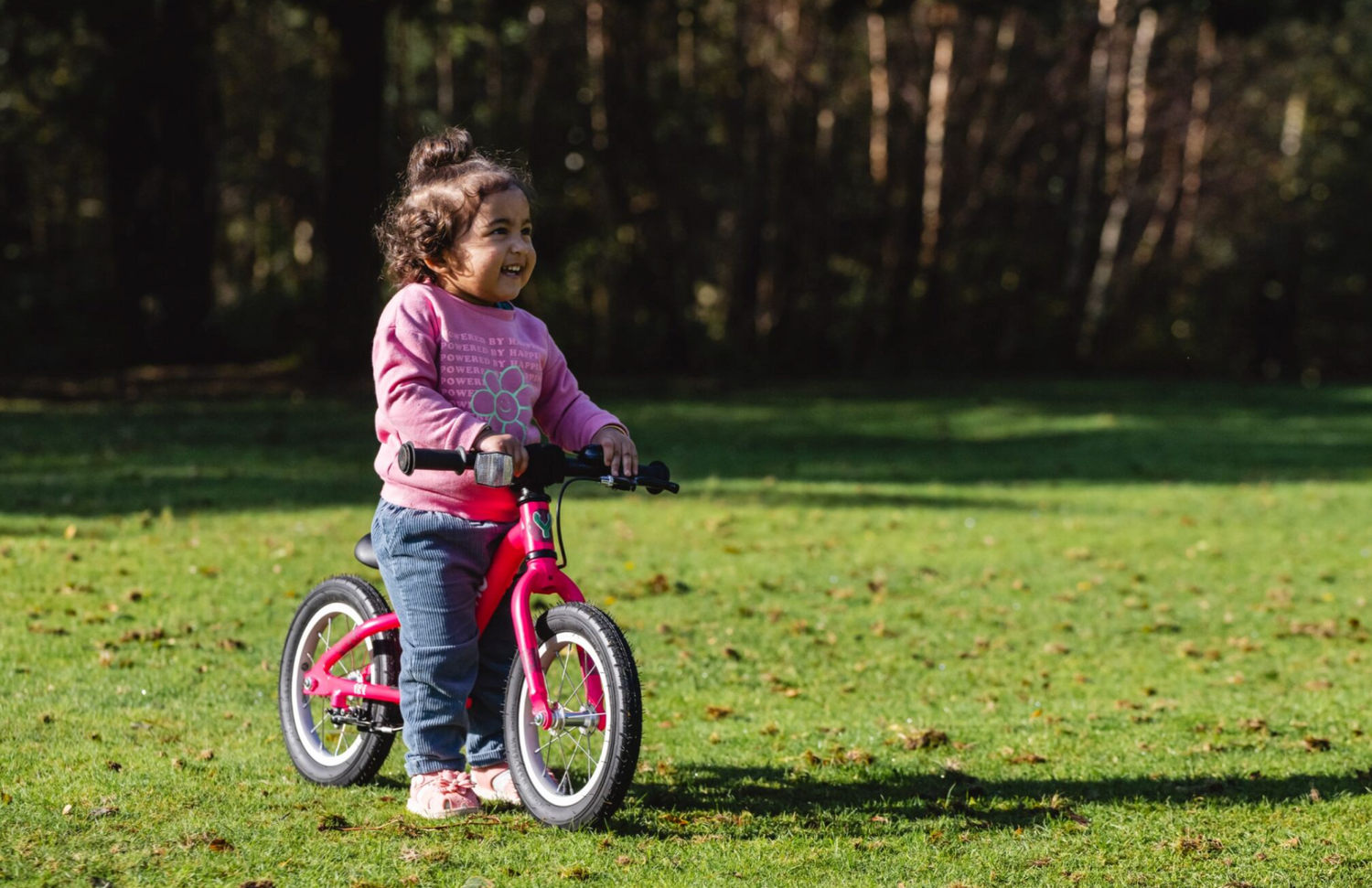
Starting nursery is a big step for a young child. It often comes with more independence, new routines and plenty of opportunities to explore. For many families, it is also around this stage that a balance bike becomes part of everyday adventures.
A good toddler balance bike should feel manageable from the first ride. The right fit, a low overall weight and child-friendly controls can all make it easier for a young rider to concentrate on learning how to balance, steer and stop.
Here’s what to look for when choosing a balance bike for a toddler starting nursery, and why getting the fit right matters more than choosing purely by age.
Why is a balance bike good for toddlers?
A balance bike removes the pedals and lets children propel themselves using their feet. At first they may simply walk while sitting on the saddle. As their confidence develops, they can begin taking longer strides and eventually lift both feet to glide.
This gives young riders the opportunity to practise balance and steering from the beginning, while keeping their feet close to the ground whenever they need reassurance.
If your child is completely new to balance biking, our step-by-step guide to using a balance bike explains how to get them started.
What should you look for in a toddler balance bike?
1. The right fit
Fit should come before almost everything else.
When your child sits on the saddle, they should be able to place both feet comfortably flat on the ground. This allows them to push themselves forwards, slow down and regain their balance without depending on an adult to hold the bike.
Age can be a useful starting point, but children of the same age can have very different leg lengths. Inside-leg measurement is therefore a much better way to confirm fit.
Not sure where to start? Use our Perfect Size Finder and enter your child's measurements and riding confidence.
2. A lightweight bike
Weight matters particularly for very young riders. A lighter balance bike can be easier for a toddler to steer, reposition and pick up after stopping.
It also matters to parents. If a nursery ride ends halfway home and you suddenly find yourself carrying both the bike and everything else, a lighter bike is considerably easier to manage.
3. Child-friendly controls
Controls should be designed around small hands rather than simply being scaled-down versions of adult components.
Comfortable grips, suitable handlebar dimensions and an appropriately positioned brake lever can help a child feel more in control of the bike.
4. A brake they can learn to use
Young balance-bike riders will often begin by slowing themselves with their feet. A properly designed hand brake can also introduce them to braking before they progress to a pedal bike.
The important point is that the lever should be positioned so that a small hand can comfortably reach and operate it.
5. Adjustability as they grow
Toddlers grow quickly, so an adjustable saddle is particularly useful. The saddle can be raised gradually as their legs get longer while maintaining a comfortable and confidence-inspiring riding position.
YOMO 12 balance bike: key specifications
The YOMO 12 balance bike was designed specifically for very young riders taking their first steps on two wheels.
| Feature | YOMO 12 |
|---|---|
| Wheel size | 12 inch |
| Bike weight | 3.6 kg |
| Approximate age | 18 months–3 years |
| Inside leg | 32–42 cm |
| Rider height | 83–109 cm |
| Maximum rider weight | 30 kg |
| Brake | Rear mini V-brake with reach-adjustable child-sized lever |
| Other features | Adjustable saddle and handlebar, integrated footrest and steering limiter |
These measurements are a guide rather than a reason to choose by age alone. For the YOMO 12, an inside leg of approximately 32–42 cm is the key fit range, and your child should be able to sit comfortably with both feet on the ground.
You can view the YOMO 12 specifications and current availability here.
Why does a 3.6 kg balance bike help?
For an adult, a difference of a kilogram or two may sound insignificant. For a toddler, it represents a much larger proportion of their own body weight.
The YOMO 12 weighs approximately 3.6 kg. Its lightweight aluminium frame and fork are designed to make the bike manageable for a small rider while they are learning to walk, scoot, steer and eventually glide.
Weight is not the only factor that makes a good balance bike, but combined with correct sizing and child-specific geometry, it can make the bike easier for a young child to handle.
Why does the YOMO 12 have a hand brake?
Balance-bike riders commonly use their feet to control their speed at first. As their coordination improves, introducing a hand brake gives them another useful skill to practise.
The YOMO 12 uses a rear mini V-brake with a reach-adjustable lever designed for smaller hands. This means the lever position can be adjusted to suit the rider rather than expecting a toddler to stretch for an adult-sized control.
There is no need to rush this stage. First let your child become comfortable moving and balancing the bike. Braking can then be introduced gradually in a flat, open and safe riding area.
What is the footrest for?
When a child first uses a balance bike, their feet will spend most of the time close to the ground.
Once they become more confident, they will naturally begin taking longer strides before lifting their feet and gliding. The YOMO 12's integrated footrest gives them somewhere to position their feet during these longer glides.
That moment when a child begins comfortably gliding is also a useful sign that their balance is developing well.
How to introduce a balance bike before nursery
You do not need long training sessions. Short, relaxed opportunities to ride are usually much more enjoyable for a young child.
Start somewhere flat and quiet
Choose a safe area away from traffic with plenty of room. Let your child become familiar with sitting on the bike and walking it forwards before expecting them to glide.
Let them set the pace
Some children begin gliding very quickly. Others may happily walk with their balance bike for quite a while before lifting their feet. Both are normal stages of learning.
Avoid constantly holding the bike upright for them. One of the main benefits of a balance bike is giving the child the opportunity to discover how the bike responds to their own movements.
Keep the saddle low enough
For a beginner, both feet should comfortably reach the ground. As their confidence and leg length increase, the saddle can gradually be raised while maintaining good ground contact.
Introduce the brake gradually
Once they are comfortable moving forwards, show them how gently squeezing the brake slows the bike. Practise at low speed on level ground before introducing slopes.
Should children wear a helmet on a balance bike?
A correctly fitted cycle helmet is a sensible part of getting ready to ride. It should sit level and low on the forehead and remain secure without rocking from side to side.
Fit matters just as much for a helmet as it does for the bike, so measure your child's head rather than choosing a helmet based solely on age.
Balance bike or stabilisers?
Balance bikes and stabilisers teach cycling skills in different orders.
A balance bike lets a child develop balance and steering before adding pedalling. Stabilisers allow a child to practise pedalling while the additional wheels largely support the bike's balance.
Neither approach needs to become stressful or competitive. However, many families choose a balance bike because the child can practise the balancing skill they will ultimately need when riding a pedal bike independently.
We've compared the two approaches in more detail in our guide to balance bikes vs stabilisers.
When is a toddler ready to move to a pedal bike?
Rather than focusing on a particular birthday, look at what your child can actually do.
A child who can confidently push off, glide with both feet raised, steer around gentle turns and bring the bike to a controlled stop has already developed important skills for the transition to pedals.
The next pedal bike still needs to fit properly. Buying a bike that is deliberately too large to give a child more growing room can make starting and stopping unnecessarily difficult.
When that stage arrives, use our Perfect Size Finder to compare the appropriate YOMO sizes based on your child's height, inside leg and riding confidence.
Choosing the best balance bike for your toddler
The best balance bike is not simply the one aimed at your child's age. It is the one they can comfortably control right now.
Look for the correct saddle height, manageable weight, child-friendly controls, useful adjustability and a riding position that gives your child confidence.
For riders within its recommended fit range, the YOMO 12 combines a 3.6 kg lightweight build with child-specific controls, a rear hand brake, adjustable fit and an integrated footrest designed around those first stages of learning.
Check your child's measurements first, then use the Perfect Size Finder if you need help confirming the right YOMO for them.


