


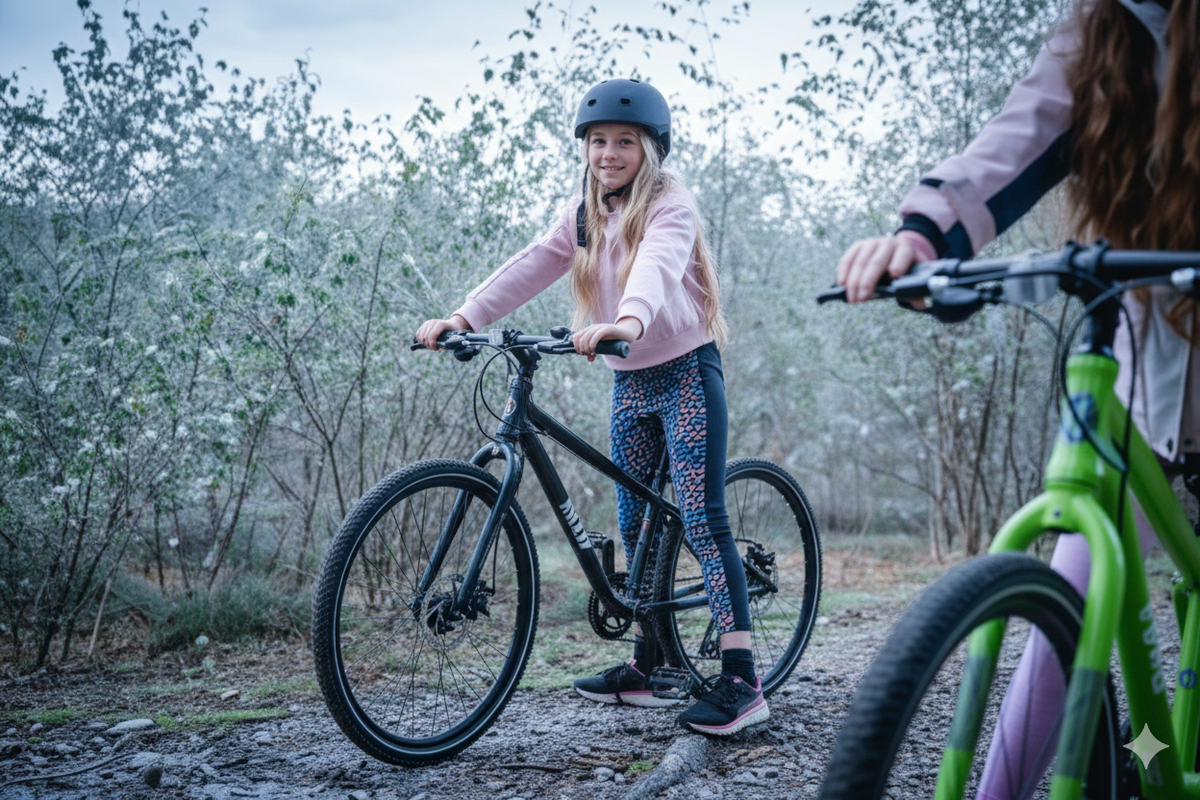
When we picture family bike rides, it's easy to imagine warm evenings, dry paths and long summer days.
But some of the rides children remember most don't happen in perfect weather.
A crisp loop around the park. Racing home before it gets dark. Riding through crunchy leaves. Finding the biggest puddle on a muddy trail and discovering too late that it was much deeper than expected.
Winter bike rides with kids don't need to be long or ambitious to feel like an adventure.
With the right route, clothing, bike preparation and expectations, colder months can still offer plenty of opportunities for enjoyable family cycling. The important part is knowing when conditions are suitable — and when it's better to leave the bikes at home.
Why winter family bike rides can feel more adventurous
Children don't need an epic destination to feel as though they're exploring.
Winter changes familiar places.
A park you've visited dozens of times can suddenly have:
- frosty grass;
- muddy tracks;
- fallen leaves;
- mist over the water;
- different wildlife; and
- puddles that weren't there last week.
A familiar route can therefore feel completely different without needing to travel far from home.
That's particularly useful with younger children. Instead of planning an entire afternoon around cycling, you can simply head outside for a manageable ride and see how everyone feels.
Short winter bike rides still count
One of the easiest mistakes is assuming that getting everyone dressed and preparing the bikes isn't worthwhile unless you're going somewhere substantial.
It is.
A winter family ride could be:
- a lap around the local park;
- a short traffic-free trail;
- a ride to a café;
- a cycle to see friends or family;
- a trip to the playground;
- a ride to the shops instead of driving; or
- simply 15 minutes outside before heading home.
There isn't a minimum distance that makes a bike ride worthwhile.
For younger riders especially, finishing while they are still warm, comfortable and enjoying themselves can make them much more enthusiastic about riding again.
Let the destination make the ride worthwhile
“Would you like to go cycling?” doesn't always get the same response as:
“Shall we ride to the café for a hot chocolate?”
For children, the bicycle doesn't always need to be the main event.
Give the ride a destination:
- a favourite playground;
- a café;
- a woodland path;
- a friend's house;
- a picnic spot;
- a local landmark; or
- somewhere they haven't explored before.
The destination gives the ride a purpose while the cycling becomes part of the adventure.
Mud and puddles can be part of the fun
Winter rides aren't usually spotless.
Tyres get muddy. Trousers get splashed. Bikes may need cleaning afterwards.
For plenty of children, that's part of the attraction.
If the route and surface are suitable, allowing children to enjoy a little mud or an occasional puddle can turn an otherwise ordinary ride into something they talk about afterwards.
But encourage them to look ahead rather than aiming blindly for every puddle. Standing water can hide potholes, debris or other hazards underneath.
There's an important difference between getting muddy and riding into a surface you can't assess safely.
Winter surfaces change how a bike behaves
Winter riding can give children experience of different conditions, but that experience should be introduced gradually.
Wet leaves, mud, damp surfaces, painted markings and metal covers can provide less grip than a dry summer path.
Encourage children to:
- ride at a speed that suits the conditions;
- look further ahead;
- brake earlier;
- use the brakes smoothly;
- slow down before corners rather than braking sharply through them; and
- avoid sudden steering movements on slippery surfaces.
The aim isn't to make winter riding deliberately difficult. It's to help children understand that good cyclists adapt how they ride when conditions change.
Ice is different from mud and rain
A wet family ride can be great fun.
An icy ride is a different proposition.
Ice can be difficult to see and can cause a bicycle to lose grip suddenly. Untreated paths, shaded areas, bridges and places where water collects can remain icy even when other parts of the route appear clear.
If the route is icy or conditions are uncertain, choosing another activity is usually the sensible decision for a family ride.
Winter cycling should never become a challenge to prove that your family will ride regardless of the weather.
Choose your winter route carefully
A favourite summer route isn't automatically the best winter route.
Before heading out, consider:
- the surface;
- lighting;
- traffic levels;
- whether the route is exposed to strong winds;
- areas that may remain icy;
- how far you are from home if someone becomes cold; and
- whether there's somewhere to stop if the weather changes.
For younger children, familiar and relatively short routes can work particularly well.
If everyone is having fun, you can always add another loop.
If someone is cold or tired, you're already close to home.
Check the forecast before leaving
Winter weather can change quickly, so check the local forecast before deciding to ride.
Look beyond the headline temperature and consider:
- rain;
- ice;
- snow;
- wind;
- fog;
- visibility; and
- any weather warnings affecting your area.
Strong winds can be particularly difficult for smaller, lighter riders, while snow can hide ice and other surface hazards.
If conditions look unsuitable, postponing the ride is good judgement.
How to dress children for a winter bike ride
The aim is to keep children comfortable without restricting their ability to control the bike.
Layers are useful because they can be adjusted as children warm up while riding.
Depending on the weather, consider:
- a comfortable base layer;
- a warm mid-layer;
- a wind-resistant or waterproof outer layer;
- gloves;
- warm socks; and
- bright or reflective elements in poorer visibility.
Make sure gloves still allow your child to grip the handlebars and comfortably operate the brake levers and gears.
Avoid loose scarves, cords or clothing that could become caught in the bicycle.
Make sure the helmet still fits properly
Winter clothing shouldn't compromise helmet fit.
A cycling helmet should remain correctly positioned, appropriately sized and securely fastened.
Don't put a thick woolly hat underneath if it changes how the helmet sits on the child's head.
Measure head circumference rather than choosing a helmet by age.
You can read our children's bike helmet sizing and fit guide or view the YOMO Kids' Helmet range.
Visibility matters on short winter days
Winter family rides can quickly move from daylight into low light, particularly later in the afternoon.
The Highway Code says that at night a bicycle must have a white front light and red rear light illuminated, together with the required reflectors.
Light-coloured, fluorescent and reflective clothing or accessories can also help other road users see cyclists in poorer light.
Before leaving, check that:
- the lights work;
- batteries are charged;
- reflectors are clean; and
- bags or clothing don't obscure the lights.
If there's any chance you'll still be out as daylight fades, take suitable lights with you.
Give the bikes a quick check before you go
A few minutes spent checking the bikes can prevent a family ride ending early.
Before leaving, check:
- both brakes operate correctly;
- tyres are in good condition;
- tyres are inflated within the pressure range shown on the tyre;
- wheels are secure;
- the chain and gears work correctly;
- the saddle and handlebars are secure; and
- lights and reflectors are working where required.
If a bike has been sitting unused for several weeks, give it a more thorough check before the first ride back.
Make sure your child's bike still fits
Children can grow significantly between seasons.
If the bike hasn't been used for a while, don't assume the setup that worked in autumn is still correct in January or February.
Check:
- saddle height;
- inside-leg measurement;
- reach to the handlebars;
- reach to the brake levers; and
- whether the child still looks and feels comfortable controlling the bike.
For YOMO bikes, sizing should prioritise inside leg, riding confidence and current fit, with age used only as a guide.
Use the YOMO Perfect Size Finder if you're unsure whether the bike still fits.
Let children set some of the agenda
A family ride doesn't need to mean adults making every decision.
Let children choose things such as:
- which safe route to take;
- whether to do another loop;
- where to stop;
- which destination to visit; or
- when they've had enough.
That small amount of ownership can make cycling feel like something the family is doing together rather than an activity they've been taken along to do.
Don't turn every winter ride into a cycling lesson
Winter conditions naturally require more awareness, so there will be moments when parents need to give instructions.
But that doesn't mean every ride needs constant coaching.
Once you're somewhere suitable, give children space to enjoy riding.
There is time for puddles, conversations, stopping to look at something interesting and occasionally going nowhere in particular.
Those parts of the ride can matter just as much as improving cycling technique.
Have a simple plan for getting cold
Children can go from comfortable to fed up surprisingly quickly.
It's useful to have an easy way to shorten the ride.
That might mean:
- staying relatively close to home;
- choosing a circular route with shortcuts;
- planning a warm stop;
- carrying an extra lightweight layer; or
- turning around before anyone becomes uncomfortable.
Finishing early isn't a failed ride.
If everyone returns home wanting to go again, that's usually a better result than squeezing another few miles out of a tired child.
Make the post-ride routine easy
A muddy bike doesn't need to become a reason not to ride in winter.
When you get home:
- remove heavy mud and dirt;
- wipe the bike down;
- dry appropriate components;
- check the chain and drivetrain;
- lubricate the chain when necessary using a suitable bicycle lubricant; and
- allow wet clothing and equipment to dry properly.
A simple routine means the bikes are more likely to be ready when someone suggests another ride.
Winter family bike ride ideas
If you need inspiration, try giving each ride a small purpose.
The hot-chocolate ride
Choose a café within a manageable cycling distance and make the stop part of the adventure.
The puddle ride
Pick a suitable traffic-free route after ordinary rain, accept that everyone is getting muddy and bring a change of clothes if necessary.
The wildlife ride
Choose a park, canal path or woodland route and see what children can spot along the way.
The new-route ride
Explore one safe local path you've never ridden before rather than trying to cover a large distance.
The sunset ride
On a clear afternoon, take a short ride before sunset — with suitable lights and enough time to return safely as conditions change.
The destination ride
Cycle somewhere the child already wants to go: a playground, friend's house or favourite local spot.
When should you skip a winter family ride?
There will be days when staying home or choosing another activity is the better decision.
Reconsider cycling when:
- ice is present or likely on the route;
- snow makes surfaces difficult to assess;
- strong winds make bike control difficult;
- there is flooding or significant standing water;
- visibility is very poor;
- a weather warning affects your area;
- the bike isn't mechanically ready; or
- your child isn't comfortable with the conditions.
Year-round family cycling doesn't mean riding every day regardless of the weather.
It means recognising the days that are suitable and making the most of them.
Frequently asked questions about winter cycling with kids
Can children ride bikes in winter?
Yes, children can continue cycling during suitable winter conditions provided the route, weather, bike and rider ability are appropriate. Cold weather itself doesn't automatically mean cycling has to stop.
Can kids cycle in the rain?
Ordinary rain doesn't necessarily prevent a family ride. Reduce speed, allow more room for braking and watch for slippery surfaces and standing water. Heavy rain, flooding or poor visibility may make another activity more appropriate.
Should children cycle when it's icy?
For an ordinary family ride, avoiding icy routes is the sensible choice. Ice can be difficult to see and can cause sudden loss of grip.
How long should a winter bike ride with kids be?
There isn't a fixed duration. Let the child's age, ability, temperature, route and enjoyment determine the length. A short enjoyable ride can be more successful than a longer trip that ends with everyone cold and tired.
Do kids need bike lights in winter?
At night, bicycles must have an illuminated white front light and red rear light together with the legally required reflectors. Lights can also be useful in poor daytime visibility.
What should children wear for winter cycling?
Use comfortable layers appropriate to the weather, with gloves that still allow proper use of the controls. Consider waterproof, wind-resistant, bright or reflective clothing depending on conditions.
Why some of the shortest rides become the best memories
Children probably won't remember whether the ride was 3 miles or 13.
They may remember the enormous puddle.
They may remember stopping somewhere warm halfway around.
They may remember the day everyone came home covered in mud or the afternoon you squeezed in a ride just before darkness arrived.
That's one of the best things about winter family cycling: the adventure doesn't have to be very big to feel significant.
Keep the route manageable, prepare for the conditions and don't be afraid to turn around when everyone has had enough.
Sometimes a short winter ride is all it takes to turn an ordinary afternoon into a family story.
For more advice on riding through the colder months, read our guide to cycling to school in winter.
If your child has grown since their last regular rides, check their bike size with the YOMO Perfect Size Finder or explore the YOMO children's bike range.


